Sell a damaged or wrecked car
If your car was hit, flooded, vandalized, or is just too expensive to fix, you may still be able to sell it for cash. ScrapRoute helps you compare licensed buyers for free, so you can choose the safest deal and avoid lowball surprises.
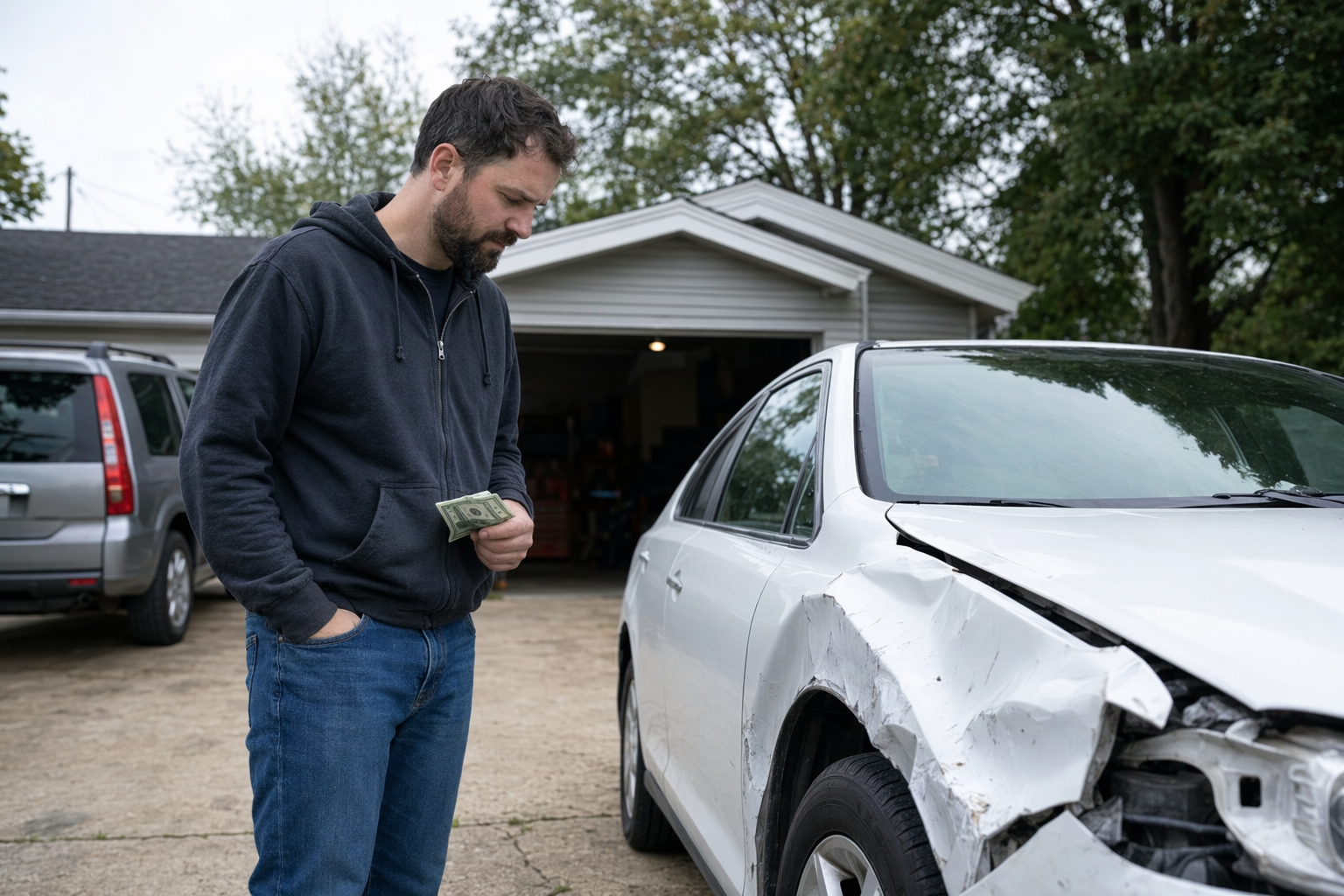
What ScrapRoute does — and does not do
ScrapRoute is a free matching service. We help you connect with licensed salvage yards, auto recyclers, and cash-for-cars buyers in your area. You compare options and decide who you want to deal with.
We do not buy cars, tow vehicles, dismantle anything, transfer titles, or make legal promises. We do not give offers or guarantees. Any dollar amount you see on this page is a typical range, not a quote. The real cash amount depends on the year, make, model, condition, weight, location, and current scrap and parts prices.
If your car is wrecked, has body damage, frame damage, airbag damage, flood damage, or does not run after an accident, you can start here: get a match or learn more about selling a damaged vehicle.
This service is free for car owners. Participating buyers pay a flat fee to be listed and matched.
How selling a wrecked car usually works
A damaged-car sale is usually simple when you know the steps.
1. Share basic car details
Give the year, make, model, condition, and your contact info. You do not need to treat the VIN as a requirement to get started.
2. Describe the damage honestly
Say if the car was in a crash, flooded, stolen and recovered, vandalized, or not running. Mention major issues like deployed airbags, missing catalytic converter, bad engine, broken suspension, or no title in hand.
3. Compare interested buyers
You may hear from licensed local buyers who handle damaged vehicles. Some want cars for parts. Some want scrap weight. Some may want repairable cars.
4. Ask for the full deal in writing
Before pickup, confirm the amount, whether towing is included, and whether there are any fees. Get it in writing by text or email if possible.
5. Get paid before you release the car
Keep your title, keys, and ID safe. Do not hand over the title or keys until you are paid.
6. Confirm state title rules
Title, lien, and damaged-vehicle rules vary by state. Check your DMV for your state requirements. This is general information, not legal advice.
If the car also does not run, this guide may help: sell a non-running car.

What a damaged or wrecked car may be worth
Most damaged cars sell in a range, not at one fixed price.
Typical real-world ranges:
- Wrecked or flood-damaged car: roughly $150-$900
- Non-running car with major mechanical damage: roughly $150-$600
- Scrap-only vehicle: roughly $100-$500
- Heavier trucks and SUVs by scrap weight: roughly $250-$1,200
- Older running car sold whole, even with damage: roughly $300-$1,500
These are estimates only. They are not offers or guarantees. A badly damaged late-model SUV with usable parts may bring more than an old compact car with severe rust. A car with flood damage may be valued very differently from a car with rear-end damage but a good engine.
If you want a broader look at how values are estimated, see how junk car prices work or check your car’s general value.
What changes the cash amount most
Two damaged cars that look similar can bring very different amounts. Here is what usually matters most:
- Year, make, and model: Popular models often have better parts demand.
- Running or not running: A car that starts and moves may bring more than one with a dead engine or locked transmission.
- Type of damage: Front-end damage, frame damage, flood damage, fire damage, and airbag deployment all affect value differently.
- Missing parts: Missing wheels, battery, catalytic converter, engine parts, or body panels can lower the amount.
- Weight: Heavier vehicles can be worth more as scrap.
- Location: Local towing distance and regional scrap prices matter.
- Title status: A clean title, salvage title, rebuilt title, or no title situation can change who is willing to buy.
- Current metal and used-parts market: Prices move.
A simple example: a 2012 sedan with rear damage, clean interior, good engine, and title in hand may be worth more than a 2008 SUV with flood damage, mold, and no keys, even though the SUV is heavier.
If your goal is parts instead of selling the whole car, ScrapRoute can also help you find used parts.
Pickup, towing, and fees: ask this before you agree
Many damaged cars need to be picked up. That part is where people get burned if they do not ask clear questions.
Before you say yes, ask:
- Is towing included?
- Is there any pickup fee, winch fee, storage fee, or paperwork fee?
- Will the amount change if the car does not start, has flat tires, or is hard to access?
- What documents should I have ready?
- When exactly will pickup happen?
- How will I be paid, and at what moment?
Get the amount, towing terms, and fees in writing before pickup. If someone says one number on the phone and then tries to reduce it in the driveway because of damage you already described, you can walk away.
Read more here: free towing explained.
Also, remove your personal items before pickup. Check the glove box, trunk, center console, under seats, and license-plate area. Take off your toll tag if your state uses one. Remove any documents with personal information.
How to stay safe and avoid the most common problems
Selling a wrecked car should not feel risky. A few basic steps help a lot.
Deal only with licensed, insured buyers. Verify the license yourself. Do not rely only on what someone says in a text.
Protect your title and ID. Show only what is needed. Do not send sensitive records, bank information, SSN, or anything unrelated to the vehicle sale.
Never hand over the title or keys until you are paid. If payment is cash, count it. If payment is electronic, confirm it is received and cleared in the agreed way before release.
Confirm the exact terms in writing. That includes:
- final amount
- towing included or not
- any extra fees
- pickup date and time window
- who needs to sign what
Check your state DMV rules. Title transfer, lien release, plates, and notice-of-sale rules vary by state. This is general information, not legal or DMV advice.
If you want a deeper checklist, read how to avoid junk car scams.
Good questions to ask a buyer before pickup
When you talk to a buyer, keep it simple and direct. These questions can save you time:
- Are you licensed and insured in this state?
- Did you include the damage I described in your amount?
- Is towing included, with no hidden fees?
- Will the amount change for any reason at pickup? If so, why?
- What documents do I need?
- Do you need the keys? What if I do not have them?
- How and when will I be paid?
- Can you send the full terms in writing now?
You are in control. You compare options. You choose who to deal with. You confirm everything before any pickup or payment.
If you are ready to start, use this free match form.
Tell the truth about the damage, compare licensed buyers, and get the amount, towing, and any fees in writing before pickup. Keep your title and keys until you are paid, and check your state DMV rules before you sign anything.
Common questions
Can I sell a wrecked car if it does not run?
Yes, many licensed buyers still want non-running damaged cars. Typical ranges for a non-running car are often around $150-$600, while some wrecked or flood cars may be around $150-$900 depending on the year, make, model, condition, weight, location, and current scrap and parts prices. These are estimates only, not offers or guarantees.
Do I need a title to sell a damaged car?
Often yes, but rules vary by state and by buyer. Some states allow limited exceptions in certain situations, and some buyers may not handle no-title vehicles at all. Confirm your state DMV rules and ask the buyer what documents are required. This is general information, not legal advice.
Is towing really free?
Sometimes, but not always in every situation. Some buyers include pickup at no extra charge, while others may add fees based on distance, access, missing wheels, or winch needs. Always confirm the amount, towing, and any fees in writing before pickup.
What if my car is too valuable to scrap but too damaged to repair?
That can happen. Some damaged cars are worth more for parts or as repairable vehicles than as scrap metal. The amount may depend on usable components, demand for the model, and title status. Comparing more than one licensed buyer can help you see whether the car is being valued as parts, repair, or scrap.