How to avoid cash-for-cars scams
Selling a junk or damaged car should be simple. The trouble starts when a buyer changes the price at pickup, adds hidden fees, or pushes you to sign before you get paid.
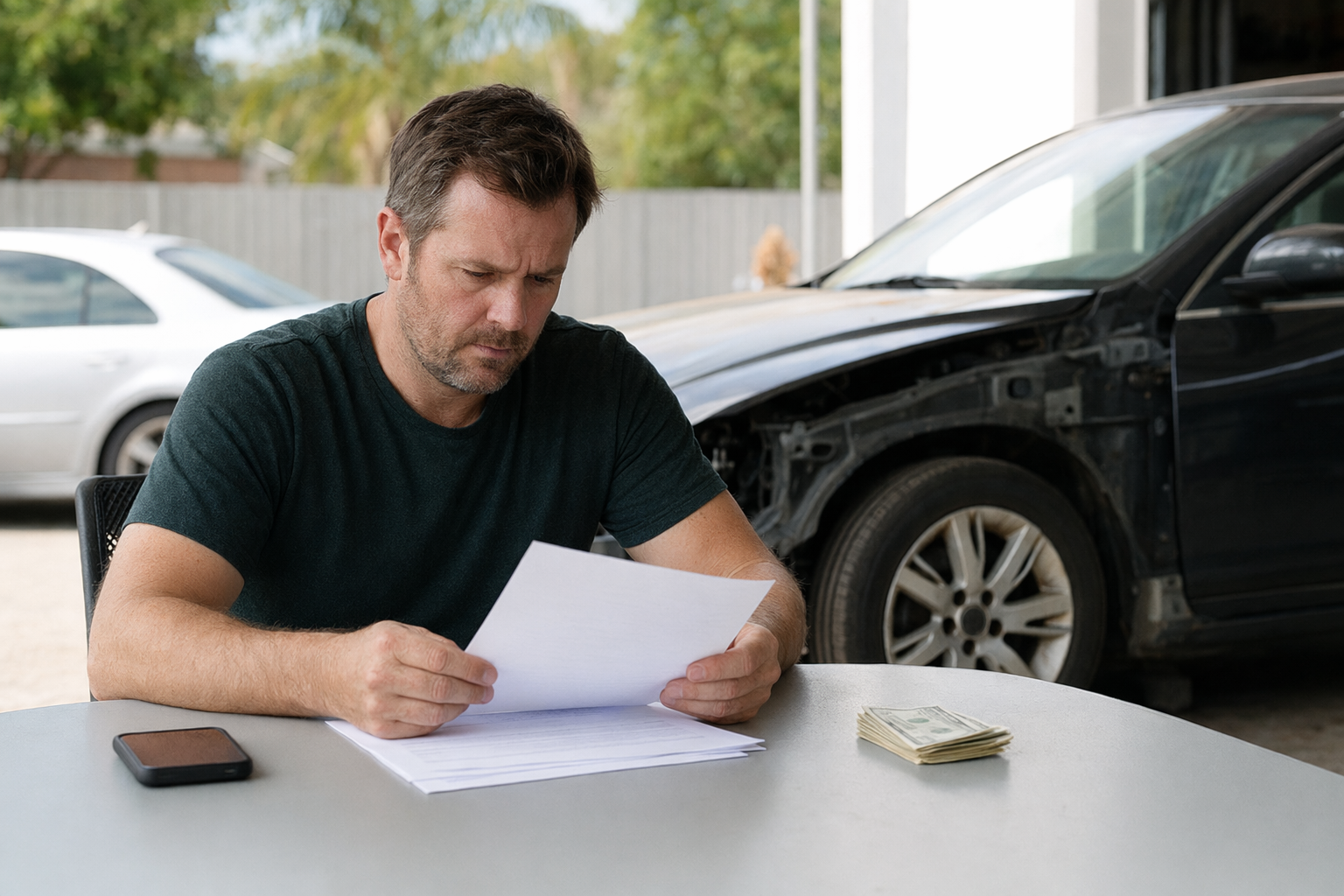
The biggest scam warning signs
Most problems happen at the very end of the deal. The car owner is busy, the tow truck is there, and the buyer knows it is hard to start over. That is when people get pressured into taking less money or signing papers too soon.
Watch for these common red flags:
- Bait-and-switch price drops at pickup. You were told one number on the phone, then the driver says the car is "worth less" now.
- Surprise towing, loading, or admin fees. A buyer says towing is free, then subtracts charges when the truck arrives.
- Fake checks or bounced checks. A paper check can look real and still fail later.
- Pressure to sign the title before payment. Once the title and keys are gone, your leverage is gone too.
- No license or no proof of insurance. If they cannot show they are properly licensed, walk away.
- Pressure to act right now. Scammers want you rushed, confused, and alone.
Cash-for-cars prices are never one fixed number. They are typical ranges and estimates based on the year, make, model, condition, weight, location, and current scrap and parts prices. For example, an older running car sold whole might land around $300-$1,500. A non-running car with a dead engine might be around $150-$600. Scrap-only vehicles are often closer to $100-$500. Heavier trucks and SUVs can be more by weight, sometimes $250-$1,200. If you want a clearer starting point, see how junk car prices work.
How to protect yourself before pickup
A safe sale usually comes down to a few simple habits. You do not need to know every law. You just need to slow down, compare, and keep control of the paperwork.
- Compare more than one estimate. Do not take the first number you hear. Use a free matching service and see what licensed buyers may pay in your area.
- Ask what is included. Confirm the amount, whether towing is included, and whether there are any fees.
- Get the details in writing. Text or email is better than a verbal promise. You want the vehicle info, the expected amount, pickup terms, and any conditions.
- Verify the buyer's license yourself. Ask for the business name and license details. Check with your state or local agency if needed.
- Keep your title and ID safe. Do not send more personal information than needed. Vehicle and contact details are usually enough to start.
- Do not hand over the title or keys until you are paid. If they want your signature first, stop the deal.
ScrapRoute is a free matching service. That means you can compare options and choose who to deal with yourself. If you are getting ready to sell, you can start with get matched here or read more about selling a junk car.

What to confirm in writing before anyone comes
This step saves people the most money. Before pickup, ask the buyer to confirm a few things in writing. If they refuse, that is a warning sign by itself.
Ask for written confirmation of:
- The estimated price range for your vehicle as described
- Whether the car is being bought as running, non-running, damaged, or scrap-only
- Whether towing is included
- Any possible deductions or fees
- What payment method they will use
- What documents they expect you to have at pickup
Good buyers will explain that the final cash amount depends on the vehicle's actual year, make, model, condition, weight, location, and current scrap and parts prices. That is normal. What is not normal is refusing to explain the rules ahead of time.
Free towing is another area where people get burned. "Free" should mean no towing charge to you, not a hidden deduction later. Learn the questions to ask on free towing explained.
If your car does not run, has major damage, or has flood history, say that clearly upfront. Hiding problems can lead to real price changes later. But honest details from the start make it harder for a buyer to use fake "new issues" as an excuse to lowball you at pickup.
Mistakes that cost sellers money
Many scams work because they look like small shortcuts. Here are the mistakes that most often lead to a bad deal:
- Accepting a phone number as a guarantee. It is not. It is only a starting estimate unless confirmed in writing and matched to the vehicle condition.
- Letting the tow driver rush you. You can stop and call the office. You can refuse the pickup.
- Signing over the title before you are paid. This is one of the biggest mistakes.
- Ignoring title and lien issues until pickup day. If there is a lien or a missing title, ask about your state's process early.
- Trusting a check because the truck looks professional. Looks do not clear a bank.
- Not removing personal items. Check the glove box, trunk, center console, and under seats.
Title rules vary by state. Some states are stricter about title transfer, duplicate titles, and lien releases than others. Confirm your state's rules with the DMV. This is general information, not legal advice. If you need a basic overview before you call your DMV, see title transfer help.
One more smart move: take a few photos of the car before pickup. Get wide shots and close-ups of damage. Save texts and emails too. If there is a dispute, having a record helps.
Used-parts buyers can get scammed too
ScrapRoute also helps people find affordable used and recycled parts. The same rule applies here: slow down and verify.
If you are looking for a used engine, transmission, or other part, watch for these problems:
- A seller who cannot clearly confirm the part type, fitment, or condition
- A price that sounds far below normal with no clear reason
- Pressure to pay before basic details are confirmed
- No written terms about returns, exchange policy, or pickup/shipping details
- No business identity, license, or contact trail
Typical ranges can help you spot nonsense. A used engine is often a few hundred dollars up to around $1,500 installed-ready depending on the vehicle and condition. A used transmission is often around $300-$1,200. Those are not promises, just realistic ballpark ranges. Rare vehicles, lower-mileage assemblies, and local availability can push the price up or down.
If you need help finding parts, start with find used auto parts or learn more about used engines and transmissions.
Your safest next step
If you want to avoid scams, the goal is simple: compare, verify, and keep control.
- Compare more than one buyer or yard
- Deal only with licensed, insured businesses
- Verify the license yourself
- Confirm the amount, towing, and any fees in writing
- Keep your title, keys, and ID safe
- Never hand over the title or keys until you are paid
You are in charge of the deal. You choose who to work with. You can say no if the terms change at pickup.
If you want to check a realistic range before you decide, try what your car may be worth. If your car will not start, non-running car options may help. If it was crashed or flooded, see selling a damaged or wrecked car.
Get everything in writing, use only licensed and insured buyers, verify the license yourself, and never give the title or keys until you are paid. If the price changes at pickup or new fees appear, say no and keep your car.
Common questions
What if the buyer lowers the price when the tow truck arrives?
You can refuse the deal. A real inspection can change an estimate if the vehicle was described incorrectly, but the buyer should explain exactly why. If they suddenly drop the amount without a clear reason, or add new fees that were not disclosed, do not sign the title or hand over the keys. Keep the car and move on.
Is free towing always really free?
Not always. Some buyers say towing is free, then subtract loading, winching, mileage, or admin charges later. Ask for towing terms in writing before pickup. Confirm whether there are any deductions at all. If the answer is vague, that is a warning sign.
Is a check safe when selling a junk car?
A check can be risky because it may bounce or be fraudulent. If a buyer plans to pay by check, ask what kind of check it is and make sure the payment method is confirmed before pickup. Do not sign over the title or release the vehicle until you are actually paid under the agreed terms. If anything feels rushed or unclear, stop the deal.
Do I need a title to sell a junk car?
That depends on your state and whether there is a lien. Some states require a title for most sales. Others may allow limited exceptions in certain situations. Because title and lien rules vary by state, confirm your state's rules with the DMV. This is general information, not legal advice.