Find used & recycled auto parts
Need a part without paying new-part prices? ScrapRoute helps you get matched, for free, with licensed auto recyclers and salvage yards so you can compare availability, condition, and total cost before you decide.
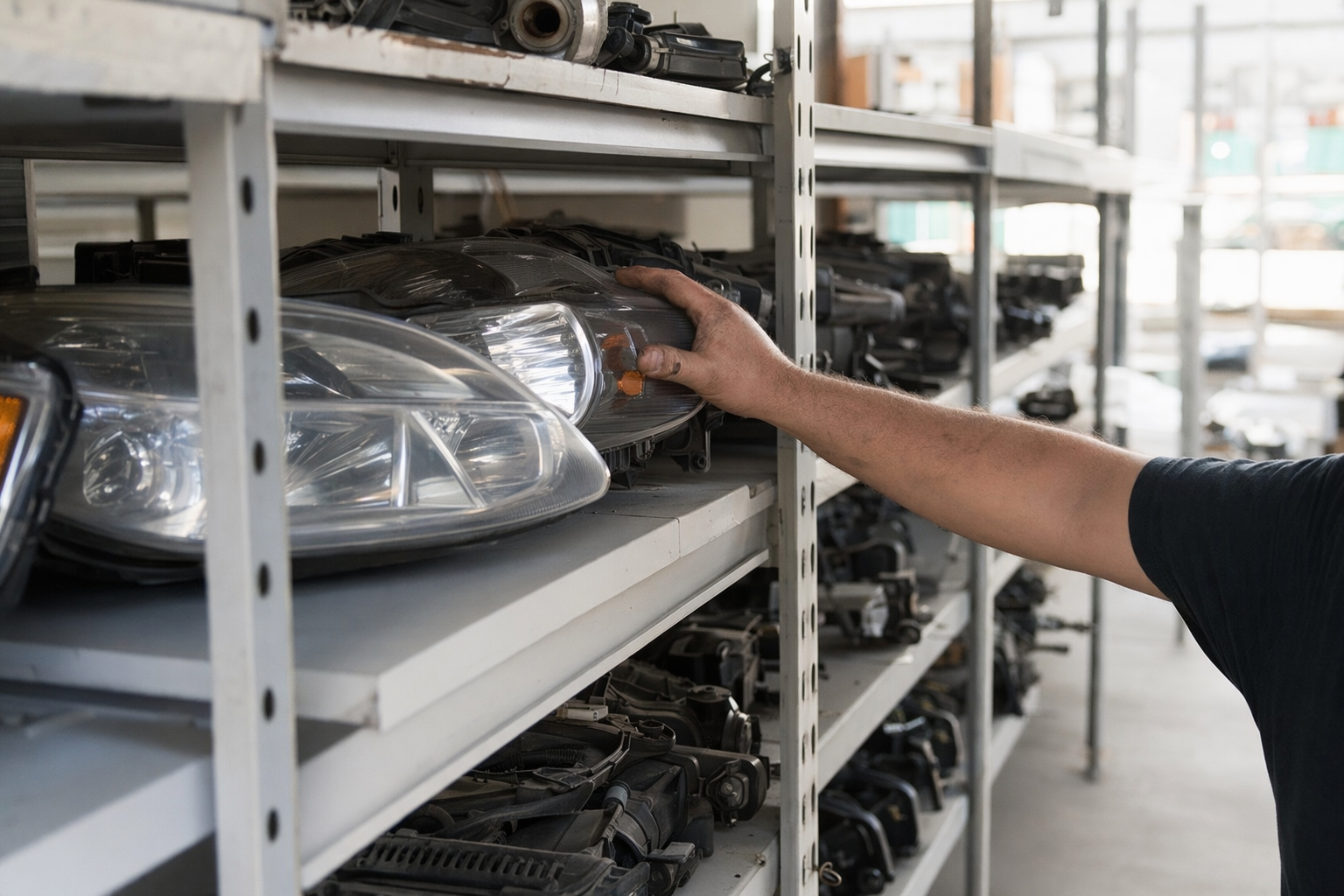
A simple way to look for parts without calling all day
Used and recycled parts can save real money, especially on older cars, work trucks, and daily drivers with cosmetic damage. A good used part may cost much less than a new one, and sometimes it is the only practical option if the new part is discontinued or backordered.
ScrapRoute is a free matching service. We help you connect with licensed yards and recyclers that may have the part you need. You compare options. You choose who to deal with. We do not sell parts ourselves, ship parts, install parts, or guarantee fitment.
People often search for:
- engines and transmissions
- alternators, starters, radiators, and AC parts
- doors, fenders, hoods, bumpers, and mirrors
- headlights, tail lights, wheels, and interior pieces
- truck, SUV, and van parts that are expensive new
If you are also trying to get rid of a vehicle, you can start with cash offer matching or learn more about finding used parts.
How the parts search usually works
The fastest part searches are the ones with clear details. You usually do not need to give sensitive information. In most cases, the basic vehicle and part details are enough to start.
- Tell us the year, make, model, and the part you need.
- Add helpful details like engine size, drivetrain, trim, side of vehicle, color, or whether you need a complete assembly.
- We match you with participating licensed businesses that may have that part or a compatible option.
- You ask questions, compare condition, warranty terms, pickup or shipping, and final price.
- You decide whether to buy, wait, or keep checking.
For major drivetrain parts, see used engines & transmissions.
A small detail can change everything. Example: a 2014 sedan may have different headlights based on trim level. A transmission may differ by engine size or 2WD vs. AWD. If you are not sure, say that up front and ask the seller to confirm compatibility in writing before you pay.

What used parts usually cost
There is no single price for a used part. Prices change by demand, condition, mileage, local supply, and whether the part is tested, cleaned, or sold with a warranty. But honest ranges help you know if a number seems normal.
Typical examples:
- Used engine: often a few hundred dollars up to about $1,500 installed-ready depending on the setup
- Used transmission: roughly $300-$1,200
- small electrical parts: often much less, depending on testing and availability
- body panels: may be cheap if you can accept scratches or color mismatch
- lights, mirrors, wheels, and seats: often vary a lot based on condition and trim
Important: these are typical ranges and estimates, not offers or guarantees. The real total depends on the exact part, year, make, model, condition, mileage, location, and current market demand.
When comparing, do not look at the part price alone. Ask for the total out-the-door number including:
- part price
- core charge if any
- warranty cost if optional
- shipping, freight, or local delivery
- loading fee or handling fee
- sales tax where applicable
A lower sticker price can end up costing more after fees. Ask for the full breakdown in writing.
What makes one used part cheap and another expensive
Two parts that sound the same can have very different values. Here is what usually moves the price:
- Condition: cracked tabs, rust, broken connectors, dents, or water damage lower value
- Mileage or hours: common with engines, transmissions, rear ends, and some electronic modules
- Testing: a tested part usually costs more than an untested one
- Warranty length: 30 days, 60 days, 90 days, or longer can change the price
- Rarity: parts for older, less common, or high-demand models can cost more
- Labor risk: parts that are expensive to install should be checked more carefully before buying
- Paint/color match: body parts in the right color may cost more but save money later
- Local supply: if few yards have the part nearby, price may go up because of shipping or demand
If you are buying a big-ticket part, it helps to ask for the donor vehicle info that is safe and relevant, such as:
- year, make, and model of the donor vehicle
- mileage shown for the donor vehicle if available
- whether the part was tested before removal
- whether accessories are included or sold separately
- the warranty terms and return window
You can also compare the likely value of your current vehicle at how junk car prices work if repairing it may not make sense.
Pickup, shipping, and installation questions to ask first
Used parts are only a bargain if you know how they will get to you and what happens if they do not fit.
Before you agree to anything, ask:
- Is the part still available today? Inventory changes fast.
- What exactly is included? For example, does the engine include manifolds, sensors, turbo, or harness?
- Has it been tested? How? Compression test, run test, visual inspection, or unknown.
- What is the warranty? Ask what is covered, for how long, and what voids it.
- Can you send photos? Photos help catch damage, connector differences, or missing pieces.
- What are pickup or shipping costs? Freight on large parts can change the deal.
- What is the return policy if it is wrong or damaged? Get this in writing.
- Do you need my old part as a core? If yes, ask how much and when it is refunded.
If the part is being delivered or freighted, inspect it as soon as it arrives. Take photos before installation if the packaging is damaged. If you are using a repair shop, ask the shop to verify the part number and compatibility before they start labor. That one step can save you a lot of money.
Stay safe and avoid the common mistakes
Most problems come from rushing, not comparing, or paying before details are clear. A few simple habits can protect you.
- Deal only with licensed, insured businesses and verify the license yourself.
- Confirm the exact part, condition, warranty, pickup or shipping method, and all fees in writing.
- Do not send sensitive personal information you do not need to send.
- Be careful with prepaid orders on hard-to-verify listings.
- Ask whether the part is OEM used, aftermarket used, rebuilt, or for parts only.
- If the seller says "it should fit," ask them to confirm compatibility more clearly.
- Keep screenshots, emails, and receipts until the part is installed and working.
If you are also selling a vehicle for parts value or scrap, read how to avoid junk car scams. The same rule applies here too: slow down, compare, and get the details in writing.
Tell us your car and the part you need, then compare licensed sellers before you pay. Ask about condition, warranty, shipping, and total cost in writing so you can choose the safest and best-value option.
Common questions
What information should I have before looking for a used part?
Start with the year, make, model, engine size, trim if known, and the exact part name. It also helps to know whether you need the left or right side, front or rear, 2WD or AWD, and whether you need a complete assembly or just one piece. You usually do not need to provide sensitive personal information just to start a parts search.
Are used engines and transmissions worth it?
Sometimes yes, especially when a new replacement is too expensive for the value of the car. A used engine often runs a few hundred dollars up to about $1,500 installed-ready depending on the setup, and a used transmission is often around $300-$1,200. These are typical estimates, not guarantees. Ask about mileage, testing, warranty, and what parts are included before you buy.
How do I know if a used part will fit my car?
Give the full vehicle details and ask the seller to confirm compatibility in writing. Trim level, engine size, drivetrain, production date, and connector style can all matter. For expensive parts, ask for photos and any identifying numbers the seller can safely share, then have your mechanic verify fitment before installation if possible.
Can ScrapRoute guarantee the condition or price of a used part?
No. ScrapRoute is a free matching service. We help connect you with licensed recyclers and salvage yards, but we do not sell parts, inspect parts, install parts, or guarantee price, condition, availability, fitment, shipping, or warranty terms. Always confirm the final details directly with the business you choose.