How junk car prices really work
Junk car prices are not random, but they are not fixed either. The real amount a licensed buyer may pay depends on your car, your location, and what the metal and parts market looks like that week.
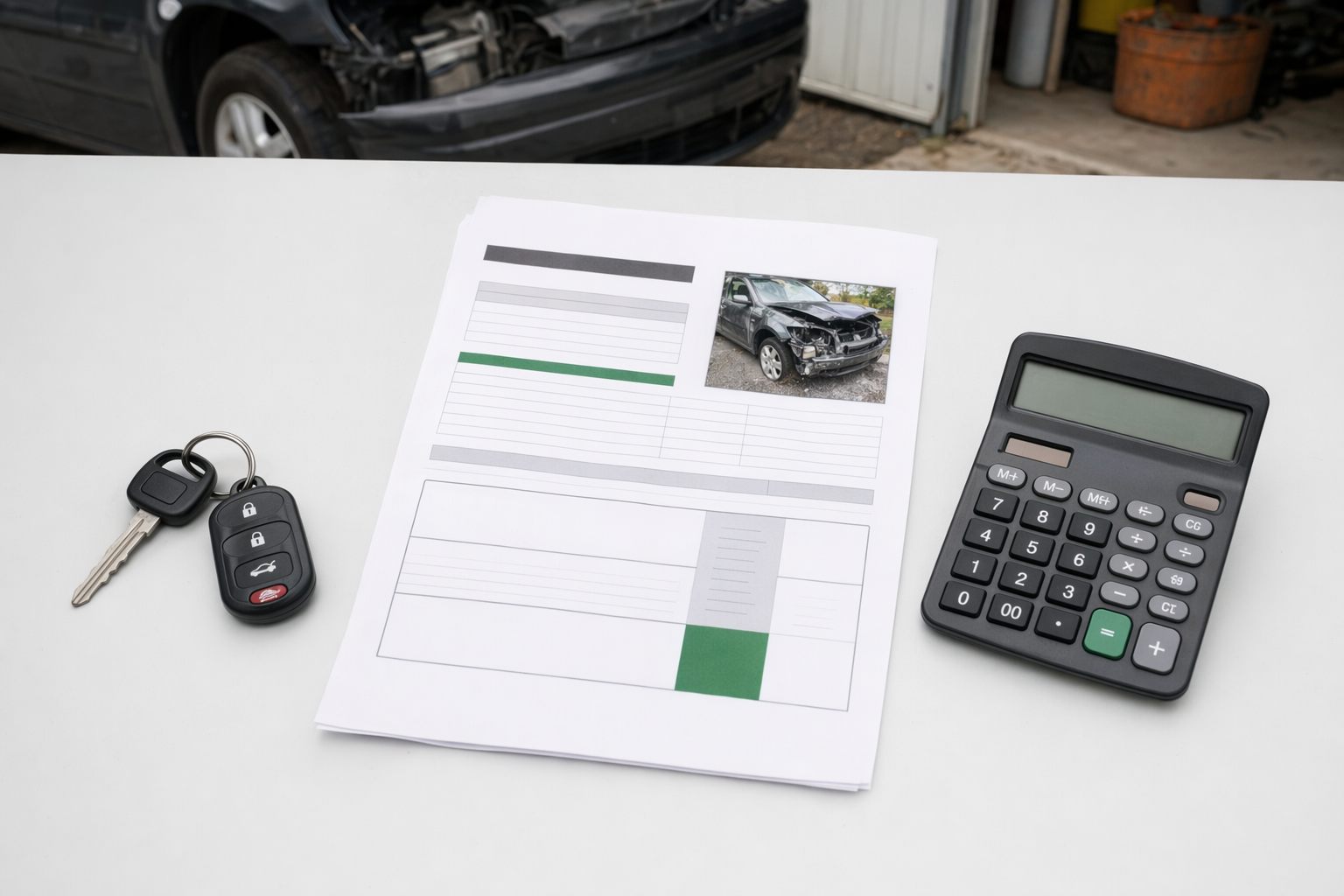
The short truth: price depends on parts value, scrap weight, and local demand
Many people think there is one standard price for a junk car. There is not. Two cars that look similar can bring very different amounts.
A buyer usually looks at three things:
- Can the car be resold whole or repaired? An older running car sold whole may land around $300-$1,500 as a typical range.
- Does it have usable parts? Good engine, transmission, wheels, doors, catalytic converter, and electronics can matter.
- Is it mostly scrap metal by weight? Scrap-only vehicles often bring around $100-$500, while heavier trucks and SUVs may be closer to $250-$1,200 by weight.
Typical ranges many owners see:
- Non-running car or dead engine: about $150-$600
- Wrecked or flood car: about $150-$900
- Older running car: about $300-$1,500
These are estimates, not offers. The real cash offer depends on the year, make, model, condition, weight, location, and current scrap and parts prices.
If you want a simple starting point, see how junk car prices work or check your vehicle details at value.
What makes one junk car worth more than another
The biggest price changes usually come from details owners forget to mention at first.
1. Year, make, and model
Some vehicles have strong used-parts demand. Common pickup trucks, popular sedans, and certain SUVs may be worth more because recyclers can resell more parts.
2. Running vs. non-running
A car that starts, moves, and has a usable drivetrain often brings more than one with a seized engine or bad transmission. If your car does not run, buyers may price it closer to parts value or scrap value. You can read more about that on non-running car options.
3. Damage type
Not all damage is equal. Front-end damage, side damage, frame damage, fire damage, theft recovery, hail, and flood damage all affect value differently. Flood cars can drop fast because electronics, interior, and corrosion risks scare off many buyers.
4. Missing parts
If the battery, catalytic converter, wheels, air bags, radio, engine, or transmission are missing, the number usually drops. Be honest early. Surprises at pickup often lead to lower written numbers.
5. Vehicle weight
When a car is truly scrap-only, weight matters. Bigger SUVs and trucks can bring more than a small compact car just because there is more metal.
6. Your ZIP code
Local towing distance, regional parts demand, and nearby scrap prices all affect the amount. The same vehicle may price differently in two cities.
7. Paperwork
A clean title often makes a smoother sale. No-title situations may still have options in some states, but rules vary. Confirm your state's rules with the DMV. This is general information, not legal advice. For a basic overview, see title transfer steps.

How buyers usually think about the number
A licensed buyer or recycler is not just guessing. They are usually doing a rough math problem.
- What can be reused or resold?
- What will it cost to pick up, store, process, and handle paperwork?
- What is the current metal price?
- How likely is it that hidden damage changes the deal?
Here is why offers can move up or down fast:
- Strong used-parts market: raises value
- Free pickup included: may lower the cash number a little in some cases, because towing still costs money
- Long-distance pickup or hard access: can lower value
- Catalytic converter present: can matter on some vehicles
- Airbags deployed, flood damage, or stripped interior: often lowers value
- High-demand engine or transmission: may raise value
The same market also affects people shopping for parts. A used engine is often a few hundred dollars up to about $1,500 installed-ready depending on the vehicle, and a used transmission is often around $300-$1,200. If you are trying to fix a car instead of junking it, compare that repair path first at find used parts.
The main point: your car is worth what a real local licensed buyer will pay today, in writing, for that exact condition. Not what a friend got last year. Not what a random online ad says.
What to do if you want the best honest price
You do not need to become an expert. You just need to make it easy for buyers to price the car correctly and safely.
1. Gather the basic facts
Have the year, make, model, mileage estimate, and a short honest description ready. Mention if it runs, drives, has major damage, flood history, missing parts, or a lien.
2. Take clear photos
Front, back, both sides, interior, engine bay if possible, and the main damage. Good photos reduce surprise price changes.
3. Compare more than one local option
A free matching service like get offer helps you compare licensed buyers instead of taking the first number you hear.
4. Ask what is included
Confirm the amount, whether pickup is included, and whether there are any fees. Get it in writing before pickup.
5. Protect yourself at handoff
Deal only with licensed, insured buyers and verify the license yourself. Keep your title and ID safe. Never hand over the title or keys until you are paid. Confirm the exact amount, towing, and any fees in writing before the truck arrives.
6. Check your state's title rules
Title and lien rules vary by state. Confirm your state's requirements with the DMV. This is general information, not legal advice.
If your car is badly hit, water-damaged, or not safe to drive, damaged and wrecked car options can help you understand what details matter most.
Common mistakes that lead to low numbers or bad pickups
Most bad experiences come from a few repeat mistakes.
- Taking the first number without comparing
Some buyers start low because they expect people to accept fast.
- Not describing the car honestly
If the engine is locked, the catalytic converter is gone, or the title is missing, say it upfront. Hidden issues often lead to problems at pickup.
- Confusing an estimate with a guarantee
Online ranges are just that: ranges. The final amount depends on the actual vehicle and market that day.
- Not checking license and insurance
This is a big one. Work only with licensed, insured buyers, and verify it yourself.
- Giving up keys or title before payment
Do not do it. Get paid first, then hand over keys and signed title as required.
- Ignoring written confirmation
If pickup is supposed to be free, or if there are no extra charges, make sure that is written down.
- Sharing too much personal information
You usually only need vehicle details and contact details to start. Do not give out bank account numbers, Social Security numbers, or other sensitive records just to compare options.
If you want a safety checklist before you choose anyone, read how to avoid junk car scams.
Next step: compare safely and decide if selling or fixing makes more sense
If the repair cost is high and the car is old, selling may be the easier move. If the rest of the vehicle is solid, used parts may make a repair affordable.
A simple way to decide:
- If the car needs an engine or transmission, price the repair with used parts first.
- If the car has heavy damage, flood issues, a bad title situation, or multiple major problems, compare local buyer estimates.
- If towing matters, confirm whether pickup is included and get that in writing.
ScrapRoute is a free matching service. You compare options. You choose who to deal with. And you confirm everything before any pickup or payment.
When you are ready, start with sell a junk car if you want to move the car, or used engines and transmissions if fixing it may still pencil out.
Junk car prices change based on your car's parts, weight, condition, location, and today's market. Compare licensed buyers, get the amount and towing terms in writing, and do not hand over the title or keys until you are paid.
Common questions
Why did one buyer give me a much lower number than another?
Because junk car pricing is local and subjective. One buyer may see strong parts value in your vehicle, while another may only price it for scrap weight. Towing distance, current metal prices, missing parts, title status, and local demand can all change the estimate.
Is free towing really free?
Sometimes pickup is included, but you should not assume it. Ask whether towing is included, whether there are mileage limits, and whether any fees could be deducted. Get the amount, towing terms, and any fees in writing before pickup.
Can I sell a junk car without a title?
Maybe, depending on your state and the vehicle situation. Some states allow certain no-title sales, and others do not. Title and lien rules vary by state, so confirm the rules with your DMV. This is general information, not legal advice.
Should I fix the car first or sell it as-is?
It depends on the repair cost and the rest of the car. If it needs a major engine or transmission repair, compare the cost of used parts and labor against typical as-is sale estimates. If the car has multiple major issues, selling as-is is often simpler.