Sell a car that won't start or run
If your car will not start, has a dead engine, or has been sitting for months, you may still be able to sell it for cash. ScrapRoute helps you compare licensed buyers for free so you can choose the best fit and confirm the details before pickup.
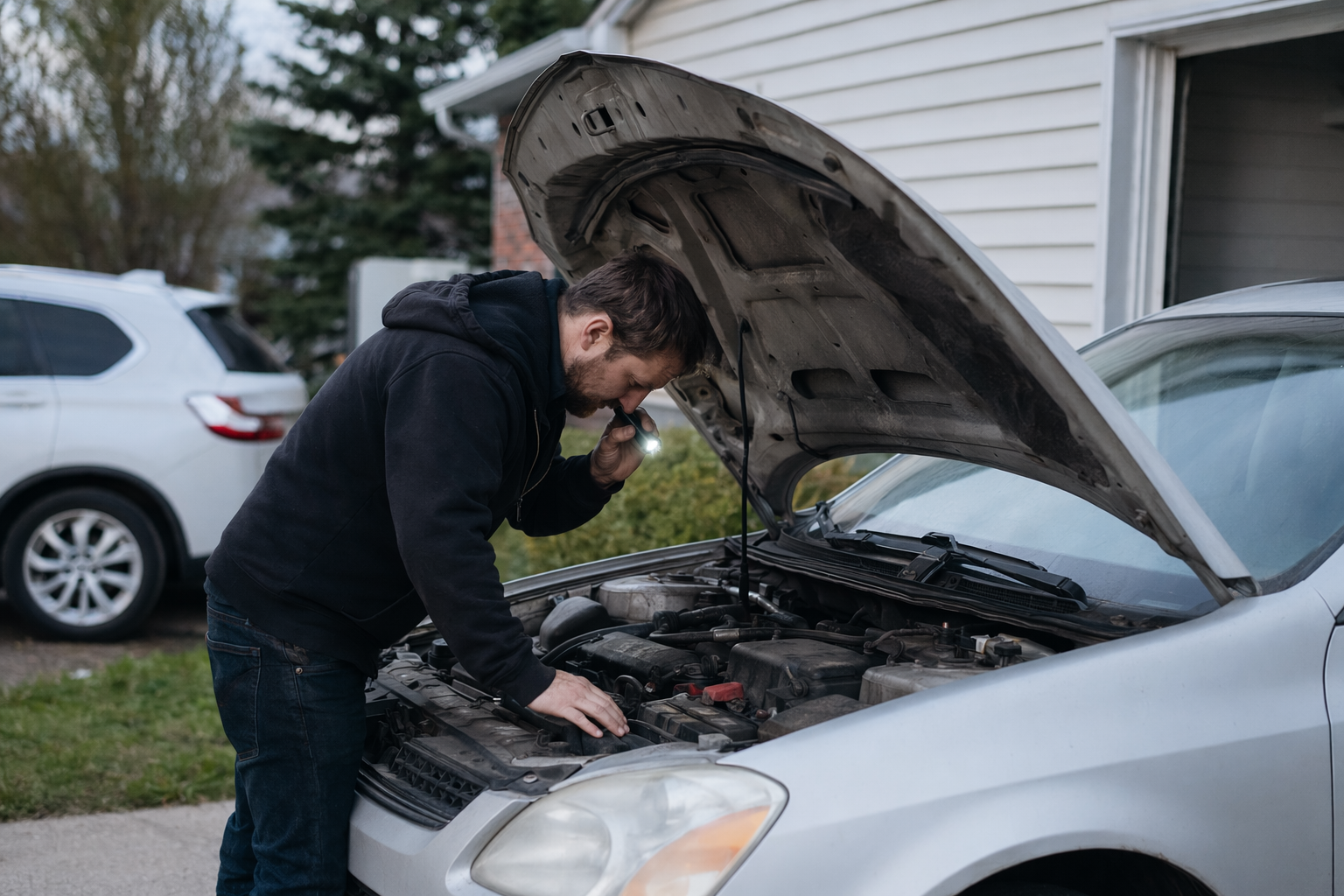
Yes, a non-running car can still have value
A car does not need to run to be worth something. Many non-running vehicles are bought for usable parts, scrap metal, rebuildable components, or because the buyer thinks they can repair and resell them.
Typical ranges are just that: ranges, not offers. In many US markets, a non-running car with a dead engine or major mechanical problem may fall around $150-$600. If the car is older and only good for scrap, it may be closer to $100-$500. If it is heavier, has desirable parts, or still has strong parts value, it may land higher. The real cash offer depends on the year, make, model, condition, weight, location, and current scrap and parts prices.
If you want a quick starting point, you can compare the basics on non-running car options or check how junk car prices work.
How ScrapRoute works
ScrapRoute is a free matching service. We do not buy cars, tow cars, or sell parts. We help connect you with licensed salvage yards, auto recyclers, and cash-for-cars buyers so you can compare your options.
Here is the usual process:
- Share basic vehicle and contact details. Keep it simple: year, make, model, condition, whether it runs, and your location.
- We match you with participating licensed buyers in your area.
- You compare responses and ask questions.
- You choose who you want to deal with.
- Before pickup, confirm the amount, towing terms, and any fees in writing.
- At pickup, do not hand over the title or keys until you are paid.
This matching service is free to you. Participating buyers pay a flat fee to be included. If you are ready, you can start at get an offer.

What changes the amount most
Two non-running cars can bring very different numbers. A car that will not start is not always "junk only." Sometimes the engine is bad but the body, wheels, catalytic converter, electronics, or transmission still have value.
The biggest price factors are:
- Year, make, and model: Common vehicles with in-demand parts may do better than very old or unpopular ones.
- What is actually wrong: A bad starter is different from a seized engine. A missing transmission is different from a complete car.
- Completeness: Buyers usually pay less if major parts are missing.
- Body condition: Heavy damage, flood damage, or severe rust can lower the number.
- Weight: Bigger cars, trucks, and SUVs can be worth more on scrap weight alone. Heavier vehicles often fall around $250-$1,200 in scrap-weight situations, but that still varies a lot.
- Title status: A clean title is usually simpler. Title and lien rules vary by state.
- Your location: Local metal prices, transport distance, and regional parts demand matter.
If your car is wrecked, flooded, or badly damaged on top of not running, see damaged and wrecked car info.
Pickup and towing: ask the right questions
Many non-running cars need to be picked up, but free towing is not automatic in every situation. Some buyers include it. Some only include it within a certain distance. Some may reduce the amount if the car is hard to access, missing wheels, stuck in mud, or parked in a garage with clearance issues.
Before you agree to anything, ask these questions:
- Is towing included?
- If it is included, are there any mileage limits?
- Are there extra fees for a car that does not roll, has flat tires, or is blocked in?
- What paperwork do I need at pickup?
- Will the final amount change if the driver says the condition is different?
- How will I be paid, and when?
Get the amount, towing terms, and any deductions in writing before pickup. That is one of the easiest ways to avoid last-minute pressure. If you want a simple breakdown, read free towing explained.
What to do before the buyer arrives
A little prep can save a lot of stress. You do not need to make the car pretty, but you should protect yourself and make the handoff clean.
- Remove personal items from the trunk, glove box, center console, under seats, and door pockets.
- Take off your plate if your state requires it.
- Find your title if you have it.
- If there is a lien, confirm your state's rule with the DMV before scheduling pickup.
- Take clear photos of the car and its condition.
- Write down what is missing or damaged so there is less room for argument later.
- Keep your ID and title safe until payment is made.
Never hand over the title or keys until you are paid. And deal only with licensed, insured buyers. Verify the license yourself. Title and lien rules vary by state, so confirm the current rule with your state's DMV. This is general information, not legal advice.
If you need help understanding next steps on paperwork, see title transfer basics.
Questions to ask so you do not get lowballed
Lowball offers often happen when a seller is tired, in a hurry, or not sure what to ask. You do not need expert car knowledge. You just need a few direct questions.
Try asking:
- Is this your final amount based on the condition I described?
- Are there any fees for towing, paperwork, or pickup?
- Are you licensed and insured, and can I verify that?
- What changes would cause the amount to go down at pickup?
- Do you need the title in hand, and what does my state require if it is missing?
- Will the vehicle be picked up from my address on the agreed day and time?
The point is simple: you compare, you choose, you confirm. If someone is vague, pushes you to act fast, or refuses to put terms in writing, move on. For more red flags, read how to avoid junk car scams.
Not selling? You may still save money with used parts
Sometimes a non-running car is worth repairing if the problem is limited and the rest of the vehicle is solid. And if you own another car that needs work, used recycled parts can be a practical way to save money.
Typical used-part ranges vary by vehicle, mileage, warranty terms, and market demand, but a used engine is often a few hundred dollars up to around $1,500 installed-ready, while a used transmission often runs around $300-$1,200. Those are general ranges, not quotes.
If you want to look for affordable parts instead of selling, ScrapRoute can also help you find licensed recyclers through find used parts or learn more about used engines and transmissions.
That is the two-sided value of ScrapRoute: if the car is not worth keeping, compare buyers. If the repair makes sense, compare used parts.
A car that will not run can still be sold, but the amount depends on the car, its parts, its weight, your location, and local prices. Use ScrapRoute to compare licensed buyers for free, ask if towing is included, get everything in writing, and do not hand over the title or keys until you are paid.
Common questions
How much can I get for a car that does not run?
Typical ranges for a non-running car are often around $150-$600, with scrap-only vehicles sometimes closer to $100-$500. Heavier trucks and SUVs may be higher on scrap weight alone. These are estimates, not offers. The real cash offer depends on the year, make, model, condition, weight, location, and current scrap and parts prices.
Will someone tow my non-running car for free?
Sometimes, but not always. Some licensed buyers include towing, while others may limit distance or charge more if the vehicle does not roll, has missing parts, or is hard to access. Confirm towing, pickup timing, and any fees in writing before pickup.
Can I sell a non-running car without a title?
Maybe, but the rules vary by state and by buyer. Some states allow certain sales without a title in limited situations, while others do not. Lien and title rules also vary. Confirm your state's current rule with the DMV, and deal only with licensed, insured buyers. This is general information, not legal advice.
What should I do to stay safe when selling a car that will not start?
Verify the buyer's license yourself, keep your title and ID safe, and never hand over the title or keys until you are paid. Confirm the amount, towing terms, and any fees in writing before pickup. Remove personal belongings from the vehicle and take photos of its condition before it leaves.