Free towing and pickup, explained
"Free towing" can save you money, but it does not always mean the same thing from one buyer to the next. Here is how to check the details, avoid surprise charges, and stay in control before your car is picked up.
What “free towing” usually means
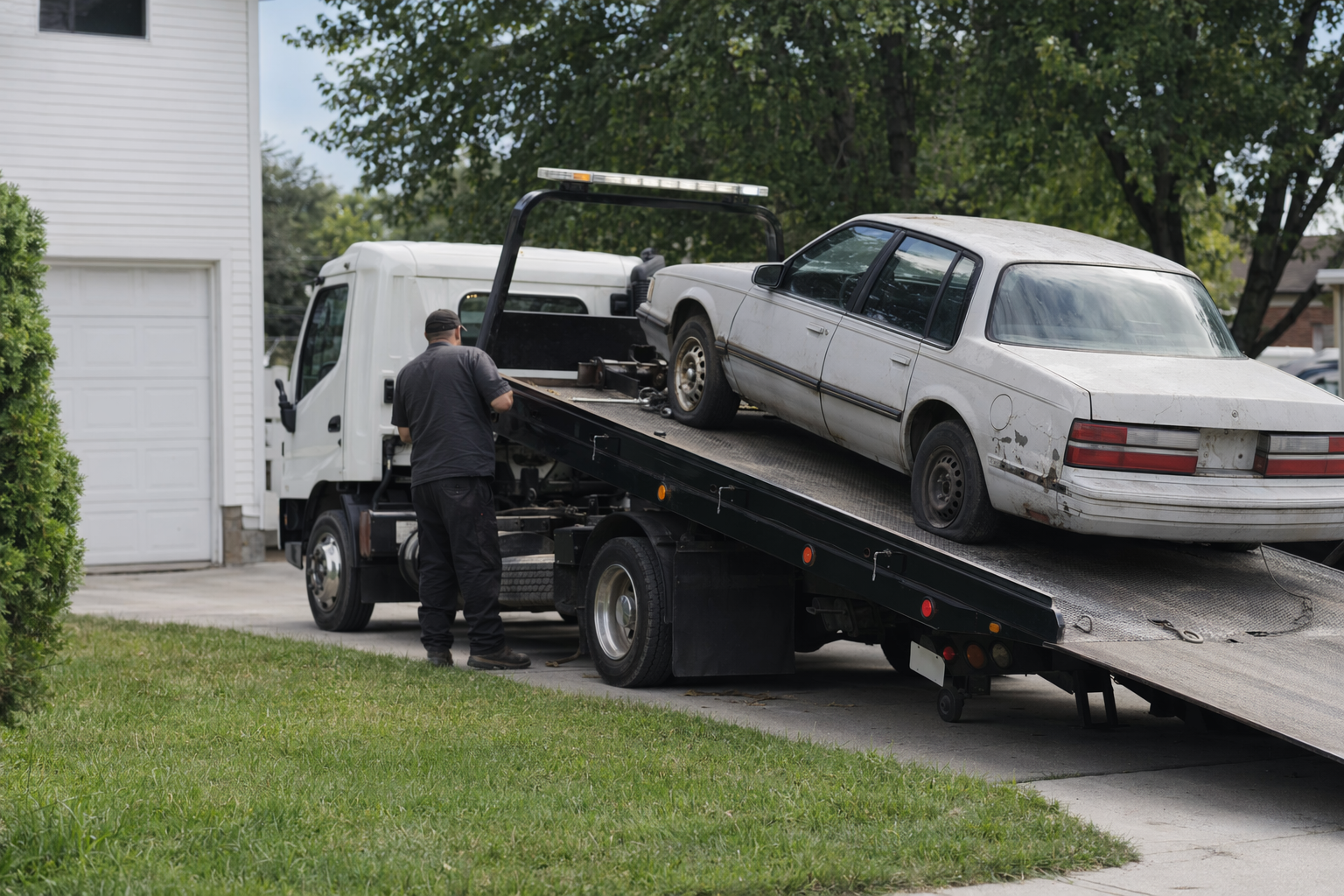
When people sell a junk, damaged, flooded, or non-running car, many licensed buyers include pickup in the deal. That is what most people mean by free towing. In simple terms, the buyer arranges the truck and pays the towing cost, so you do not pay that bill separately.
But there is an important catch: free towing is not a law and not a guarantee. It is just one part of the buyer's terms. Some buyers include it only within a certain distance. Some include it only if the car is complete and easy to load. Some may lower the cash amount they are willing to pay if the car is far away, missing major parts, stuck in a garage, or needs special equipment.
That is why the real cash amount is always a range and estimate, not a promise. It depends on the year, make, model, condition, weight, location, and current scrap and parts prices. As a rough guide, an older running car sold whole might land around $300-$1,500. A non-running car with a dead engine might be around $150-$600. A wrecked or flood car may be around $150-$900. Scrap-only vehicles are often around $100-$500. Heavier trucks and SUVs can be around $250-$1,200 based partly on scrap weight.
If you want to compare how pricing works before pickup is even discussed, read how junk car prices work.
What free pickup should include before you say yes
Before you agree to any pickup, ask for the details in writing. A text or email is better than a phone promise. Keep it simple and direct.
You want to confirm:
- Who is coming to pick up the car
- The buyer's business name
- That the buyer is licensed and insured
- The exact pickup address
- Whether towing is fully included
- Whether there are any extra fees for distance, winching, stairs, tight access, flat tires, missing wheels, or no keys
- The payment amount or price range discussed and whether anything could reduce it at pickup
- The payment method and when you get paid
- What documents they expect at pickup
Also ask one very direct question: "Will I owe anything at pickup, yes or no?"
If the answer is vague, slow down.
A trustworthy buyer should be able to explain the plan in plain English. You should not have to guess whether the tow truck driver will ask for money when they arrive.
If you are still comparing options, get matched here and review the details carefully before choosing who to deal with.

How to protect yourself on pickup day
Pickup day is where people get burned. The problem is usually not the first phone call. The problem is the last-minute change.
Use this checklist:
- Verify the buyer's license yourself. Do not rely only on what someone tells you on the phone. Deal only with licensed, insured buyers.
- Keep your title and ID safe. Do not text more personal information than needed. ScrapRoute only needs basic vehicle and contact details for matching, not sensitive records.
- Do not hand over the title or keys until you are paid. This is one of the biggest rules.
- Confirm the final amount, towing terms, and any fees in writing before the truck starts loading the car.
- Ask for a receipt or bill of sale if your state uses one.
- Remove your personal items. Check the glove box, trunk, under seats, and your license plate area if your state requires plate removal.
- Confirm your state's title rules with the DMV. Title and lien rules vary by state. This is general information, not legal advice.
If title paperwork is part of your situation, see title transfer basics. The main idea is simple: you stay in control until payment is made and the paperwork is clear.
Common free-towing mistakes people make
A lot of bad pickup experiences come from a few common mistakes.
- Focusing only on the highest number first. A bigger number means little if fees show up later.
- Not mentioning the real condition. If the car has no wheels, no catalytic converter, front-end damage, flood damage, or is blocked in, say so early. Hidden problems often lead to lower day-of-pickup numbers.
- Assuming all non-running cars are treated the same. A car that rolls and steers is different from one that is seized, locked, or buried in a backyard.
- Letting the truck load first and arguing later. Once the car is hooked up, people feel pressured. Confirm everything first.
- Giving up the title too early. Never do this before payment.
- Not checking for liens or state paperwork rules. A buyer may need different documents depending on your state.
For non-runners, the towing question matters even more because special equipment may be needed. If that is your situation, read selling a non-running car.
A simple rule: the easier you make the facts to understand, the easier it is to compare buyers fairly.
What used-parts buyers should know about pickup and delivery
ScrapRoute also helps people find affordable used auto parts. If you are looking for a used engine, transmission, door, wheel, or another recycled part, you may hear similar words like pickup, delivery, loading, or freight.
That is different from free towing for a whole car.
For parts, ask these questions instead:
- Is the part available now or coming off a vehicle later?
- Is the price for the part only, or does it include delivery?
- If it is a big item like an engine or transmission, is it installed-ready, or does it need extra parts moved over?
- Are there core charges, loading fees, pallet fees, or freight costs?
- What is the warranty period, if any?
- Can the seller confirm the year, make, model, engine size, and transmission type match your vehicle?
As honest ranges, a used engine is often a few hundred dollars up to about $1,500 installed-ready depending on the vehicle and condition. A used transmission is often around $300-$1,200. Those are not quotes or guarantees. They vary with supply, mileage, compatibility, and local demand.
If you are shopping for parts instead of selling a whole car, start at find used parts.
Your best next step
If a buyer says towing is free, treat that as a term to verify, not a promise to assume. Get the details in writing. Verify the license yourself. Confirm whether any fees can appear later. Keep your title and keys until you are paid.
A good next step is to compare a few local options and look at the full picture, not just the first number you hear:
- the expected cash range
- whether pickup is included
- how soon they can come
- whether the buyer is licensed and insured
- whether the terms are clear in writing
If your vehicle is damaged or wrecked, you can also review selling a damaged or wrecked car. The goal is not to move fast at any cost. The goal is to deal safely, understand the terms, and choose the option that works for you.
If someone says towing is free, ask what that really includes, get it in writing, verify the buyer's license yourself, and do not give the title or keys away until you are paid.
Common questions
Does free towing mean I will never pay anything?
Not always. Many licensed buyers include pickup at no separate charge, but some may have limits based on distance, access, missing parts, or special loading needs. Ask for the towing terms and any possible fees in writing before pickup.
Can a buyer lower the amount when the tow truck arrives?
They may try if the vehicle condition is different from what was described, or if access is harder than expected. That is why you should describe the car honestly, ask what could change the amount, and confirm the terms in writing before pickup. Do not hand over the title or keys until you are paid.
What if I do not have the title with me right now?
Rules vary by state, and lien status matters. Some buyers can handle certain no-title situations depending on state law, but you need to confirm your state's rules with the DMV. This is general information, not legal advice. Keep your ID and paperwork safe and verify what documents are needed before scheduling pickup.
Is ScrapRoute the company that tows my car or pays me?
No. ScrapRoute is a free matching service. We help connect car owners and parts buyers with licensed salvage yards, auto recyclers, and cash-for-cars buyers. You compare options, choose who to deal with, and confirm the final terms directly with that business before any pickup or payment.