Transferring the title and plates
Selling a junk car is not just about the cash. It is also about handling the title, plates, and paperwork the right way so you do not get stuck with someone else’s problem later.
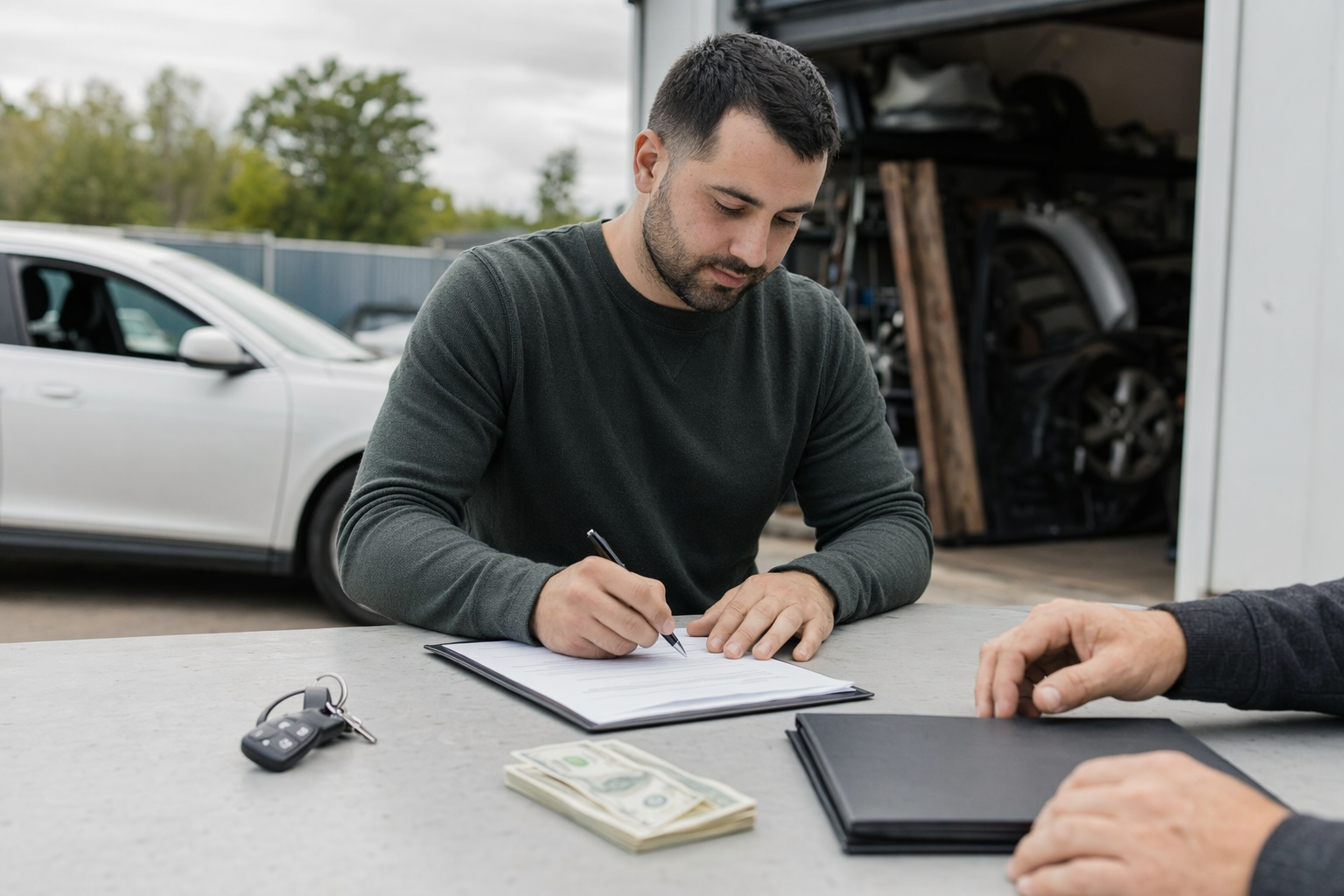
Start with the title before pickup day
If you plan to sell a junk, damaged, or non-running car, the title matters almost as much as the car itself. Many licensed buyers prefer a clear title because it helps them document the purchase and follow state rules. If you are not sure where your title is, check before you schedule anything.
A few basic truths help:
- A title shows who owns the vehicle.
- If there is a lender listed, there may still be a lien.
- Some states have special rules for older cars, abandoned cars, or vehicles with missing paperwork.
- Title rules vary by state, so always confirm the exact requirements with your own DMV.
ScrapRoute is a free matching service. We help you connect with licensed, insured buyers so you can compare options and ask the right questions. If you want a starting point before talking to buyers, see title transfer help and how junk car prices work.
Keep this mindset: you compare offers, you choose the buyer, and you confirm every document step before pickup.
What to check on the title
Before you meet a buyer, take a slow look at the title itself. Small mistakes can create delays.
- Make sure the name on the title matches your ID, or confirm with your DMV what proof you need if the name changed.
- Check whether there is a lienholder listed.
- Look for damage, missing pages, unreadable sections, or old corrections.
- Do not sign the title early unless your state specifically allows that and you know exactly where to sign.
- Ask the buyer what paperwork they need in writing before pickup.
Many people get rushed at pickup. That is where problems happen. A driver shows up, asks for the keys, says the office will handle the paperwork later, and leaves with the car. Do not do that. Do not hand over the title or keys until you are paid and the written terms match what you agreed to.
If your car still runs, or if you want to compare likely value before talking to anyone, you can also review junk car selling basics or start with get matched here.
Remember, any dollar amount you hear is only a typical range or estimate, not a guarantee. The real cash offer depends on the year, make, model, condition, weight, location, and current scrap and parts prices.

If there is a lien, clear that up first
A lien means a lender or finance company may still have a legal claim on the vehicle. Even if the car is old, wrecked, or not worth much, a lien can still block a clean sale.
Here is the simple version:
- If you still owe money, ask the lender what must happen before the title can be transferred.
- If the loan was paid off, ask whether you should have received a lien release already.
- Keep copies of any payoff letter or lien release document.
- Confirm with your DMV whether the lien must be removed from the title record before sale.
Do not assume the buyer can "take care of it." Some buyers may be willing to discuss next steps, but you should verify the rule yourself with your state DMV. This is general information, not legal advice.
If the title is missing, the lien was paid long ago, or the paperwork is confusing, call your DMV before pickup day. One phone call can save you from a failed pickup or a lower estimate.
That is especially true for non-running and damaged vehicles, where owners often just want the car gone fast. Fast is fine. Unclear ownership is not. If your vehicle is dead, wrecked, or flooded, you can still compare licensed buyers through non-running car help or damaged and wrecked car help.
Plates, registration, and the DMV notice
A lot of sellers focus on the title and forget the plates. That can come back to bite you.
In many states, plates stay with the seller, not the car. In others, the rules can differ by plate type or transaction. Some states also want you to file a release of liability, seller notice, notice of transfer, or similar DMV record after the sale.
Because the exact steps vary, confirm with your state DMV. In general, ask these questions:
- Do I remove the plates before pickup?
- Do I keep the registration card or part of it?
- Does my state require a release of liability or seller notice?
- Is there a deadline to notify the DMV after the vehicle is sold?
- Should I cancel or update my insurance after pickup is complete?
A good rule is to remove personal items, remove plates if your state says to, and keep proof of the sale date. That proof can help if tolls, tickets, or other problems show up later.
Also confirm towing terms in writing before pickup. Some buyers include towing, some may have conditions based on location, access, or vehicle condition. Learn what "free towing" really means by reading free towing explained.
What paperwork and proof you should keep
After the car leaves, you want a paper trail. Nothing fancy. Just enough to protect yourself.
Keep copies or photos of:
- The front and back of the signed title, if allowed in your state
- Any bill of sale or purchase receipt
- The buyer's business name and contact information
- The pickup date and time
- Written confirmation of the agreed amount, towing terms, and any fees
- Any lien release or payoff paperwork
- Your DMV submission or confirmation number, if your state requires notice after sale
If possible, write down:
- The odometer reading, if your state asks for it
- The plate number
- The name of the person who picked up the vehicle
- A quick note that the keys and title were handed over only after payment
This is not about being difficult. It is about being organized. If something goes wrong, these details matter.
The same practical thinking helps on the parts side too. If you are shopping for used parts instead of selling a car, ask for the exact part fitment, warranty terms, and return policy in writing before paying. ScrapRoute can also help you find used parts through licensed recyclers.
Stay safe and avoid the common title-transfer mistakes
Most bad experiences happen because the seller is rushed, unsure, or trusting the wrong person. You can lower that risk with a few simple habits.
- Deal only with licensed, insured buyers and verify the license yourself.
- Never hand over the title or keys until you are paid.
- Confirm the amount, pickup window, towing, and any fees in writing before the truck arrives.
- Do not share more personal information than needed. Vehicle details and contact details are usually enough to get matched. Do not treat your VIN, financial account numbers, SSN, or sensitive records as standard intake items.
- Remove personal papers, mail, toll tags, garage openers, tools, and anything with your address on it.
- Take photos of the car before pickup, especially if it is damaged.
Watch for red flags:
- The buyer will not give a business name.
- The driver asks you to sign blank paperwork.
- The amount changes at pickup without a clear reason.
- Surprise towing or paperwork fees appear at the last minute.
- You are told to leave the title unsigned and "the office will fill it in later."
If anything feels off, stop. You can always compare another option. That is the point of a matching service. ScrapRoute helps you connect with buyers, but you stay in control. For more practical warning signs, read how to avoid junk car scams.
Before you sell your junk car, check your title, ask about any lien, confirm your state's plate and DMV rules, and keep copies of everything. Only deal with licensed, insured buyers, and never give the title or keys until you are paid and the written details are clear.
Common questions
Can I sell a junk car if I lost the title?
Maybe, but it depends on your state and the vehicle. Some states allow other ownership documents in limited cases, and some require a replacement title first. Confirm the rule with your DMV before pickup. Do not assume a buyer can solve missing-title issues for you.
Do I remove the license plates before the car is picked up?
Often yes, but not always. Plate rules vary by state, and sometimes by plate type. Check with your DMV so you know whether to remove the plates, return them, transfer them, or keep them with your records.
What if there is still a lien on the car?
Contact the lender first. If money is still owed, ask what must happen before the title can be transferred. If the loan was paid off, ask for any lien release paperwork you still need. Then confirm with your DMV whether the lien must be cleared from the title record before sale.
When should I sign the title and hand over the keys?
Only when you are ready to complete the sale, the paperwork is correct, and you have been paid. Never hand over the title or keys early. Confirm the amount, towing, and any fees in writing before pickup, and verify the buyer's license yourself.