How to Find a Used Engine
A used engine can save real money, but only if you get the right match and ask the right questions. The goal is simple: find an engine that fits your car, understand its condition, and deal only with licensed, insured sellers you can verify yourself.
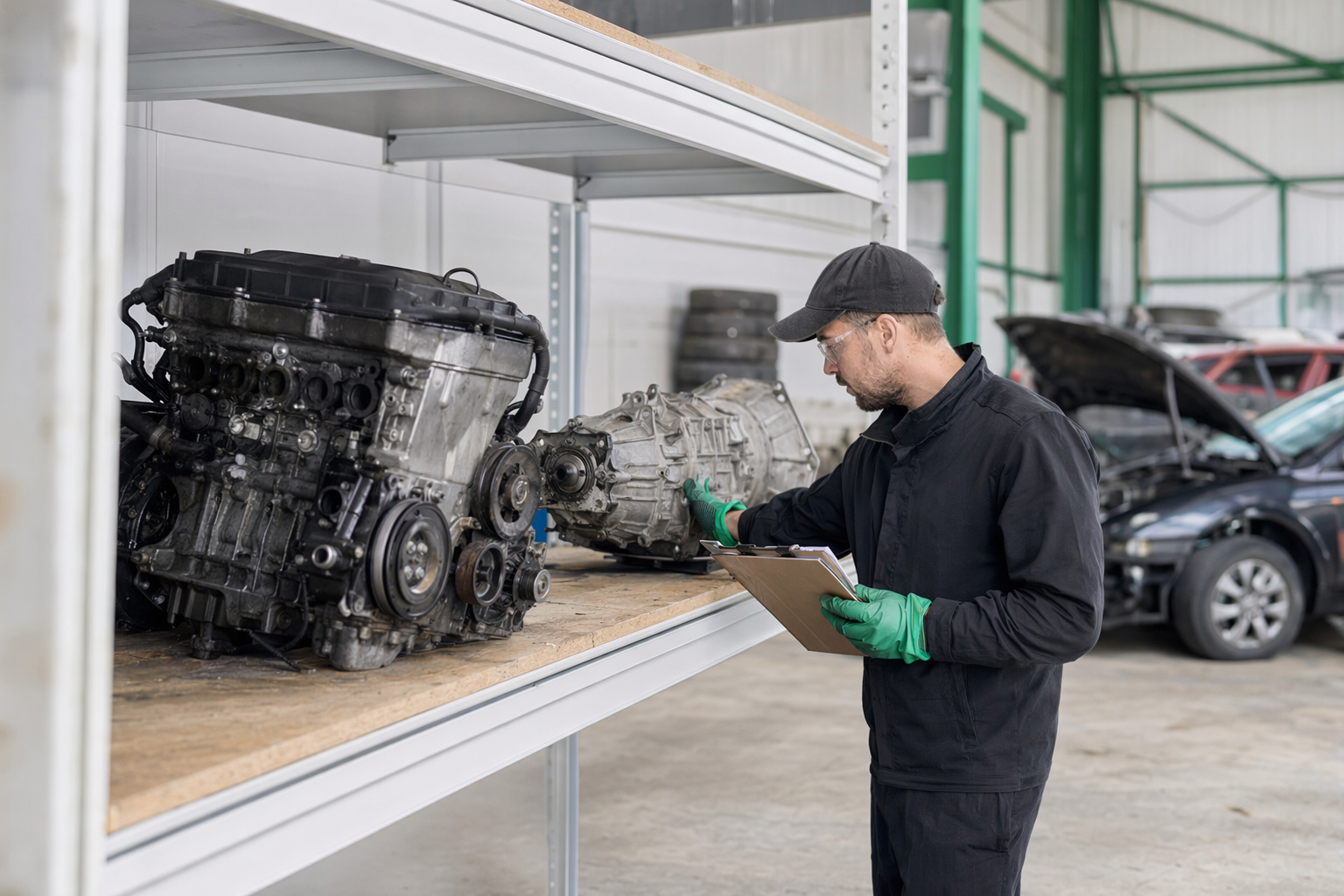
The short answer
If you need a replacement engine, start with the exact vehicle details: year, make, model, engine size, fuel type, drivetrain, and whether your car has any emissions or computer differences. A used engine often costs a few hundred to about $1,500 installed-ready depending on the vehicle and what is included, but the real price depends on mileage, condition, availability, and your location.
The safest path is to compare more than one source and ask for the same facts from each one:
- engine code or fitment details
- mileage, if known
- what parts are included with the engine
- warranty terms, if any
- shipping or delivery cost
- return policy and core requirements
ScrapRoute is a free matching service. We do not sell engines or handle payment. We help you connect with licensed auto recyclers and parts sources so you can compare options and choose what works for you. If you also need another major part, see used engines and transmissions.
What information you need before you search
Many used-engine problems happen before the engine is even bought. The buyer says, "I need an engine for my Honda," but that is not enough. The right fit can change within the same model year.
Before you start, gather these details:
- Year, make, and model of the vehicle
- Engine size such as 2.4L, 3.5L, 5.3L
- VIN-friendly fitment details if available from your mechanic or records, but do not treat the VIN as a requirement when starting your request
- Transmission type if it affects compatibility
- 2WD or 4WD / AWD when relevant
- Federal or California emissions setup if your car has that distinction
- Your ZIP code for local availability or shipping
It also helps to know what failed on your old engine. A dead engine from overheating may have damaged other parts. If your mechanic says you also need accessories, wiring, sensors, or computer programming, ask that before you compare used engines.
A good parts source should be willing to explain whether the engine is being sold as a long block, short block, or complete pullout. That matters. One low price may look good until you learn it does not include manifolds, sensors, harnesses, or accessories you still need.
If you are just starting your search, you can use find used parts to get matched at no cost with licensed sources and compare what is actually available near you.

How to compare used engines without getting burned
A cheap used engine is not always a good deal. Compare the details, not just the number.
Here is a practical checklist:
- Mileage: Lower is usually better, but condition and maintenance history matter too.
- Compression or test information: Ask whether the engine was tested, inspected, or run before removal.
- What is included: Intake, exhaust manifolds, fuel system parts, sensors, turbo, wiring, and accessories may or may not be included.
- Warranty: Ask how long it lasts, what it covers, and what voids it.
- Return rules: Ask who pays if the engine is wrong, damaged, or not as described.
- Shipping or delivery: Ask for total cost in writing.
- Core charge: Ask whether you must return your old engine and by when.
A few smart questions can save you hundreds of dollars:
- Was the donor vehicle running before dismantling?
- Do you know the mileage on the donor vehicle?
- Is this engine the exact fit for my year, trim, and emissions setup?
- What is included with the engine as sold?
- Are there any missing sensors, covers, or accessories?
- Is there a startup warranty, parts-only warranty, or longer coverage?
- What happens if my mechanic finds a fitment issue?
Always deal only with licensed, insured sellers and verify the license yourself. Keep your payment records, part description, and warranty terms in writing. If someone avoids basic questions, pressures you, or changes the terms by phone, walk away.
If you also have an old non-running vehicle you may want to sell instead of repair, compare that option too. In many cases, a dead-engine car sells for roughly $150-$600 as a non-running vehicle, depending on the year, make, model, condition, weight, location, and current scrap and parts prices. You can learn more at sell a non-running car.
Common mistakes first-time buyers make
The biggest mistake is buying based on price alone. The second biggest is assuming every same-size engine will fit.
Watch out for these common problems:
- Wrong engine code: Same car, same year, different engine version.
- Missing parts: The engine arrives bare, and now you need sensors, coils, manifolds, or a harness.
- No written terms: The seller promises one thing and delivers another.
- Ignoring labor risk: Even a fair-priced engine becomes expensive if install labor has to be done twice.
- Skipping mechanic input: Your installer may know fitment issues you do not.
A realistic approach is to get the installer involved early. Ask your mechanic what exact engine code they want, what parts must transfer over from the old engine, and whether they prefer a complete pullout or a long block. That one call can prevent the wrong buy.
Also remember that used parts pricing moves with supply and demand. A very common 4-cylinder engine may be easier to find. A turbo engine, hybrid-related setup, or a newer low-mile unit may cost much more.
If you want a broader look at pricing on vehicles and parts markets, how junk car prices work explains why condition, weight, location, and demand change the numbers.
What to do next
If you need a used engine now, keep it simple:
- Gather your vehicle details.
- Ask your mechanic for the exact fitment notes.
- Compare multiple licensed sources.
- Get the included parts, warranty, and total cost in writing.
- Choose the option that gives you the best fit and least risk, not just the lowest price.
ScrapRoute makes the first part easier. Our service is free to you. We match you with licensed auto recyclers and parts sources so you can compare availability and decide who to contact.
Need help starting? Use find used parts if you want to search for an engine, or get an offer if you are thinking about selling the car instead of fixing it.
If you do sell a vehicle, protect yourself: deal only with licensed, insured buyers, verify the license yourself, keep your title and ID safe, never hand over the title or keys until you are paid, and confirm the price, towing, and any fees in writing before pickup. Title and lien rules vary by state, so confirm your state's requirements with the DMV. This is general information, not legal advice.
To find a used engine, first get your car's exact year, make, model, engine size, and fitment details from your mechanic. Then compare a few licensed, insured parts sources, ask what is included and what warranty you get, and make sure the full price is in writing before you buy.
Common questions
How much does a used engine usually cost?
A used engine often runs from a few hundred dollars to about $1,500 installed-ready depending on the vehicle, mileage, condition, and what is included. Some common engines cost less. Hard-to-find, turbo, or newer engines can cost more. Always ask for the total cost, including shipping, accessories, and any core charge, in writing.
What should I ask before buying a used engine?
Ask for the exact fitment, mileage if known, whether it was tested or inspected, what parts are included, warranty terms, return policy, shipping cost, and whether there is a core charge. It is also smart to ask your mechanic what engine code or setup they want before you buy.
Is a used engine worth it compared with selling the car?
Sometimes yes, sometimes no. If the rest of the car is solid, a used engine can be the cheaper path. But if the car also has transmission trouble, flood damage, major rust, or high repair bills, selling may make more sense. A non-running car often brings roughly $150-$600 depending on the year, make, model, condition, weight, location, and current scrap and parts prices.
How can I avoid scams or bad parts sellers?
Deal only with licensed, insured sellers and verify the license yourself. Get the engine details, warranty, delivery terms, and any fees in writing. Do not rely on verbal promises. If the seller will not answer basic fitment questions or pressures you to pay fast, move on. Keep your records and compare more than one option before you decide.