Used engines & transmissions
Need an affordable used engine or transmission? ScrapRoute helps you get matched, for free, with licensed auto recyclers and salvage yards so you can compare options, ask the right questions, and buy more safely.
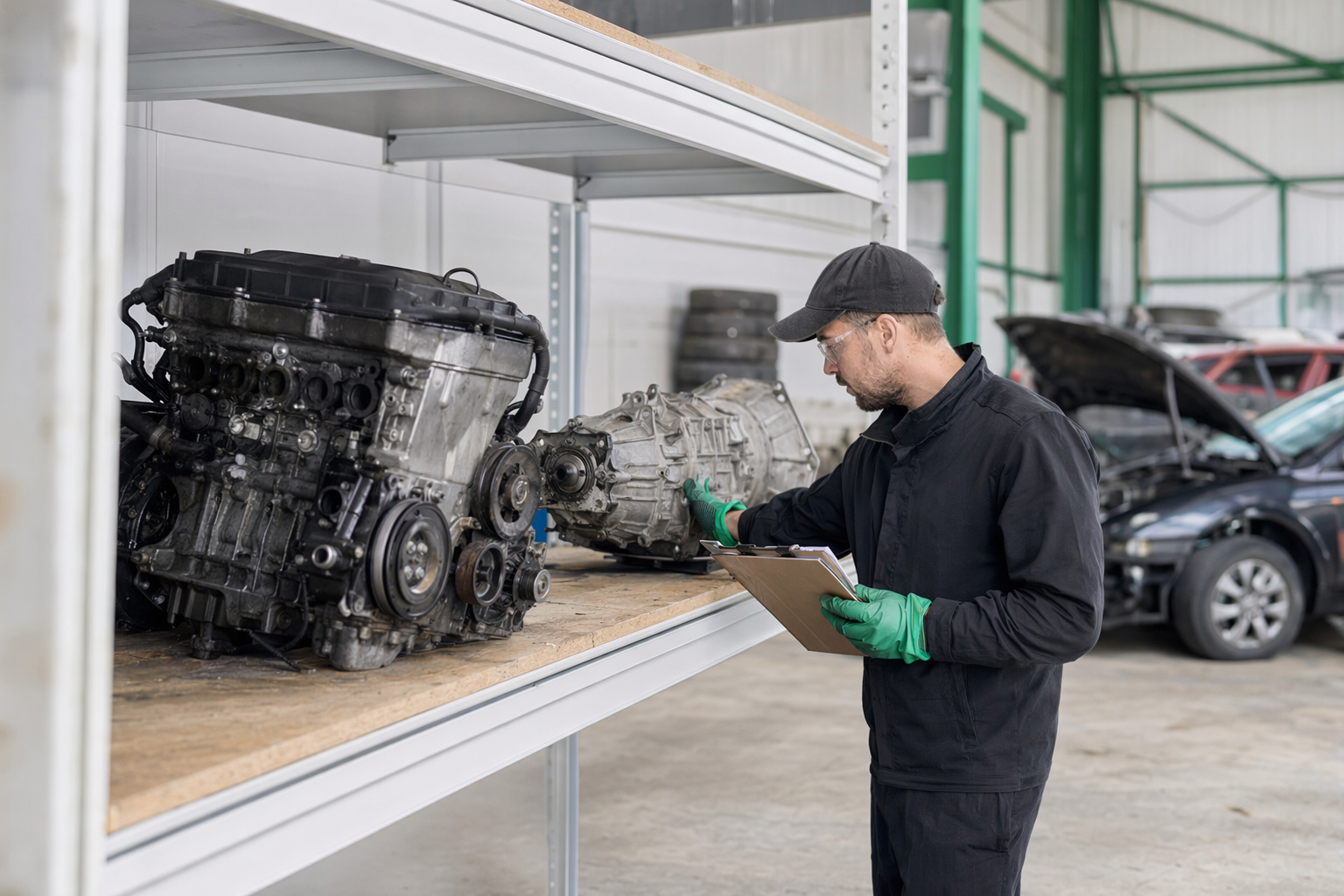
A simpler way to look for used powertrain parts
A used engine or transmission can save real money compared with buying new. For many older cars, it is the only repair that still makes financial sense.
ScrapRoute is not a parts seller. We are a free matching service that helps you connect with licensed salvage yards and auto recyclers that may have the part you need. You compare availability, condition details, warranty terms, and total cost. You decide who to deal with.
If you are not sure whether your car is worth fixing, it can also help to compare the vehicle's likely sale value first at /value/ or see how used engines and transmissions usually work in the recycled-parts market.
For many common vehicles, a used engine may run from a few hundred dollars up to about $1,500 installed-ready depending on the setup, and a used transmission often falls around $300-$1,200. Those are typical ranges, not quotes or guarantees. The real number depends on the year, make, model, mileage, trim, drivetrain, local supply, labor, and whether the part is sold as bare, complete, or installed-ready.
How the matching process works
Getting started is simple. You do not need to hand over sensitive information just to ask for help.
- Tell us the vehicle basics. Usually the year, make, model, engine size, transmission type, and your contact details are enough to start.
- We help match you with participating licensed businesses. These may include auto recyclers and salvage yards in your area or nearby markets.
- You compare the details. Ask each business about mileage, warranty, included accessories, shipping or pickup, and whether the part is tested.
- You choose what works for you. There is no cost to you for the match.
If you are trying to keep repair costs down, you can also start from the general parts page at /parts/find-used-parts/.
A good match starts with accurate information. If your car has more than one engine option or transmission option, say that up front. A wrong-code engine or mismatched transmission can waste days and add labor costs fast.

What affects the price and availability
Two used engines for the same model can have very different prices. Same for transmissions. Here is what usually moves the number up or down:
- Year, make, and model: Common vehicles usually have better supply and lower prices.
- Engine size and transmission type: Turbo engines, diesel engines, CVTs, dual-clutch units, and heavy-duty truck setups often cost more.
- Mileage on the donor vehicle: Lower mileage often brings a higher price, but ask how mileage was verified.
- What is included: A bare engine is different from a complete engine with manifolds, accessories, harness sections, or intake pieces. A transmission may or may not include the torque converter, transfer case, pan, sensors, or cooler lines.
- Testing and grading: Compression results, run-and-drive notes, fluid condition, and recycler grading can affect value.
- Warranty terms: A longer parts warranty may raise the price, but it can still be worth it.
- Local demand and shipping: Hard-to-find parts and long-distance freight can change the total quickly.
If you are deciding between repairing the car or selling it as-is, compare that repair path with what a buyer might typically pay for a non-running or damaged vehicle at /sell/non-running-car/.
What to ask before you agree to buy
This is where people save money or get burned. Ask direct questions. Get the answers in writing.
- What exact part am I getting? Ask for the engine code or transmission code if available.
- What mileage is on the donor vehicle? If the mileage is unknown, ask them to say that clearly.
- Was the donor vehicle running? Ask whether the engine was tested, compression-checked, or heard running. For a transmission, ask whether the vehicle moved under its own power.
- What is included and what is not? Intake, exhaust manifolds, turbo, wiring, ECU-related items, sensors, transfer case, torque converter, flexplate, flywheel, mounts, and accessories all matter.
- What is the warranty? Ask how long it lasts, what it covers, and what voids it.
- What are the return rules? Ask about restocking fees, exchange-only terms, and who pays freight if there is a problem.
- What is the total out-the-door price? Include shipping, core charges, taxes if applicable, lift-gate delivery, and shop delivery fees.
- Can you send photos or tag numbers? This helps confirm the correct part before money changes hands.
A low sticker price is not always the cheapest option. A slightly higher price with clearer testing, cleaner terms, and a real warranty can be the better buy.
Shipping, pickup, and install planning
Large parts are where surprises happen. Engines and transmissions are heavy. Freight, loading equipment, and install details matter.
Before you say yes:
- Confirm how the part will move. Will it be shipped to a home, a repair shop, or picked up in person?
- Ask about freight costs and timing. A cheap part can stop being cheap once pallet shipping is added.
- Check what your installer needs. Many shops want the part delivered directly to them and may require matching sensors, modules, or accessories.
- Ask about core returns. Some sellers charge extra until your old engine or transmission is returned.
- Inspect quickly on arrival. Look for cracked housings, broken connectors, cut harnesses, missing sensors, and shipping damage before installation starts.
If you are trying to decide whether to fix the car or move on from it, compare both paths before spending. Sometimes a used powertrain makes sense. Sometimes it is smarter to get matched with buyers for the whole vehicle through /get-offer/.
If you are selling a car with a bad engine or transmission
A failed engine or slipping transmission does not mean the car is worthless. Many licensed buyers still want vehicles for parts, rebuild projects, or scrap value.
Typical ranges are often lower than for a running car, but they are still worth checking. As a rough guide only:
- Older running car sold whole: about $300-$1,500
- Non-running car or dead engine: about $150-$600
- Wrecked or flood car: about $150-$900
- Scrap-only vehicle: about $100-$500
- Heavier trucks and SUVs by scrap weight: about $250-$1,200
These are typical estimates, not offers. The real cash offer depends on the year, make, model, condition, missing parts, weight, location, and current scrap and parts prices.
If you want to sell instead of repair, see /sell/junk-car/ for the general process. You can compare buyers and choose the one that works for you.
Stay safe and protect yourself
Whether you are buying a used transmission or selling a non-running car, a few simple steps can save you from a bad deal.
- Deal only with licensed, insured businesses, and verify the license yourself.
- Keep your title and ID safe.
- If you are selling a vehicle, never hand over the title or keys until you are paid.
- Confirm the price, pickup or shipping terms, and any fees in writing before anything moves.
- If a business says towing is included when buying your car, confirm whether it is truly free and whether any deductions apply. Our guide on /guides/free-towing-explained/ can help you know what to ask.
- Title and lien rules vary by state. Confirm your own state's requirements with the DMV. This is general information, not legal advice.
- If anything feels rushed, vague, or inconsistent, walk away.
For more ways to spot red flags, read /guides/avoid-junk-car-scams/. The main rule is simple: you compare, you choose, and you confirm everything before payment, pickup, or delivery.
If you need a used engine or transmission, compare licensed recyclers carefully, ask what is included, and get all terms in writing. If the repair cost is too high, you can also compare buyers for the whole car and choose the safer, better fit for your situation.
Common questions
How much does a used engine usually cost?
A used engine often costs from a few hundred dollars up to about $1,500 installed-ready depending on the vehicle, mileage, what is included, and local market conditions. That is a typical range, not a quote or guarantee. The real price depends on the year, make, model, engine type, availability, shipping, and warranty terms.
How much does a used transmission usually cost?
A used transmission often falls around $300-$1,200, depending on the vehicle, whether it is automatic, manual, CVT, or heavy-duty, plus mileage, testing, included parts, shipping, and warranty. It is an estimate only, not a guaranteed price.
Do I need the VIN to start looking for a used engine or transmission?
Usually no. Basic vehicle details such as year, make, model, engine size, transmission type, and contact information are often enough to start the matching process. Some recyclers may later ask for more vehicle details to confirm fitment, but you should not need to provide sensitive personal information just to begin.
Should I repair my car or sell it with a bad engine or transmission?
It depends on the car's age, overall condition, repair cost, and local demand. If the car is otherwise solid and the used powertrain plus labor makes sense, repair may be worth it. If the vehicle has other major problems, high mileage, or title issues, selling it as-is may be the better move. Compare the likely repair total with the vehicle's realistic value and the typical cash range for selling it non-running.