How Junk Car Towing and Pickup Works
If you have a junk, damaged, flooded, or non-running car, pickup is often simple, but this is where people get rushed, confused, or underpaid. Here is the straight answer on how towing usually works, what to confirm first, and how to stay safe.
The short answer: towing is often included, but you need to confirm it
Many licensed buyers and salvage yards may include pickup at no extra cost when they want the vehicle. But do not assume that means every tow is free in every situation.
The real cash amount and whether pickup is included depend on the year, make, model, condition, weight, location, and current scrap and parts prices. A small scrap-only car close to the yard may be easier to pick up than a heavy truck far away. A vehicle with usable parts may bring a higher typical range than one sold only for scrap metal.
Typical ranges many owners see are:
- Older running car sold whole: about $300-$1,500
- Non-running car or dead engine: about $150-$600
- Wrecked or flood car: about $150-$900
- Scrap-only vehicle: about $100-$500
- Heavier trucks and SUVs by scrap weight: about $250-$1,200
These are estimates, not offers or guarantees. The buyer you choose will decide the final amount.
If you want to compare options, start with get-offer or read more about free towing explained.
What usually happens before pickup
A normal pickup should feel clear, not rushed. In most cases, the process looks like this:
- You share basic vehicle and contact details. Usually the year, make, model, condition, whether it runs, and where it is located. You should not need to hand over sensitive records just to get matched.
- You hear from a licensed buyer or yard. They may ask simple follow-up questions about damage, missing parts, tire condition, title status, and access for the tow truck.
- You compare the numbers and terms. Do not focus only on the highest dollar figure. Ask what is included.
- You confirm pickup details in writing. Get the amount, whether towing is included, who is coming, and whether there are any fees.
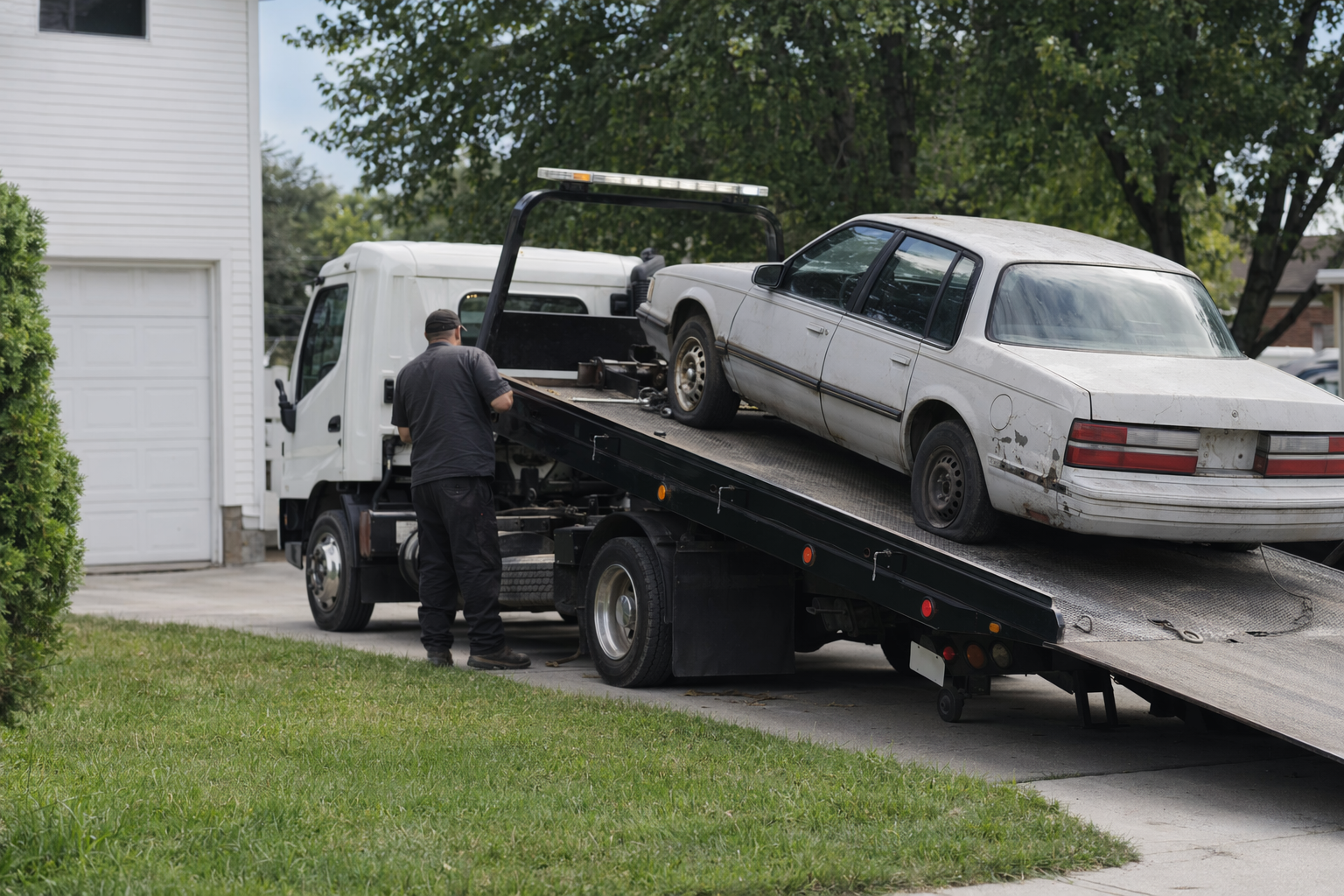
- The driver arrives, checks the vehicle, and loads it. The car may be winched up if it does not run.
- You get paid and then hand over the title and keys. Not before.
A few smart questions can save you a headache:
- Is towing included in the amount you discussed?
- Are there any extra charges for winching, distance, missing wheels, or difficult access?
- What paperwork should you have ready?
- What name and company should the driver arrive under?
- Will the amount change if the condition matches what you already described?
If you want a better idea of what affects the number, see how junk car prices work.

What free towing really means and where people get burned
The phrase free towing sounds simple, but you still need to pin down the details.
Sometimes it really does mean the buyer covers the pickup cost and you pay nothing for the tow. Other times, a person hears one number on the phone and then finds out at pickup that there is a charge for distance, a locked steering wheel, no tires, no keys, or a car stuck in a garage or mud.
That is why you should ask for the full terms in writing before pickup.
Watch for these common problems:
- The amount drops at pickup. This can happen if the driver says the vehicle is in worse shape than expected. Be clear up front about damage, missing parts, and whether it runs.
- Unexpected tow or loading fees. Ask directly if there are any charges for non-running vehicles, flats, missing wheels, or difficult loading.
- Pressure to sign first. Do not sign away ownership or hand over the title before you are paid.
- The driver cannot show company info. Ask who is coming and verify the business license yourself if you can.
- Verbal promises only. If it is not written down, it is easy for terms to change.
A licensed, insured buyer should be able to explain the process without getting angry or vague. If something feels off, stop. You can compare another option.
For more warning signs, read how to avoid junk car scams.
How to get your car ready for pickup safely
You do not need to do much, but a little prep makes pickup smoother.
Before pickup day:
- Remove personal items. Check the glove box, trunk, center console, under seats, and any door pockets.
- Take off plates if your state requires it. State rules vary, so confirm with your DMV.
- Find your title if you have it. If there is a lien, or if the title is missing, ask what your state requires and confirm with the DMV. This is general information, not legal advice.
- Keep your ID safe. Show only what is needed for the transaction.
- Take photos of the vehicle. Get a few pictures before pickup in case there is any dispute.
- Make access easy. Move other cars if needed. Tell the buyer if the car is blocked in, on a narrow street, or in a parking garage.
For title-related basics, see title transfer help.
Most important of all:
- Do not hand over the title or keys until you are paid
- Verify the buyer's license and insurance yourself
- Confirm the amount, towing, and any fees in writing before the truck comes
You are in control. You can say no if the terms change.
What to do next if you want to sell or if you need parts instead
ScrapRoute helps on two sides of the problem.
If you want to sell a car you no longer want:
- Use sell your junk car if the car is at the end of the road
- Use sell a non-running car if it will not start or drive
- Use sell a damaged or wrecked car if it was hit, flooded, or declared a loss
If you are trying to keep another car on the road and need affordable parts instead, you can look for recycled parts through find used auto parts. Common big-ticket items like engines and transmissions can sometimes cost much less used than new. A used engine is often a few hundred dollars up to around $1,500 installed-ready depending on the vehicle, and a used transmission is often about $300-$1,200. Availability depends on the vehicle and local inventory.
The key idea is simple: compare, verify, and confirm everything before pickup or payment. Whether you are selling a car for cash or trying to find a replacement part, taking five extra minutes now can save you from a bad deal later.
Ask what the car is worth, ask if towing is included, get the amount and any fees in writing, verify the buyer is licensed and insured, and do not give the title or keys until you are paid.
Common questions
Do I have to pay for junk car towing?
Not always. Many licensed buyers may include pickup at no extra cost, but you should never assume it. Ask if towing is included, whether there are charges for distance, winching, missing wheels, or hard access, and get the terms in writing before pickup.
Can they pick up a car that does not run?
Yes, many buyers can arrange pickup for a non-running car. The final amount is usually lower than for a running vehicle, and the details depend on the year, make, model, condition, location, weight, and current scrap and parts prices. Tell them clearly if the car has a dead engine, flat tires, or missing parts.
Should I give the title and keys to the driver before I get paid?
No. Keep your title and ID safe. Never hand over the title or keys until you are paid. Also confirm the amount, towing, and any fees in writing before pickup. Title and lien rules vary by state, so confirm your state's requirements with the DMV. This is general information, not legal advice.
What if I do not have the title?
Some buyers may still talk with you about the vehicle, but the rules depend on your state and your exact situation. If the title is missing or there is a lien, confirm what your DMV requires before pickup. Do not rely on general advice from a stranger over the phone.