How to Get Cash for a Junk Car Fast
If you need to move an old car fast, speed matters, but so does safety. The quickest path is usually getting your car details in front of licensed local buyers, comparing responses, and confirming payment and pickup terms in writing before anyone takes the car.
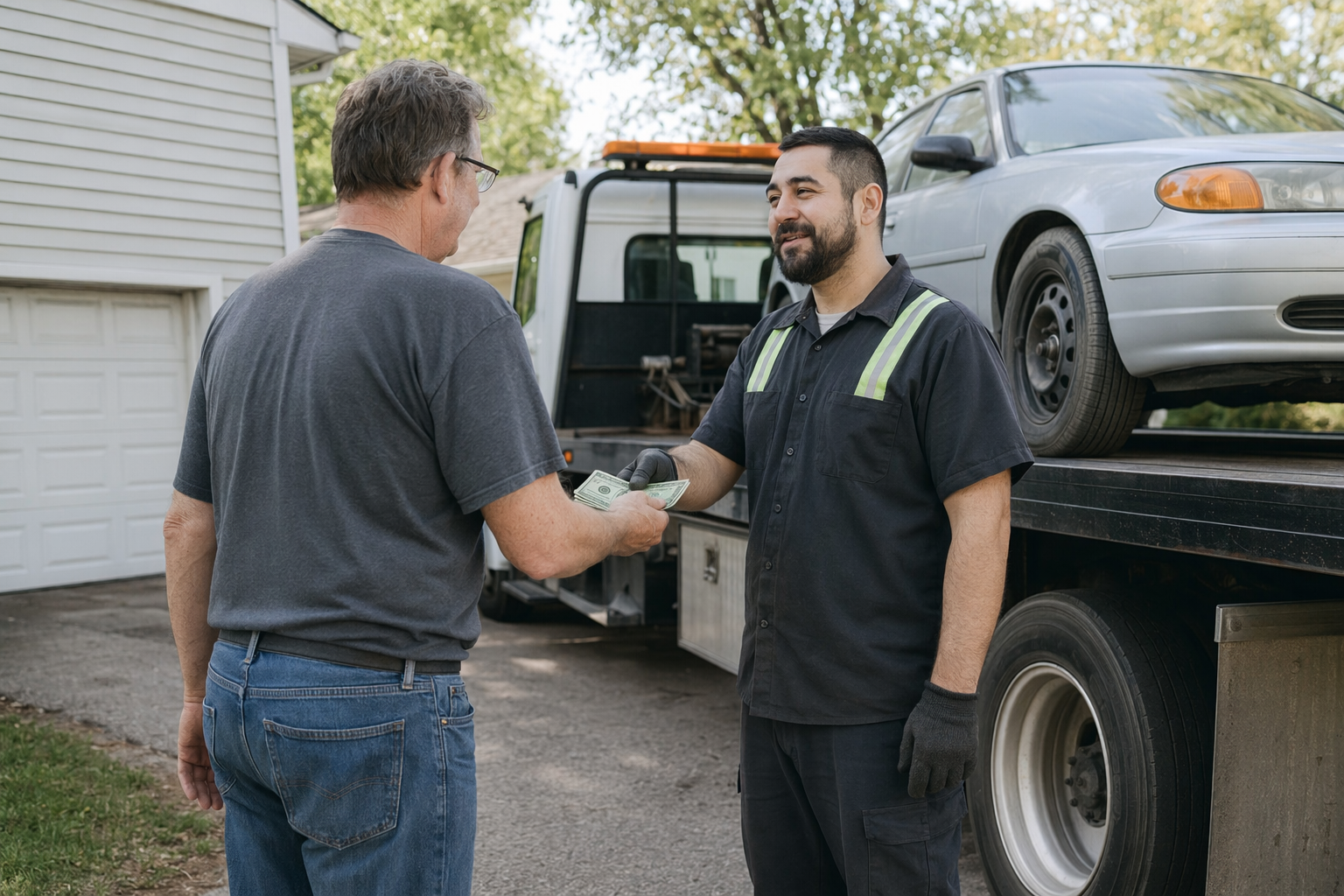
The short answer: fast usually means prepared, not rushed
You can often move a junk car quickly when you do three things right away: gather basic vehicle details, compare interest from licensed, insured buyers, and choose the one that clearly confirms payment, pickup timing, and fees in writing.
A fast sale does not mean taking the first number you hear on the phone. It means making it easy for buyers to evaluate the car without giving away control.
Start with:
- Year, make, model
- Whether it runs, drives, starts, or needs a jump
- Main damage: engine, transmission, body, flood, fire, missing parts, flat tires
- Your ZIP code
- Whether you have the title in hand
Typical ranges are broad for a reason. An older running car sold whole may bring roughly $300-$1,500. A non-running car with a dead engine may be around $150-$600. A wrecked or flood car may be roughly $150-$900. Scrap-only vehicles are often around $100-$500. Heavier trucks and SUVs can land around $250-$1,200 based on scrap weight and usable parts. The real cash offer depends on the year, make, model, condition, weight, location, and current scrap and parts prices.
If you want a place to start, use get-offer to get matched for free, or learn how values are shaped on how junk car prices work.
What actually makes a junk car sell faster
The fastest sales usually happen when the owner answers the questions buyers care about before pickup is discussed.
Here is what speeds things up:
1. Clear condition description
Say what the car does and does not do. "Starts but overheats" is better than "needs work." "Front-end damage, airbags deployed, no radiator" is better than "wrecked."
2. Good photos
You do not need studio pictures. Just take simple photos of all four sides, the interior, the odometer if readable, and the main damage. If a catalytic converter, wheels, battery, or engine parts are missing, say so.
3. Title status upfront
A clean title, salvage title, rebuilt title, or no title can all change buyer interest and timing. Title and lien rules vary by state, so confirm your state's rules with the DMV. This is general information, not legal advice.
4. Pickup access
Tell them if the car is in a driveway, garage, apartment lot, repair shop, impound-related situation, or on a narrow street. Also say if the wheels turn and roll. That affects the truck and equipment needed.
5. Realistic expectations
If the car is complete, popular for parts, or heavy, the range may be stronger. If it is burned, stripped, missing major components, or hard to access, the range may be lower.
For owners with a dead engine or a car that has been sitting, sell a non-running car explains what buyers usually ask. If the car was hit, flooded, or badly damaged, see selling a damaged or wrecked car.

How to avoid losing time or getting lowballed
A lot of "fast cash" problems are really communication problems. Some buyers throw out a high number first, then cut it at pickup. Others mention towing later or charge surprise fees. You can protect yourself without making the process hard.
Use this checklist:
- Deal only with licensed, insured buyers and verify the license yourself
- Ask them to confirm the amount, pickup window, towing terms, and any fees in writing before pickup
- Ask whether the amount changes if the car does not start, has missing parts, or needs special loading
- Keep your title and ID safe
- Never hand over the title or keys until you are paid
- Remove personal items before pickup
- Take off plates if your state requires it, and confirm your state's steps with the DMV
- Do not share sensitive information you do not need to share. Basic vehicle and contact details are usually enough to start
Free towing is common in this space, but not universal, and the details matter. "Free" should still be confirmed in writing, including what happens if the truck arrives and the car needs a winch, dollies, or extra labor. Read more on free towing explained.
If a buyer pressures you to sign first, gives vague answers, or changes terms at pickup, walk away. You compare offers. You choose who to deal with. You confirm everything before any pickup or payment.
A fast step-by-step plan you can follow today
If you want this done quickly, keep it simple.
1. Get your info together
Write down the year, make, model, mileage if known, whether it runs, major damage, title status, and ZIP code.
2. Take 6-10 basic photos
Front, back, both sides, interior, odometer, and the main problem area.
3. Get matched with local buyers
Use a free matching service like ScrapRoute's junk car page or start at get-offer. This helps put your car in front of buyers who handle junk, damaged, and non-running vehicles.
4. Compare carefully, not slowly
You do not need to drag it out for days. But compare more than one response when possible. Ask each buyer the same questions so you can compare fairly.
5. Confirm terms in writing
Before pickup, make sure you have the amount, whether towing is included, pickup timing, and any conditions in writing.
6. Prepare the handoff
Remove personal items. Check the glove box, trunk, under seats, and console. Gather your title if required by your state, but do not sign it over early. Keep your ID with you.
7. Get paid before releasing the car
Do not hand over the signed title or keys until payment is made. If something changes at pickup, stop and review the written terms.
If you are unsure what your vehicle might be worth before you start, check estimated value. Just remember it is an estimate range, not a guaranteed offer.
What if you are deciding between selling the car and keeping it for parts value
Sometimes the fastest money is selling the whole car. Other times, if the vehicle has a desirable engine, transmission, wheels, or body panels, buyers may look at it more like a parts vehicle than pure scrap.
That does not mean you should dismantle it yourself unless you already know what you are doing and your local rules. For many owners, selling the car complete is faster, cleaner, and safer.
If you are on the other side of the problem and need affordable replacement parts, ScrapRoute can also help you find used/recycled auto parts through participating yards and recyclers. Common examples:
- A used engine is often a few hundred dollars to around $1,500 installed-ready, depending on the vehicle and what is included
- A used transmission is often around $300-$1,200
That can matter if your current car is worth saving. Before you junk a vehicle with one major failure, compare the likely sale range against the cost of a used part. You can explore used engines and transmissions or find used parts if repair may still make sense.
The goal is simple: make the decision with real numbers, not pressure. Sometimes selling fast is smart. Sometimes fixing one expensive part is the better move.
Want cash fast for an old car? Gather basic car details, get matched with licensed local buyers for free, compare the written terms, and do not give the title or keys to anyone until you are paid.
Common questions
How fast can I get cash for a junk car?
Sometimes the same day, often within a day or two, but timing depends on your location, vehicle condition, title status, buyer availability, and pickup access. The fastest path is giving clear vehicle details, comparing licensed buyers quickly, and confirming payment, towing, and fees in writing before pickup.
Do I need a title to sell a junk car fast?
In many cases a title helps speed things up, but rules vary by state and by vehicle situation. Some states have exceptions for older vehicles or other documents, and some do not. Confirm your state's title and lien rules with the DMV. This is general information, not legal advice. Keep your title safe and never sign it over before you are paid.
Will the buyer tow the car for free?
Often yes, but do not assume it. Ask whether towing is included, whether there are charges for winching, missing wheels, difficult access, or long distance, and get those terms in writing before pickup. A low number plus free towing can still be better than a higher number with surprise fees.
Should I fix the car first or sell it as-is?
Usually sell as-is if the car has major problems like a dead engine, serious crash damage, flood damage, or multiple failures. Small fixes rarely add enough value to cover your time and money. But if the problem is one part and the rest of the vehicle is solid, compare the likely sale range with the cost of a used replacement part before deciding.