What Scrap Cars Pay Per Ton
The short answer: scrap car prices per ton move up and down all the time, and most people are paid for the whole vehicle, not by a simple ton chart. A light car might bring roughly **$100-$500** as scrap-only, while heavier trucks and SUVs can land around **$250-$1,200**, depending on weight, condition, location, and current metal and parts demand.
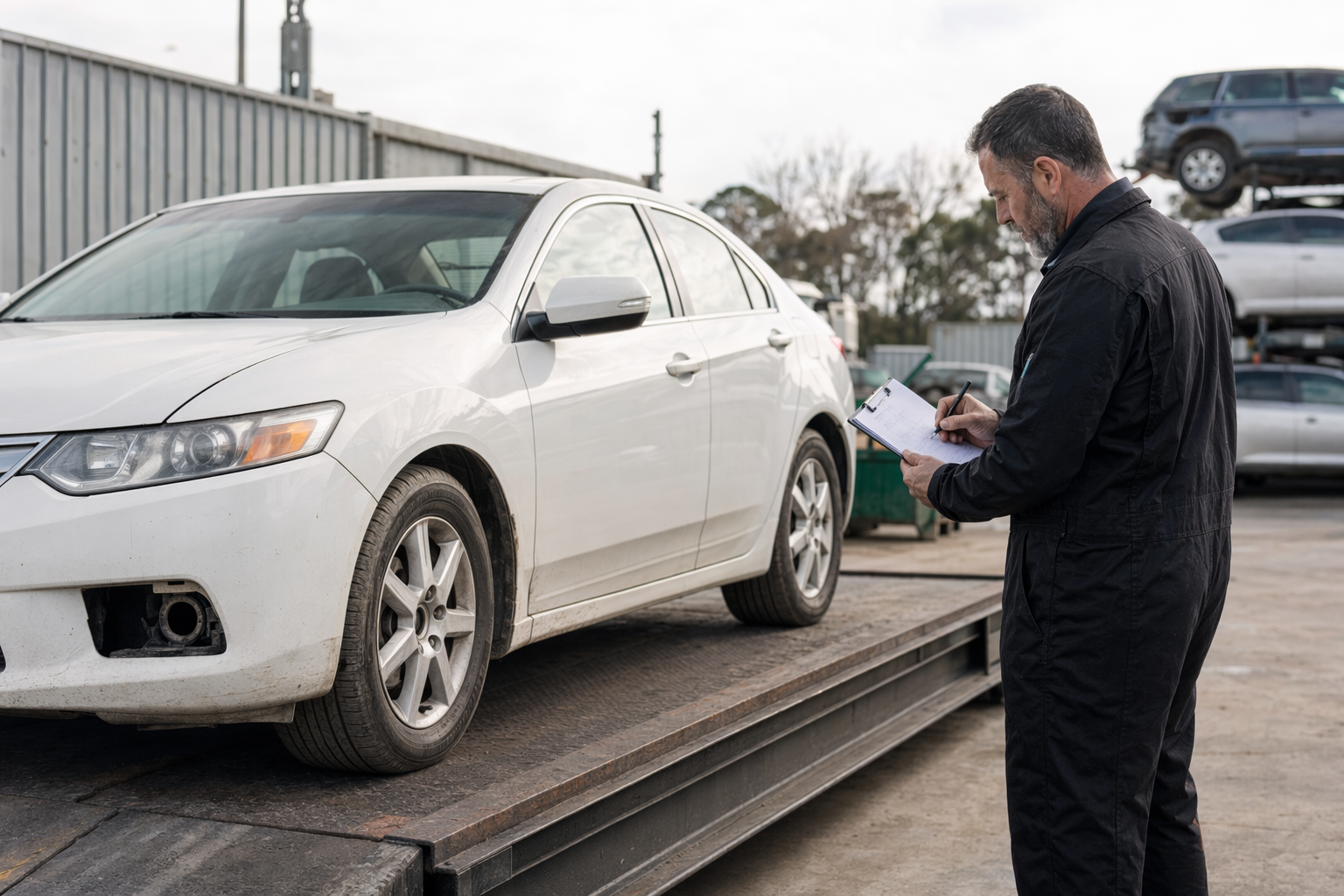
The short answer on scrap price per ton
When people ask what scrap cars pay per ton, they usually want one number. Real life is messier.
A junk car's value is usually based on weight plus parts value plus local demand. If the car is only good for crushing, the buyer may think mostly about scrap metal weight. If it still has reusable parts, that can matter just as much, or more.
Typical scrap-only ranges for many cars in the US are often around $100-$500 total. Heavier trucks and SUVs may be roughly $250-$1,200 total because they weigh more. These are estimates, not offers. The real cash offer depends on the year, make, model, condition, weight, location, and current scrap and parts prices.
So what does that mean per ton? A rough market may work out to a few hundred dollars per ton at one time and less or more at another time, but that number alone can mislead you. A small sedan, large SUV, catalytic converter issue, missing wheels, flood damage, or local towing cost can change the number fast.
If you want to see what affects your vehicle specifically, start with how junk car prices work or compare local matches through get offer.
Why two cars with the same weight can pay very different amounts
Weight matters. But it is not the whole story.
Here are the big things that move the number up or down:
- Vehicle weight: Heavier vehicles usually have a higher scrap floor because there is more metal.
- Condition: A complete vehicle may be worth more than one missing the engine, transmission, wheels, battery, or catalytic converter.
- Parts demand: A common car with a good engine, transmission, doors, or lights may be worth more than pure scrap. If you need replacement parts instead, find used parts can help you compare options.
- Location: Prices change by city, state, hauling distance, and local recycler demand.
- Current metal prices: Scrap steel markets move. What paid well last month may pay less this week.
- Towing cost and access: If the car is stuck, far away, or hard to load, that can affect the number.
- Title status: In many states, title paperwork affects who can buy the vehicle and how simple the sale is. Rules vary by state, so confirm with your DMV. This is general information, not legal advice.
That is why an older running car sold whole may bring roughly $300-$1,500, while a non-running car with a dead engine may be around $150-$600. A wrecked or flood car may land around $150-$900. Some vehicles are worth more as parts cars than as metal only.
The main point: do not let anyone wave around a "per ton" number as if it settles everything. Ask how they reached their estimate and what, if anything, would reduce the payment at pickup.

How to estimate your scrap car's value without getting fooled
You do not need to be an expert to get a reasonable estimate. Use a simple checklist.
- Start with the basics. Know the year, make, model, whether it runs, and what major parts are missing.
- Think about size and weight. A compact car will usually bring less than a full-size truck or SUV if both are scrap-only.
- Be honest about condition. Say if it has flood damage, crash damage, fire damage, no title in hand, or no keys.
- Ask whether the number is for scrap only or for the whole car. This matters a lot.
- Ask about pickup in writing. Confirm whether towing is included and whether any fees may come out of the payment.
A quick rule of thumb:
- Small/light scrap-only car: often at the lower end of $100-$500 total
- Mid-size car with decent weight: often in the middle of that range if it is complete
- Heavy SUV or truck: often $250-$1,200 total if sold mainly for scrap weight
- Non-runner with useful parts: may beat a pure scrap number
If you want a cleaner starting point, you can check vehicle value factors before you compare buyers.
Important safety note: Deal only with licensed, insured buyers and verify the license yourself. Keep your title and ID safe. Never hand over the title or keys until you are paid. Confirm the amount, towing, and any fees in writing before pickup. Title and lien rules vary by state, so check with your DMV. This is general information, not legal advice.
What to do next if you want to sell, or if you need parts
ScrapRoute is for two kinds of people: people who want to sell a junk or damaged car for cash, and people trying to find affordable used parts.
If you want to sell your car, do this:
- Gather basic vehicle details and your contact info. You should not need to give sensitive records just to start.
- Compare matched local buyers through sell your junk car or the more specific page for a non-running car.
- Review each response carefully. You choose who to deal with.
- Before pickup, confirm payment method, towing, timing, and any fees in writing.
- Keep the title until you are paid, and verify the buyer's license and insurance yourself.
If you are looking for parts instead of selling a car:
- Ask for the exact year, make, model, engine size, and transmission type.
- Check whether the part is tested, interchangeable, and whether a warranty is available.
- For major parts like used engines or transmissions, see used engines and transmissions.
One more tip: free towing is common, but not automatic in every situation. Distance, vehicle access, and condition can affect how a buyer handles transport. Read free towing explained so there are no surprises.
The goal is simple: compare options, work only with licensed businesses, and get everything clear before anyone touches the car.
Scrap cars do not have one fixed pay-per-ton number. Your vehicle's real value depends on weight, condition, parts demand, location, and current metal prices. Compare licensed buyers, get towing and fees in writing, and do not hand over the title or keys until you are paid.
Common questions
Is there one standard scrap car price per ton in the US?
No. There is no single national number that applies everywhere. Scrap prices change by region, metal markets, vehicle weight, towing distance, and whether the car has reusable parts. That is why a total vehicle estimate is usually more useful than a simple per-ton figure.
Do scrap buyers pay more for complete cars?
Often, yes. A complete vehicle with major parts still in place may be worth more than one missing the engine, transmission, catalytic converter, wheels, or battery. Some vehicles are valued partly for parts, not just for metal weight.
Can I sell a scrap car without a title?
Sometimes, but rules vary by state and by buyer. Some states are stricter than others, and lien status matters too. Confirm your state's rules with the DMV and ask the buyer what paperwork they require. This is general information, not legal advice. For help understanding the process, see /sell/title-transfer/.
How do I avoid lowball offers or surprise deductions at pickup?
Compare more than one licensed, insured buyer. Verify the license yourself. Get the amount, towing terms, and any fees in writing before pickup. Keep your title and keys until you are paid. Do not rely on a vague verbal promise, and do not let anyone change the deal at the last minute without your approval.