What a Used Transmission Costs
A used transmission can save real money, but the price can swing a lot. The honest answer depends on your vehicle, the transmission type, mileage, local supply, and whether you are buying the part only or a more complete installed-ready unit.
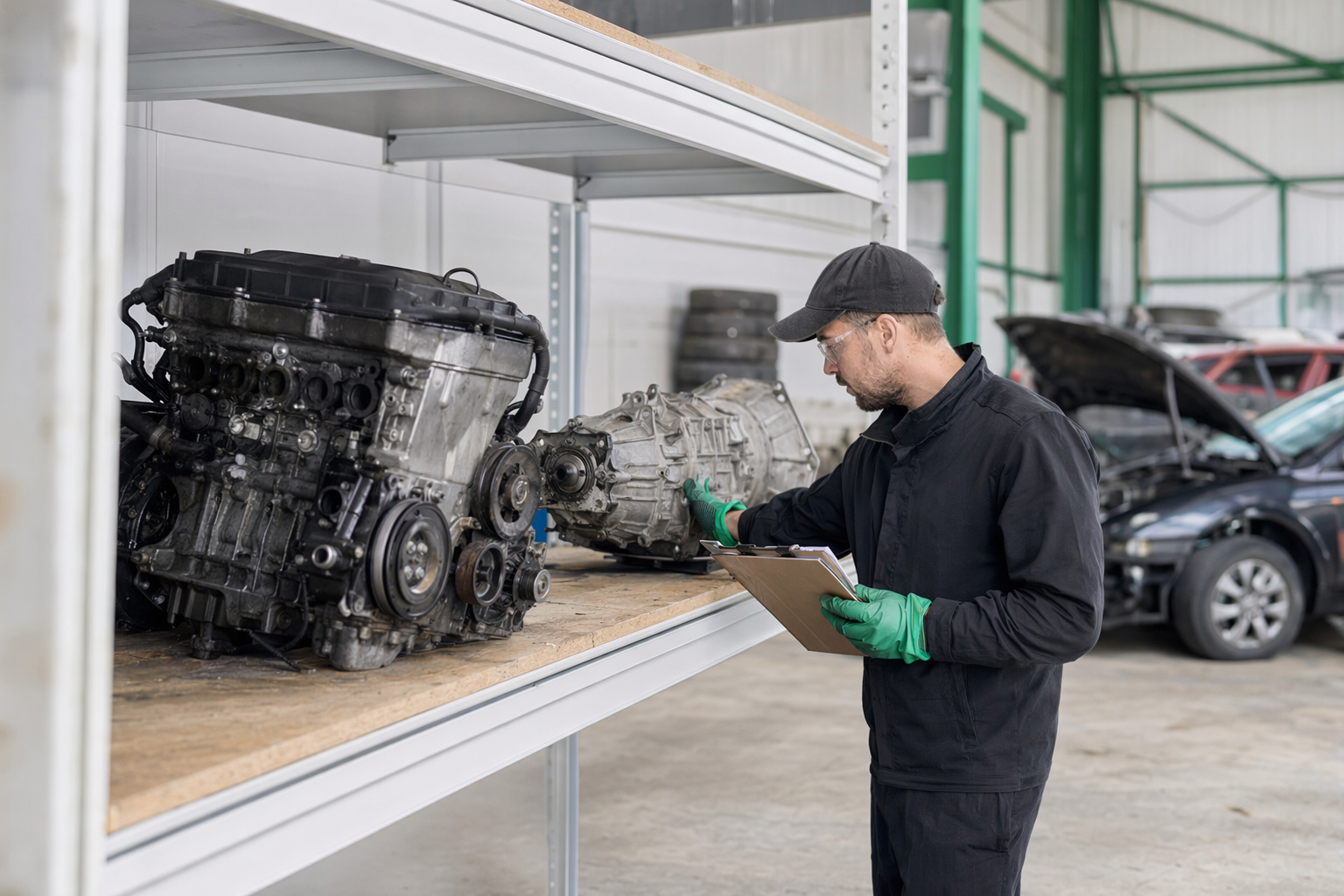
The short answer on price
For many cars in the US, a used transmission is often in the roughly $300-$1,200 range for the part itself. Some common older models may land near the low end. Newer vehicles, less common models, and units with lower mileage can cost more.
If you are comparing a more complete installed-ready used unit, the number may be higher because it can include extras tied to setup, testing, or related components. The real number depends on the year, make, model, drivetrain, transmission type, mileage, condition, location, and current used-parts supply.
A few examples of what buyers often see:
- Older common automatic for a basic commuter car: roughly $300-$700
- Lower-mileage unit for a popular late-model vehicle: roughly $700-$1,200
- Hard-to-find, heavy-duty, CVT, or specialty application: sometimes above that range
If you are still deciding whether to repair your car or sell it, compare both paths before spending money. You can look into used engines and transmissions or see what your current vehicle may be worth through car value basics.
What makes one used transmission cheap and another expensive
Not all transmissions are priced the same, even when the cars look similar from the outside. Here is what usually moves the price most:
- Vehicle year, make, and model. Common vehicles usually have more donor cars in the market. More supply often helps keep prices down.
- Transmission type. A standard automatic, manual, dual-clutch, or CVT can be very different in price and availability.
- Mileage on the donor vehicle. Lower mileage often costs more, but low mileage alone does not guarantee a better unit.
- Whether it was tested. Some sellers list a bare used transmission. Others list a tested pullout or installed-ready assembly. That can change the number.
- Engine and drivetrain match. The same model may use different transmissions depending on engine size, trim, 2WD or AWD, and production date.
- Local inventory. In some areas there are many recyclers with the same unit. In others, the part may need to come from farther away.
- Core and accessory differences. Some listings include extras like a torque converter or linked components. Others do not.
One big lesson: the cheapest listing is not always the cheapest fix. A lower part price can still turn into a more expensive repair if the unit is the wrong fit, has unclear history, or comes with missing pieces that delay the job.

Part-only vs. the real total you may pay
People often ask, "What does a used transmission cost?" The better question is, what is my total repair cost likely to be? The part itself is only one piece.
Your total can change because of:
1. Removal and installation labor at the shop
2. Fluids, seals, filters, programming, or relearn procedures
3. Shipping or delivery if the unit is not local
4. Small parts that should be replaced while everything is apart
5. Taxes and shop fees, if any
That is why a transmission priced at the low end can still become a bigger bill than expected. Ask for a full written breakdown before you agree to anything.
Helpful questions to ask the seller or recycler:
- Is this the exact transmission code or fit for my vehicle?
- What mileage was on the donor car?
- Was the unit tested, and if so, how?
- What is included with the transmission?
- Are there any fees for delivery or handling?
- What happens if the part is not the correct fit?
If you need help locating options, ScrapRoute can help you find used parts through licensed auto recyclers and salvage yards. Matching is free to you, and you can compare choices yourself.
When a used transmission makes sense
A used transmission can be a smart move when the vehicle still has decent life left and the rest of the car is in solid shape. It can also make sense when you need a lower-cost repair on an older car.
It may be worth a closer look if:
- The engine is healthy and the body is still decent
- The car has enough value to justify the repair
- You found a properly matched used unit at a fair range
- You plan to keep the car long enough to benefit from the repair
It may make less sense if:
- The car also needs major engine, electrical, suspension, or body work
- The vehicle has flood damage or serious rust
- You still owe money and are not sure how the title or lien affects a sale later
- The full repair cost gets too close to what the car is worth in running condition
If your transmission is out and the car is not worth fixing, it may be smarter to sell it as-is instead of putting more money into it. Many non-running cars bring roughly $150-$600 depending on the vehicle, weight, condition, location, and parts demand. You can learn about selling a non-running car if repair no longer makes financial sense.
How to compare options without getting burned
Used parts buyers get in trouble when they rush. A few careful steps can save money and stress.
Start with fit first. A transmission that is "close" is not good enough. Confirm the exact match for your year, make, model, engine, drivetrain, and transmission type.
Then compare the details, not just the price. Look at mileage, what is included, whether the unit was tested, and whether delivery changes the total.
Use this simple checklist:
1. Get the exact vehicle details ready.
2. Ask for the part description in writing.
3. Ask what is included and what is not.
4. Ask about delivery timing and any fees.
5. Confirm the final total before you commit.
6. Keep your payment records and messages.
And a few safety basics matter here too:
- Deal with licensed, insured businesses and verify the license yourself.
- Keep your title and ID safe.
- If you are also selling a vehicle, never hand over the title or keys until you are paid.
- Confirm any offer, pickup terms, towing, and fees in writing before the vehicle leaves.
- Title and lien rules vary by state, so confirm your state's requirements with the DMV. This is general information, not legal advice.
If you want to avoid common mistakes on the selling side too, read how junk car prices work.
What to do next
If you think a used transmission is the right move, gather your vehicle details and compare a few options side by side. Focus on fit, mileage, what's included, and total cost, not just the lowest headline number.
If the repair looks too expensive, compare it against the value of selling the car as-is. ScrapRoute helps people do both sides: find affordable used parts and get matched with licensed buyers for a car they no longer want. You stay in control, compare your options, and choose what works best for your budget.
A used transmission often costs about $300-$1,200 for the part, but the real total depends on your car and what is included. Before you buy, confirm exact fit, mileage, testing, and all fees in writing, then compare that total against what your car is worth if you sell it as-is.
Common questions
How much does a used transmission usually cost?
A typical used transmission often falls in the roughly $300-$1,200 range for the part itself, but the real number depends on the year, make, model, transmission type, mileage, condition, location, and current used-parts supply. Some common older vehicles may be lower, while harder-to-find or specialty units may be higher.
Is a used transmission worth buying?
Sometimes yes. It can be a practical choice if the rest of the car is still in decent shape and the full repair cost makes sense for the vehicle's value. It may be a poor choice if the car also has major engine, body, rust, flood, or electrical problems. Compare the full repair total against what the car is worth running and what it may bring if sold as-is.
What should I ask before I buy a used transmission?
Ask whether it is the exact fit for your vehicle, what mileage was on the donor car, whether the unit was tested, what is included, whether there are delivery or handling fees, and how the seller handles wrong-fit problems. Get the details in writing so you can compare options clearly.
Should I repair the car or sell it with a bad transmission?
That depends on the full repair cost and the rest of the vehicle. If the car is otherwise solid, repair may make sense. If the vehicle has multiple problems or the repair gets too close to the car's running value, selling as-is may be the smarter move. ScrapRoute can help you compare both paths by matching you with used-parts sources or with licensed buyers, at no cost to you.