What Paperwork Do I Need to Sell a Junk Car?
The paperwork for selling a junk car is usually simple, but the exact rules depend on your state and your car's title status. The safest move is to get your documents ready early, deal only with licensed buyers, and confirm your state's DMV rules before pickup.
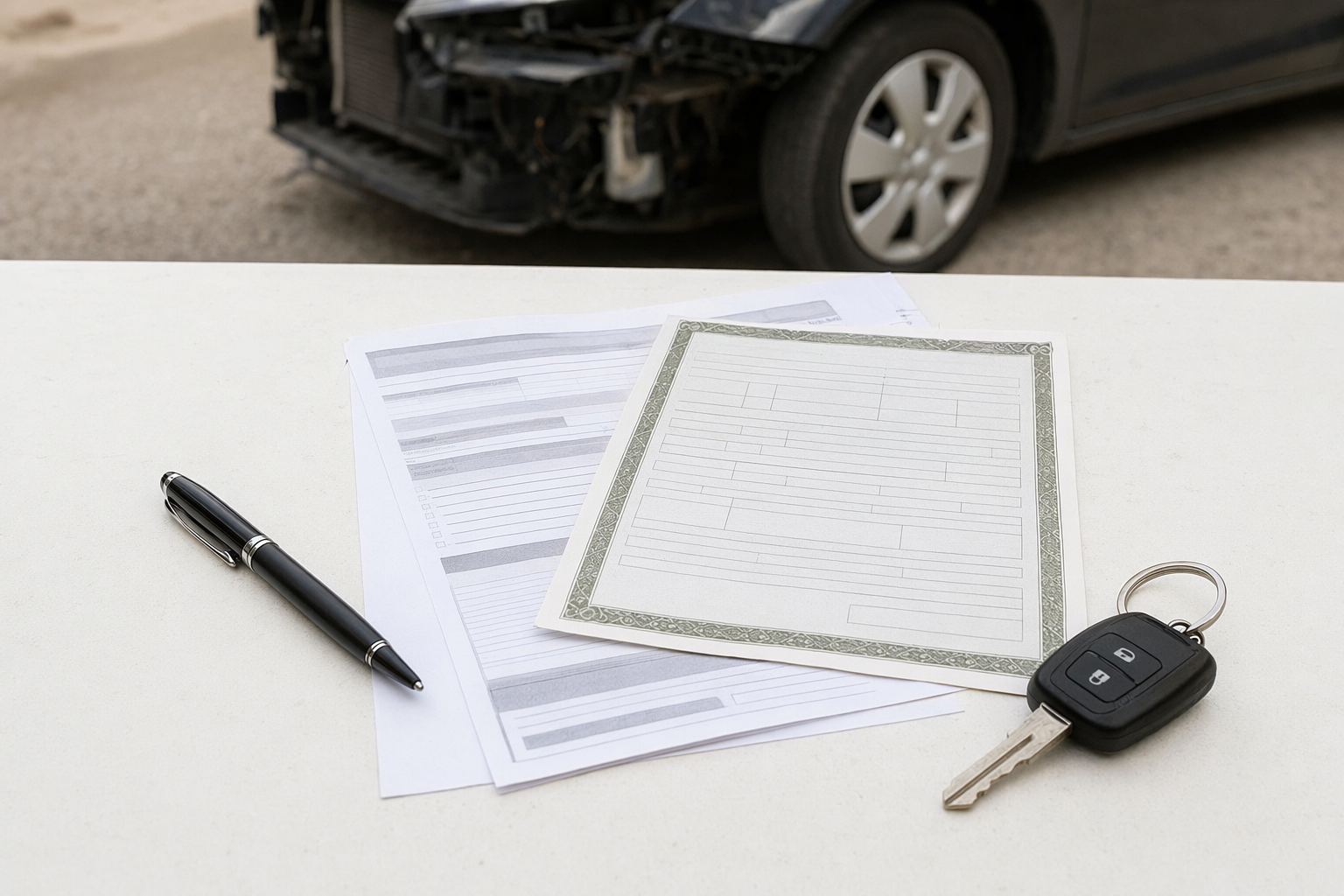
The short answer: start with the title, your ID, and the car details
In many cases, the main document you need is the vehicle title in your name. You will also usually need a valid photo ID and some basic vehicle details like the year, make, model, mileage, and current condition.
If you are trying to sell a car that is old, wrecked, flooded, or not running, buyers may still be interested. But the paperwork still matters. A missing signature, an open lien, or the wrong owner name on the title can slow everything down.
A good starting checklist is:
- Vehicle title if you have it
- Photo ID that matches the owner name
- Basic car details: year, make, model, condition, location
- Any lien release or payoff paperwork, if a lender was involved
- Keys, if you still have them
- Registration or old insurance card, if helpful for identification
If you are not sure what your car may be worth before you gather papers, you can review how junk car prices work or start with get offer to compare your options through ScrapRoute's free matching service.
Important: ScrapRoute does not buy cars or handle title transfers. We help you get matched with licensed buyers and recyclers so you can compare options and choose who to deal with.
What papers are commonly asked for?
Different buyers may ask for slightly different documents, but these are the ones people most often need:
1. The title
This is usually the most important paper. It shows who owns the vehicle. The buyer will want to see that the owner name matches your ID. If the title has a lien listed, you may need proof that the lien was released.
2. A government-issued photo ID
This helps confirm that the seller is the legal owner or is authorized to act for the owner.
3. Lien release, if needed
If you ever had a loan on the car, the lender may need to provide paperwork showing the debt was paid. A title that still shows an unpaid lien can cause problems.
4. Registration, if available
This is not always required, but it can help verify the vehicle information.
5. Keys
Not really paperwork, but buyers often ask whether keys are available. Missing keys do not always stop a sale, but they can affect the final amount.
6. A signed bill of sale or receipt
Some buyers use one, some states expect one, and some owners want one for their records. It is smart to get something in writing that shows the vehicle, date, agreed amount, towing terms, and any fees.
Before any pickup, ask for these details in writing:
- The final agreed price or price basis
- Whether towing is included
- Whether there are any extra fees
- What paperwork they expect at pickup
- When and how you will be paid
If you want more detail on title issues, see title transfer basics. State DMV rules vary, so treat online guides as general information, not legal advice.

What if I lost the title or still have a lien?
This is where many sellers get stuck. A junk car can still have value, but title and lien problems can limit who is willing to buy it and what they can legally do.
If your title is missing:
- Check whether you can request a replacement title from your state DMV
- Make sure the title is in the correct owner's name
- Do not assume an old registration is enough
- Ask the buyer what they require, but verify your state's rules with the DMV yourself
If there is a lien on the car:
- Contact the lender and ask whether the lien is still active
- Request a lien release if the loan was already paid
- If money is still owed, ask what paperwork will be needed to complete a legal sale
- Do not sign over anything you do not understand
Some buyers can work with vehicles that have paperwork problems, but that does not mean every deal is safe. The safest path is to slow down and confirm the rules before pickup.
Watch for red flags:
- The buyer tells you title papers do not matter at all
- They want you to hand over the car first and "fix the paperwork later"
- They pressure you to sign a blank form
- They ask for more personal information than they need
- They refuse to put payment and towing terms in writing
If your car is not running or badly damaged, you can still compare likely options here: sell a non-running car or sell a damaged or wrecked car.
How to protect yourself on pickup day
Most problems happen right before the car leaves. This is the moment to be careful.
Follow these steps:
1. Verify the buyer's license yourself
Deal only with licensed, insured buyers. Ask for the business name and license information, then verify it yourself if your state provides a lookup.
2. Match the paperwork
Make sure the buyer knows the exact vehicle they are picking up. Check the year, make, model, and owner name on the documents.
3. Get the full terms in writing
Confirm the amount, payment method, towing, and any fees before the truck arrives. If they said towing is free, get that in writing. Learn more in free towing explained.
4. Do not hand over the title or keys until you are paid
Keep your title and ID safe. Never let someone take the vehicle first and promise to pay later.
5. Remove personal property
Check the glove box, trunk, center console, under seats, garage opener, toll tags, and license plate instructions for your state.
6. Keep copies or photos of what you sign
Save a photo of the title after signing, the receipt, and any pickup paperwork.
This page is about paperwork, but paperwork and scams often go together. If something feels rushed or unclear, stop. Read how to avoid junk car scams before you agree to pickup.
What to do next
If you want to sell your car, the fastest way to move forward is to gather the basics first, then compare buyers.
- Find your title and ID
- Check for any lien release paperwork
- Write down the car's year, make, model, condition, and location
- Ask what paperwork will be needed before scheduling pickup
- Compare options through a free service instead of taking the first low offer
Typical cash ranges depend on the vehicle and market. For example, an older running car sold whole may land around $300-$1,500, a non-running car with a dead engine around $150-$600, a wrecked or flood car around $150-$900, and scrap-only vehicles around $100-$500. Heavier trucks and SUVs can be higher by weight, often around $250-$1,200. These are estimates only, not offers or guarantees. The real amount depends on the year, make, model, condition, weight, location, and current scrap and parts prices.
If you are ready, you can sell a junk car or check your estimated range at value. ScrapRoute is free to use. Participating buyers pay a flat fee to be listed and matched. You compare, you choose, and you confirm the terms before pickup.
Get your title, ID, and any lien release paperwork together first. Then compare licensed buyers, keep everything in writing, and do not give the title or keys to anyone until you are paid and you have confirmed your state's DMV rules.
Common questions
Can I sell a junk car without a title?
Sometimes, but it depends on your state's rules and the buyer's requirements. In many cases, the cleanest option is to get a replacement title from your DMV before selling. Do not rely on verbal promises. Confirm your state's rules yourself, because this is general information, not legal advice.
Do I need to sign the title before the tow truck comes?
Usually, it is safer to wait until payment is present and the paperwork is fully reviewed. Never hand over the title or keys until you are paid and the written terms match what you agreed to.
What if the car is in a family member's name?
The legal owner usually needs to sign, or the person selling it needs proper authority under your state's rules. The exact paperwork varies by state. Check with your DMV and do not assume a relative can sign without the right documents.
Should I give the VIN when I ask for a price?
Often, basic vehicle and contact details are enough to start the matching process. A VIN may help later with accuracy, but it should not be required just to begin. Be careful about sharing more personal or sensitive information than necessary.