Selling an Inherited or Estate Car
If you need to sell a car from an estate, slow down and protect yourself first. The best price and the smoothest pickup usually come from having the right paperwork, confirming state rules, and dealing only with licensed, insured buyers.
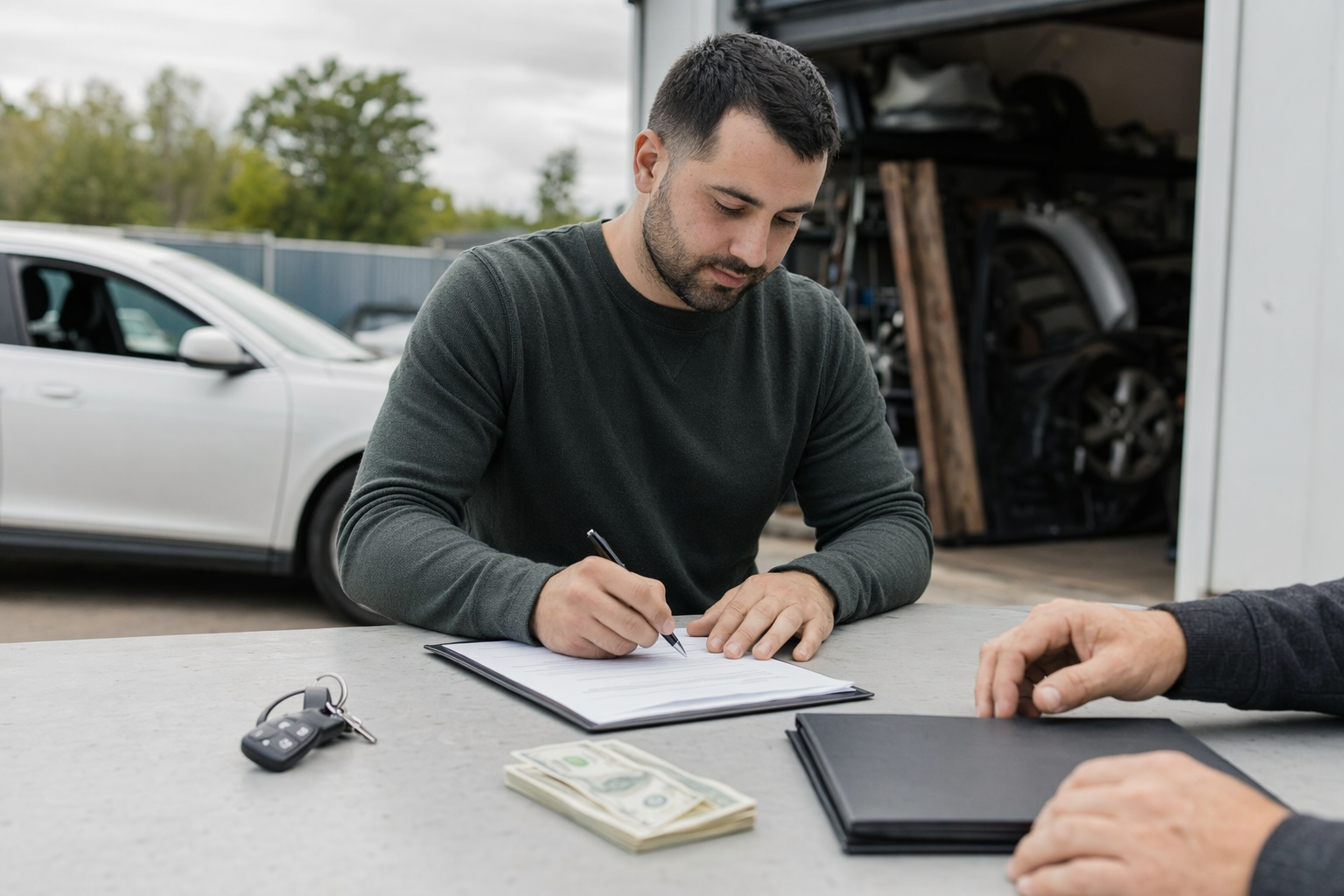
Start with ownership, title, and authority
An inherited car can be simple to sell, or it can get delayed fast if the paperwork is not clear. Before you try to sell it, make sure the person signing has the legal right to do that.
In many cases, the seller may be:
- the surviving owner listed on the title
- an executor or personal representative for the estate
- an heir who received the vehicle through the estate process
State rules are different. Some states allow a simpler transfer for a small estate. Others require probate documents, letters testamentary, a death certificate, or a signed title in a specific format. If there is a lien, the lender may also need to release it before the car can be transferred.
To avoid problems:
1. Find the title, registration, and any lien release.
2. Confirm who is legally allowed to sign.
3. Check your state's DMV rules before pickup.
4. Keep the title and ID secure until you are paid.
This is general information, not legal advice. For state-specific title steps, see title transfer basics.
What affects value on an estate vehicle
Many estate cars have been sitting for months. Some run fine. Some need a battery, tires, towing, or major engine work. The real cash offer depends on the year, make, model, condition, weight, location, and current scrap and parts prices.
A few things matter more than people expect:
- Does it start and move? A running car usually brings more than a non-running one.
- Body and interior condition. Big collision damage, flood damage, missing parts, mold, and broken glass can lower interest.
- How complete it is. Buyers usually pay less for cars missing the catalytic converter, engine parts, wheels, or airbags.
- Paperwork. A clean, ready-to-sign title often makes the process easier.
- Local demand. Some models have stronger used-parts demand than others.
If the vehicle is older but still running and complete, a typical whole-car range might be around $300-$1,500. A non-running car with a dead engine is often more like $150-$600. A wrecked or flood car may land around $150-$900. If it is truly scrap-only, a common range is about $100-$500. Heavier trucks and SUVs may bring around $250-$1,200 based partly on scrap weight.
These are typical estimates, not offers or guarantees. If you want a realistic starting point before you talk to buyers, review how junk car prices work.
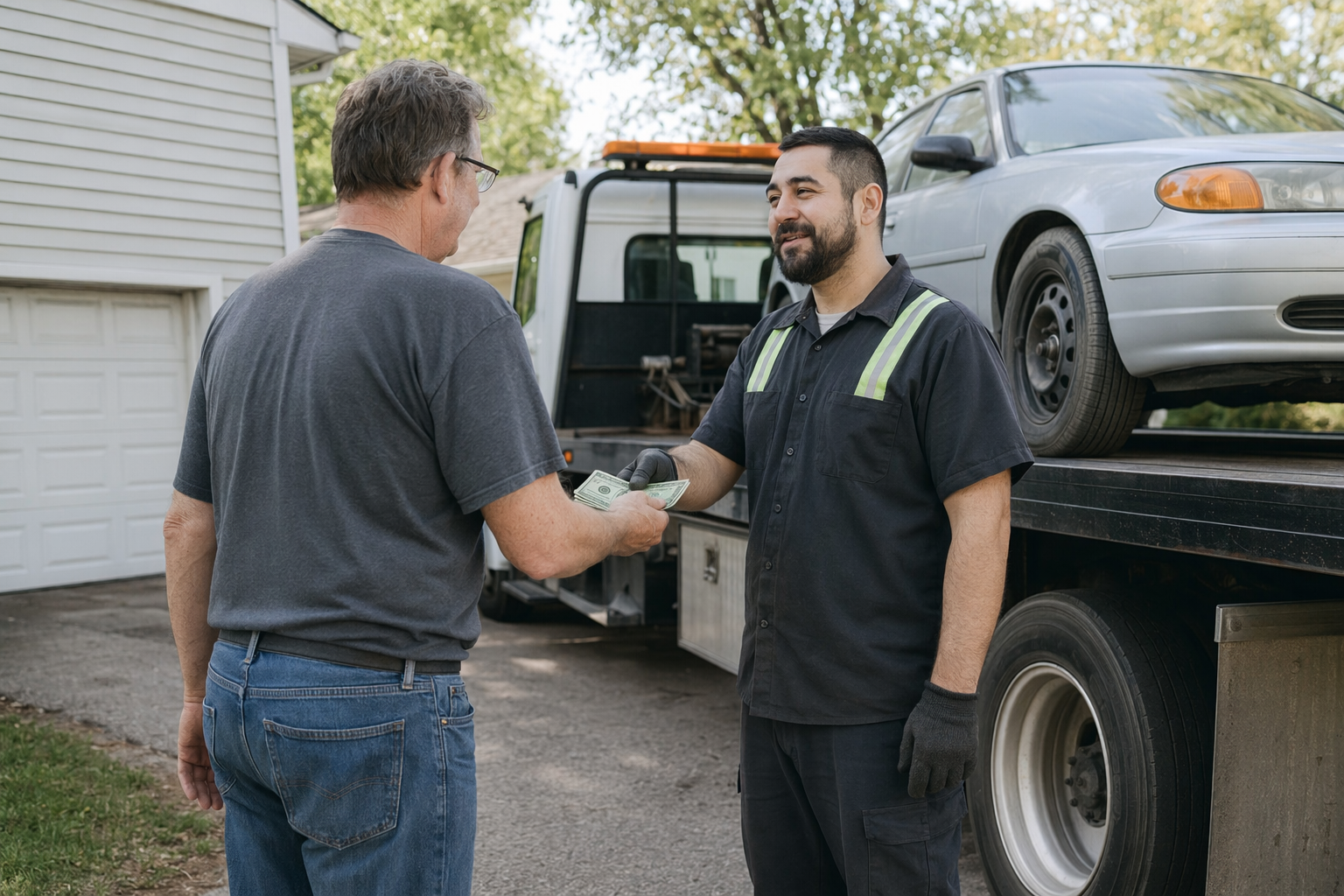
How to sell an inherited car without getting burned
Estate sales can attract lowball buyers because families are busy, grieving, or out of state. A little caution helps a lot.
Use this checklist before you agree to pickup:
- Deal only with licensed, insured buyers or salvage businesses, and verify the license yourself.
- Ask for the final amount, towing, and any fees in writing before pickup.
- Do not hand over the title or keys until you are paid.
- Remove personal items, documents, toll tags, parking passes, and plates if your state requires it.
- Take clear photos of the car and the paperwork condition before pickup.
- If the car does not run, confirm whether towing is included and whether there are any deductions.
A free matching service can help you compare local options without calling around one by one. With ScrapRoute, you compare offers, you choose who to deal with, and you confirm everything before any pickup or payment. You can start at get an estimate and get matched if you are ready.
If the car has been sitting and you are worried about common tricks, read how to avoid junk car scams.
When parts may matter more than the whole car
Some estate vehicles are not worth much as complete cars, but they may still have useful parts. That does not mean you should dismantle the vehicle yourself or expect retail part prices. It just means some models bring more interest because recyclers may value the usable components.
Examples include:
- low-mileage engines or transmissions
- clean body panels, doors, or tailgates
- wheels, tires, seats, or electronics in good shape
- popular trucks, vans, and import models with steady parts demand
This can help explain why two non-running cars that look similar may get very different numbers. One may be valued mostly for scrap weight. Another may have stronger recycled-parts demand.
If you are on the other side of the process and need affordable recycled parts for a repair, ScrapRoute can also help you get matched with sellers of used parts. Start here: find used auto parts or used engines and transmissions.
A simple next step for estate sellers
You do not need every detail to begin. Usually, the basic facts are enough to start comparing likely buyer interest:
- year, make, and model
- whether it runs, drives, or needs towing
- major damage or missing parts
- your ZIP code
- your contact information
You should not feel pressured to provide sensitive information just to start. Basic vehicle and contact details are usually enough for matching.
If you are not sure whether the car is worth fixing, scrapping, or selling as-is, get a rough baseline first at check estimated value. If you already know the vehicle is old, unwanted, or not worth repairing, sell a junk car or sell a non-running car can help you take the next step.
The key idea is simple: compare, verify, and confirm in writing. That is how families avoid bad pickups and surprise deductions.
If you are selling an estate car, first make sure the right person is allowed to sign, then compare licensed buyers, get the amount and towing terms in writing, and do not give away the title or keys until you are paid.
Common questions
Can I sell an inherited car before probate is finished?
Sometimes no, sometimes yes, depending on your state and your authority to act for the estate. In some cases a surviving owner or legally appointed executor can handle the transfer. In others, probate or small-estate paperwork may be required first. Check your state's DMV rules. This is general information, not legal advice.
What if I cannot find the title for the estate car?
A missing title can slow things down, but it does not always end the process. The estate may need a duplicate title or other DMV-approved documents before transfer. Rules vary by state. Keep the vehicle and keys secure, and confirm the title steps with the DMV before scheduling pickup.
Will a non-running inherited car still have value?
Usually yes, but the range is often lower than for a running car. A non-running car with a dead engine may typically fall around $150-$600, while a scrap-only vehicle may be closer to $100-$500. The real amount depends on the year, make, model, condition, weight, location, and current scrap and parts prices.
Should I let the buyer take the car and mail payment later?
No. A safer approach is to deal only with licensed, insured buyers, verify the license yourself, and never hand over the title or keys until you are paid. Also confirm the amount, towing, and any fees in writing before pickup.