Salvage and rebuilt titles explained
A salvage or rebuilt title can change what a car is worth, how easy it is to sell, and what paperwork a buyer may ask for. The rules are different in each state, so use this as general guidance and confirm title requirements with your DMV.
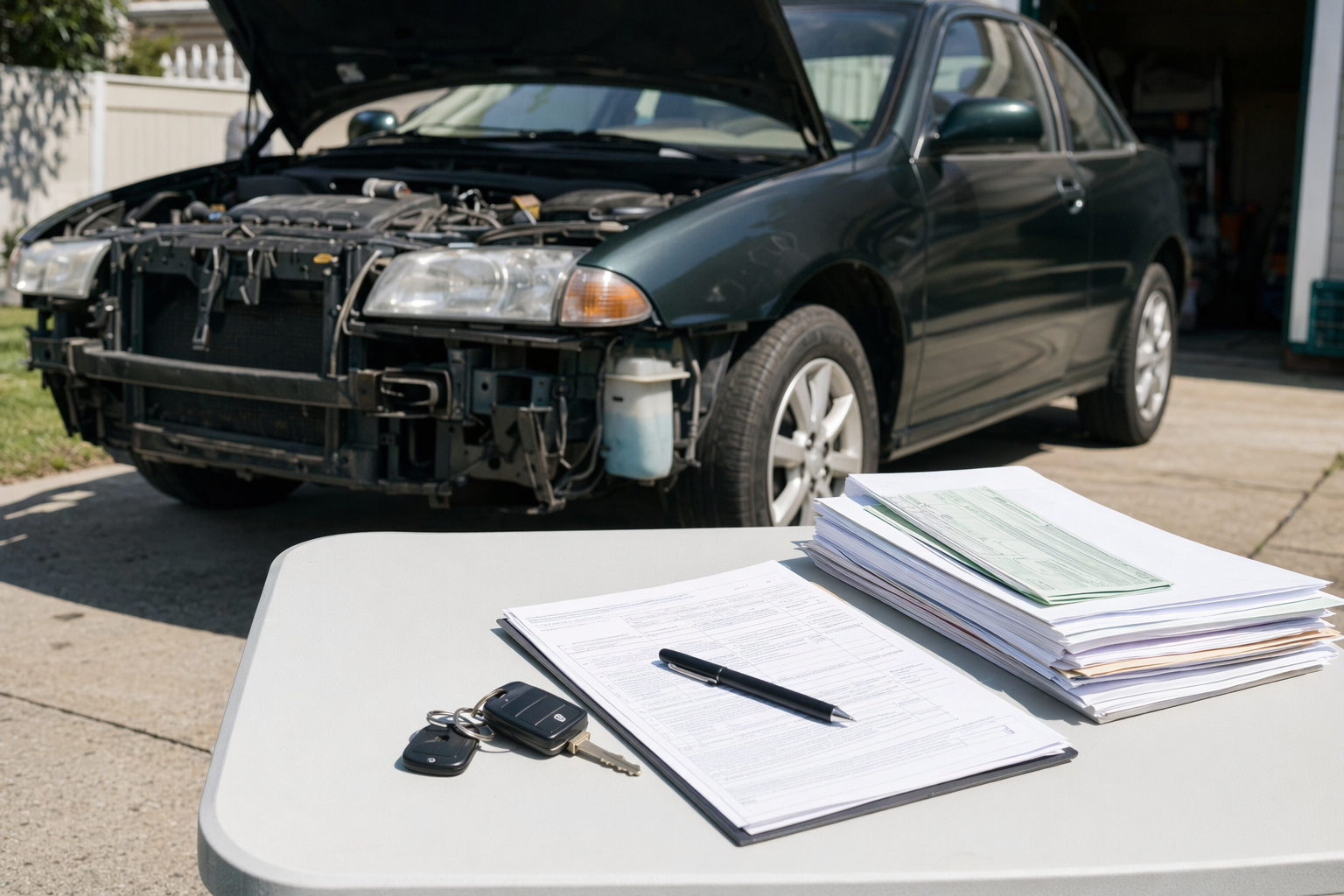
What salvage and rebuilt titles usually mean
A salvage title usually means an insurer, owner, or state agency decided the car had major damage and was not worth repairing compared with its value before the loss. That damage might come from a crash, flood, fire, theft recovery, vandalism, or another serious event.
A rebuilt title usually means that same vehicle was later repaired and passed whatever inspection or paperwork process the state requires to return it to the road. In simple terms:
- Salvage often means major prior damage and not legally road-ready in that status
- Rebuilt often means repaired after salvage, but still carries that history
- The exact words and process can vary by state
Why this matters: title history affects resale value, insurance options, financing, registration, and buyer trust. A clean-title car and a rebuilt-title car with the same year, make, and model do not usually sell for the same amount.
If you want to understand how condition and title status affect price, start with how junk car prices work.
How title brands affect value when you sell
Most buyers pay less for a vehicle with a salvage or rebuilt title than for a similar clean-title vehicle. That does not mean the car has no value. It means the buyer is pricing in risk, repair history, paperwork, and how easy it will be to resell or dismantle.
Typical real-world patterns:
- An older running car sold whole might land roughly $300-$1,500 depending on condition and demand
- A non-running car with engine or transmission trouble might be around $150-$600
- A wrecked or flood car might be around $150-$900
- A scrap-only vehicle may be closer to $100-$500
- Heavier trucks and SUVs can bring roughly $250-$1,200 by scrap weight or parts demand
These are estimates, not offers. The real cash offer depends on the year, make, model, condition, weight, location, and current scrap and parts prices.
A rebuilt title may still have decent value if the car runs well and the model has strong parts demand. A salvage title may still interest licensed buyers if the engine, transmission, catalytic converter, wheels, body panels, or electronics are useful. If the vehicle will not run, see non-running car options. If it has crash or flood damage, damaged and wrecked car help is a good next step.

What to do before you talk to buyers or yards
You do not need to make this complicated. A few careful steps can protect your money and your paperwork.
1. Gather basic vehicle details
Have the year, make, model, mileage, general condition, and your title status ready. You do not need to treat the VIN as a required first step with every matcher or inquiry.
2. Be honest about the title brand and damage
Say if the title is salvage, rebuilt, missing, signed incorrectly, or has a lien issue. Also say if the car was flooded, crashed, stripped, or has a dead engine.
3. Take clear photos
Show all sides, the interior, the odometer if possible, and the damaged areas. This helps you compare serious buyers with lowballers.
4. Ask whether the buyer is licensed and insured
Then verify the license yourself. Do not just take someone’s word for it.
5. Get the key details in writing before pickup
Confirm the price, whether towing is included, and whether any fees apply. If you want to learn what "free towing" really means, read free towing explained.
6. Protect your title and ID
Never hand over the title or keys until you are paid. Keep your ID safe. Do not share sensitive records you do not need to share.
7. Check your state DMV rules
Title transfer, salvage inspection, lien release, and replacement-title rules vary by state. Confirm your own state requirements with the DMV. This is general information, not legal advice.
If you want a simple starting point, use get offer to get matched for free and compare your options.
Common mistakes people make with salvage and rebuilt title cars
This is where people get burned. Not always by fraud. Sometimes just by moving too fast.
- Hiding the title history: If you leave out that the car has a salvage or rebuilt title, many buyers will lower the number later or walk away at pickup.
- Confusing rebuilt with clean: A rebuilt title is not the same as a clean title. It usually means the vehicle had major prior damage.
- Accepting a verbal promise: If the pickup driver says one number on the phone and another in your driveway, you need the written terms to protect yourself.
- Handing over keys or title before payment: Once the car is loaded, your leverage drops fast.
- Skipping license checks: Deal only with licensed, insured buyers and verify that license yourself.
- Forgetting about lien problems: If there is a lender or an old lien on record, that can delay the sale. State rules vary, so confirm the correct steps with your DMV.
- Expecting retail value: A salvage or rebuilt title almost always changes the market value, even if the car looks fine.
Scams often sound simple: "The driver will explain the fee later" or "Sign here now and we will fix the paperwork." Slow down. Read how to avoid junk car scams before you schedule pickup.
If you are buying used parts from a salvage-title vehicle
For a parts buyer, a salvage or rebuilt title does not automatically make every part bad. Many recycled parts come from vehicles with damage to only one area. The key is to buy smart and ask clear questions.
Good questions to ask a licensed recycler or yard:
- What exactly is the part from: year, make, model, engine size, and trim?
- Was the donor vehicle in a front hit, rear hit, side hit, flood, or fire?
- Is the part tested, inspected, or sold as-is?
- Are accessories included, like sensors, manifolds, or wiring?
- Is there a warranty period or exchange policy?
This matters most for engines, transmissions, electronics, airbags, and water-sensitive parts. For example, a used engine may cost a few hundred dollars to about $1,500 installed-ready, depending on the vehicle and setup. A used transmission often runs about $300-$1,200. Those are normal ranges, not guarantees.
If you need help finding parts, start at find used parts or learn more about used engines and transmissions.
Your next step: compare options and keep control
Whether you are selling a salvage-title car, a rebuilt-title car, or just trying to find a good used part, the safest move is to compare. ScrapRoute is a free matching service. That means you can look at your options and decide who you want to deal with.
Keep these rules in front of you:
- You compare offers
- You choose the buyer or yard
- You verify the license
- You confirm price, towing, and fees in writing
- You keep the title and keys until you are paid
- You confirm title rules with your state DMV
If you are ready to move on from the car, sell your junk car is a simple place to begin. If your main question is paperwork, title transfer help covers the basics in plain English.
Salvage means the car had serious damage history. Rebuilt usually means it was repaired after that, but the history stays with it. That can lower value, so compare buyers, verify licenses yourself, get the price and towing terms in writing, and keep your title and keys until you are paid.
Common questions
Can I sell a car with a salvage title?
Often yes, but the amount will usually be lower than for a similar clean-title car. Licensed buyers may buy it for repair, parts, or scrap, depending on the condition. The real cash offer depends on the year, make, model, condition, weight, location, and current scrap and parts prices. Title transfer rules vary by state, so confirm the paperwork with your DMV.
Is a rebuilt title the same as a clean title?
No. A rebuilt title usually means the vehicle previously had a salvage title and was later repaired and approved through the state process required for road use. It still carries that history, which can affect value, insurance, and buyer interest.
Do I need the title in hand before pickup?
In many cases, yes or something close to it, but the exact rule depends on your state and the vehicle situation. If the title is lost, signed wrong, or there is a lien, ask what documents may be needed and confirm with your DMV. Do not hand over the title or keys until you are paid, and confirm all terms in writing before pickup.
Should I buy used parts from a salvage or rebuilt title vehicle?
Sometimes yes, if you buy carefully from a licensed recycler or yard and ask the right questions. Many good used parts come from cars that were damaged only in one area. Be extra careful with flood-exposed electronics, airbags, engines, and transmissions. Ask about testing, condition, included components, and any warranty or exchange terms.