Can I Sell a Car Without a Title?
**Sometimes yes, sometimes no.** A car without a title can be harder to sell, and the rules change by state. The safest move is to confirm your DMV rules first, then deal only with **licensed, insured buyers** and get every detail in writing before pickup.
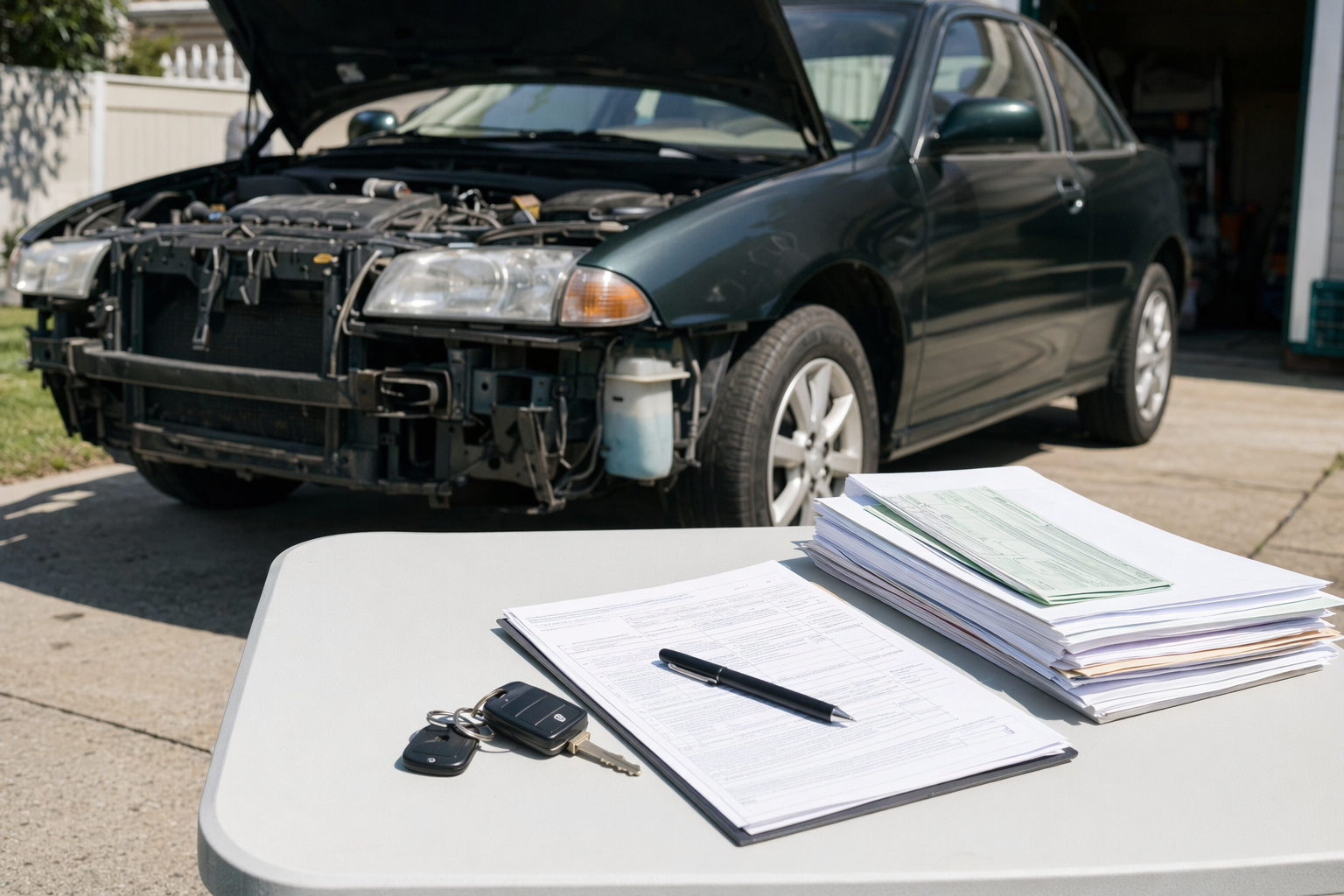
The short answer: maybe, but do not guess
Some buyers may take a vehicle without a title in certain situations. Others will not touch it. It depends on your state rules, whether your name is tied to the vehicle, whether there is a lien, and what documents the buyer is allowed to accept.
If the car is junk, non-running, wrecked, or flood-damaged, you may still be able to move it for cash, but do not assume a missing title is fine just because the car is old or not worth much. In many places, the title is still the key ownership document.
A typical cash range for a vehicle with paperwork problems can be lower than for the same car with a clean title, because fewer buyers can legally handle it. Real numbers still depend on the year, make, model, condition, weight, location, and current scrap and parts prices. For example:
- Older running car sold whole: roughly $300-$1,500
- Non-running car or dead engine: roughly $150-$600
- Wrecked or flood car: roughly $150-$900
- Scrap-only car: roughly $100-$500
- Heavier trucks and SUVs by scrap weight: roughly $250-$1,200
Those are estimates, not offers or guarantees.
If you want to compare your options, start with junk car value or get matched with buyers through get-offer.
What matters most when the title is missing
When people say, "I lost the title," there are a few very different situations. The next step depends on which one you are in.
1. You own the car, but the paper title is lost
This is often the simplest case. Many owners can request a replacement title from their state DMV before selling. That can make the sale easier and may help you avoid lower numbers from buyers who do not want paperwork risk.
2. There is still a lien on the car
If a bank, lender, or finance company still has an interest in the vehicle, you may not be able to sell it freely. A lien changes everything. You need to confirm the lien status and your state's release process.
3. The title was never transferred into your name
This is where people get stuck. Maybe you bought the car from a friend, relative, or private seller and never completed the transfer. A buyer may refuse it, even if you have keys and the car is sitting in your driveway.
4. The car belonged to a family member who passed away
Do not assume you can sell it right away. Estate and ownership rules can be different. Confirm what documents your DMV requires.
5. The car has major damage and no title
A severely wrecked or flooded car may still have value for scrap or parts, but the lack of title can limit who can legally buy it.
In all of these cases, title and lien rules vary by state. Confirm the rule with your own DMV. This page is general information, not legal advice.
If the car does not run, this guide may also help: sell a non-running car.

How to protect yourself from scams and lowball problems
Missing paperwork is where bad actors try to take advantage of people. This happens a lot with junk cars because sellers are in a hurry and think the car is "just scrap anyway." That is exactly when you need to slow down.
Use this checklist before you hand over anything:
- Deal only with licensed, insured buyers or recyclers, and verify the license yourself
- Keep your title and ID safe
- Never hand over the title or keys until you are paid
- Confirm the final amount, towing terms, and any fees in writing before pickup
- Ask whether the price changes if the car is missing parts like the catalytic converter, wheels, battery, or engine
- Confirm who is picking up the vehicle and whether they match the company details you were given
- Remove personal items and documents from the car
- Check your DMV steps for release of liability, plate return, or other required notices
A common problem is hearing one number on the phone, then getting a much lower number when the truck arrives. Another problem is a seller signing over paperwork before payment is in hand. Do not do that.
ScrapRoute is a free matching service. We help you compare licensed buyers so you can choose who to deal with. We do not buy cars, tow vehicles, or transfer titles. Read more about warning signs in avoid junk car scams and free towing explained.
What to do next if you want to sell the car
If you think you may be able to sell the car, here is the cleanest way to move forward.
1. Check your state DMV website or call the DMV
Ask what is needed to sell a vehicle when the title is missing, lost, not transferred, or tied to a lien.
2. Find out whether you can get a replacement title
If you are the recorded owner, this may be the fastest fix.
3. Gather basic vehicle details
Year, make, model, condition, whether it runs, and your location are usually enough to start comparing buyers. You should not need to give sensitive records just to begin.
4. Be honest about the condition
Say if it has front-end damage, flood history, missing parts, no keys, or a dead engine. Honest details help avoid pickup-day price drops.
5. Compare buyers carefully
You can explore how junk car prices work so the numbers make more sense.
6. Get everything in writing before pickup
That includes the amount, whether towing is included, and what paperwork the buyer expects.
7. Do not release the car until paid
No keys. No signed title. No vehicle pickup until payment is actually made.
If your goal is to move a junk or damaged vehicle, start here: sell a junk car. If your paperwork issue is mainly about ownership documents, this page may help next: title transfer.
If selling is too hard, you may still have another option
Sometimes the title problem is not quick to fix. Maybe the lien is unclear. Maybe the title was lost years ago. Maybe the car is so damaged that spending time on DMV steps does not feel worth it yet.
In that case, another path is to see whether the vehicle still has value as used parts. ScrapRoute also helps people look for affordable recycled parts from licensed yards and recyclers.
Common examples:
- A used engine is often a few hundred to about $1,500 installed-ready, depending on the vehicle and setup
- A used transmission is often roughly $300-$1,200
- Doors, bumpers, wheels, lights, and interior parts can also be worth searching for used before buying new
This matters if you are deciding whether to repair the car before selling it, keep it for a family member, or fix another vehicle on a budget.
If that is where you are, try find used parts or learn more about used engines and transmissions.
If your title is missing, do not guess. Check your state DMV rules, try to get a replacement title if you can, compare only licensed and insured buyers, and never give up the keys or title until you are paid and the full terms are in writing.
Common questions
Can I sell my car if I lost the title but the car is paid off?
Maybe. If the vehicle is paid off and you are the recorded owner, you may be able to get a replacement title through your state DMV before selling. Many buyers strongly prefer that. Rules vary by state, so confirm the process with your DMV. Do not hand over keys or paperwork until you are paid, and deal only with licensed, insured buyers.
Can I sell a junk car without a title for scrap only?
Sometimes, but not everywhere and not to every buyer. Some licensed buyers may be able to handle certain no-title situations, while others cannot. The value is usually lower when paperwork is missing, and the real amount depends on the year, make, model, condition, weight, location, and current scrap and parts prices. Check your state rules first.
What if there is still a lien on the vehicle?
A lien can prevent or limit a sale. You need to confirm whether the lien is active and what your state requires for release or payoff. Do not guess, and do not rely on informal advice from a stranger or tow driver. Contact your lender and your state DMV for the correct steps. This is general information, not legal advice.
What documents should I protect when selling a car with title problems?
Protect your title, ID, keys, and any ownership paperwork. Verify the buyer's license yourself. Confirm the amount, towing terms, and any fees in writing before pickup. Never hand over the title or keys until you are paid. Also check your state's DMV rules for any release-of-liability or plate steps after the vehicle is gone.