How Much Is My Junk Car Worth?
Short answer: most junk cars sell in a **typical range** based on weight, parts demand, and condition. The real cash amount depends on the year, make, model, condition, location, and current scrap and used-parts prices.
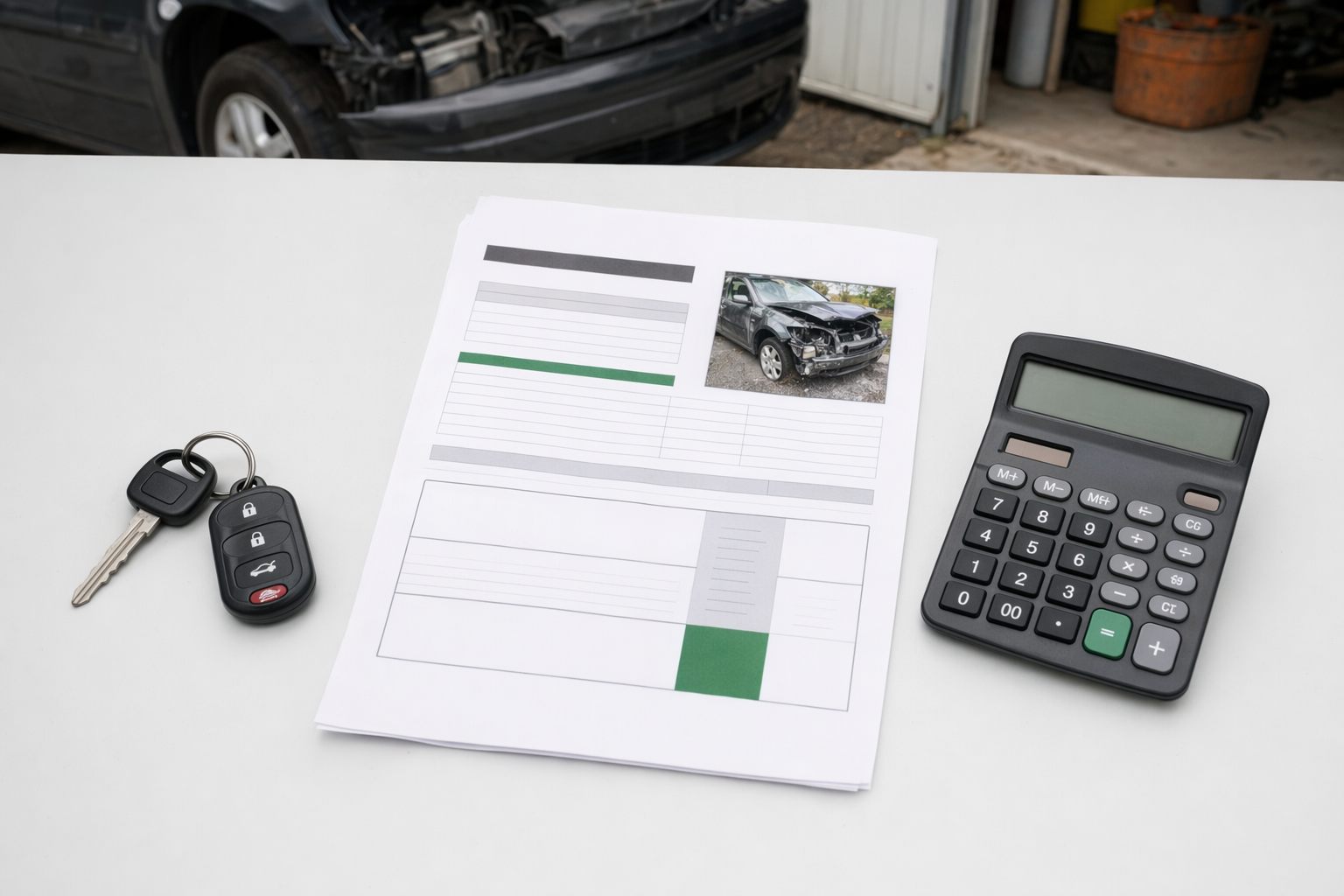
The short answer: most junk cars fall into a few common price ranges
If you want the fast version, here are honest typical ranges, not offers or guarantees:
- Older running car sold whole: roughly $300-$1,500
- Non-running car or dead engine: roughly $150-$600
- Wrecked or flood-damaged car: roughly $150-$900
- Scrap-only car: roughly $100-$500
- Heavier trucks and SUVs by scrap weight: roughly $250-$1,200
Those numbers move up or down for simple reasons. A complete vehicle with useful parts may bring more than a stripped shell. A heavy SUV may bring more than a small compact if the buyer is mainly paying for scrap weight. A common model with strong used-parts demand may do better than a rare car with little resale demand.
If you want a faster estimate, start with what affects value or request a free match through ScrapRoute's car-selling form. You compare the responses. You choose who to deal with.
What really decides the value
People often hear one number from a friend and expect the same result. That is where a lot of confusion starts. Junk car prices are not fixed.
Here is what usually matters most:
1. Year, make, and model
Some vehicles have engines, transmissions, wheels, doors, and electronics that are easy for recyclers to resell. Others do not.
2. Running or not running
A car that starts, moves, and still has major parts in place may be worth more than one with a seized engine or major missing parts.
3. Damage level
Front-end damage, side hits, flood damage, fire damage, and frame damage all affect value differently. Flood and fire cars often drop fast because many parts may not be reusable.
4. Vehicle completeness
If the catalytic converter, battery, wheels, airbags, engine, or transmission are missing, value usually drops. Buyers are looking at both scrap metal weight and usable parts.
5. Location
Prices can change by city and region. Distance to the yard or buyer matters too. In some areas, towing is commonly included. In others, fees may reduce the final amount unless clearly confirmed in writing first. Read more in this guide to free towing.
6. Current scrap and parts market
Metal prices go up and down. So does demand for used parts. That is why the same car may bring one amount this month and a different amount later.
7. Title status
A clear title often makes the process easier. But rules are different in every state, especially for older vehicles, inherited vehicles, lien vehicles, or lost titles. Confirm your state's rules with the DMV. This is general information, not legal advice.
If your car is dead and will not start, see selling a non-running car. If it has crash or flood damage, this page on wrecked cars can help.

Why one buyer says $200 and another says $700
This is normal. Different licensed buyers look at the same car in different ways.
- One buyer may want it mostly for scrap metal
- Another may want it for used parts
- Another may have better demand for your make and model in your area
- Another may have lower towing cost from your location
That is why comparing matters. A very low first number is not always the real market. It may just be a lowball.
A few practical examples:
- A 2008 sedan with a bad transmission but complete body and good wheels might land around the non-running range, but could do a little better if parts demand is good.
- A flooded compact car with electrical issues may fall near the low to middle end of the wrecked/flood range because many components are risky to reuse.
- A large SUV with 4 good tires, catalytic converter, and complete drivetrain may be valued more by weight and major parts, sometimes above a small sedan in similar condition.
- A stripped shell with missing converter, battery, and wheels often ends up close to scrap-only value.
If your goal is not to sell a full vehicle but to save money fixing one, used parts can make a big difference. A used engine is often a few hundred dollars to around $1,500 installed-ready, depending on the vehicle and supplier. A used transmission is often around $300-$1,200. If that is what you need, start with finding used parts or used engines and transmissions.
For a deeper breakdown of how salvage and scrap pricing works, see how junk car prices work.
How to protect yourself and get a fair result
The biggest mistakes usually happen when people rush, trust a verbal promise, or hand over paperwork too early.
Use this checklist:
1. Deal only with licensed, insured buyers or yards
Ask for the business name and license information. Verify the license yourself.
2. Keep your title and ID safe
Do not send more personal information than needed to get matched. Usually vehicle details and contact details are enough to start.
3. Never hand over the title or keys until you are paid
Payment method should be clear before pickup.
4. Get the final amount, towing terms, and any fees in writing
If towing is included, confirm that in writing. If any deduction may apply, ask for it in writing before pickup.
5. Confirm title rules with your state DMV
Rules for title transfer, liens, lost titles, and older vehicles vary by state. See title transfer basics, then confirm with the DMV. This is general information, not legal advice.
6. Remove personal items from the car
Check the glove box, trunk, center console, under seats, and any saved navigation or Bluetooth data.
7. Compare more than one response
ScrapRoute is a free matching service. Participating buyers and yards pay a flat fee to be included. You compare options and decide what works for you.
If you are ready to move, you can start with selling a junk car or use the free matching form.
What to do next if you want the best shot at a fair price
You do not need to know the exact value down to the dollar before you start. You just need enough information to spot a weak offer and avoid common scams.
A simple plan:
- Write down the year, make, model, mileage, and main problem
- Note whether it starts, drives, or is completely dead
- Mention major missing parts, if any
- Say whether you have a title, but do not guess about state rules
- Compare responses from licensed buyers
- Confirm the final amount, pickup timing, towing, and fees in writing
If something feels rushed or unclear, stop and ask questions. A real buyer should be able to explain how they reached the number. If they will not, move on.
And if selling is not your best move, check used parts first. Sometimes a modest repair with a recycled engine, transmission, or body part is cheaper than replacing the whole car.
Most junk cars are worth a few hundred dollars, not thousands, and the real amount depends on the car, its condition, your location, and current scrap and parts prices. Compare licensed buyers, verify the license yourself, keep your title and keys until you are paid, and get the amount, towing, and any fees in writing before pickup.
Common questions
Can I sell a junk car without a title?
Sometimes, but it depends on your state and the vehicle. Some states allow limited exceptions for older vehicles or other situations, while others do not. Confirm your state's rules with the DMV before pickup. Deal only with licensed, insured buyers, and never hand over keys or the vehicle before payment and paperwork are clear. This is general information, not legal advice.
Does a non-running car still have value?
Yes. A non-running car often has value for scrap metal, core parts, or reusable components. A typical range for a non-running car is roughly $150-$600, but the real amount depends on the year, make, model, condition, missing parts, location, and current scrap and parts prices.
Is free towing really free?
Sometimes it is included, but do not assume. Ask whether towing is included and get that confirmed in writing before pickup. Also ask whether there are any deductions, distance limits, or other fees. The safest move is to confirm the full amount you expect to receive, in writing, before the vehicle is loaded.
Should I fix the car first or sell it as junk?
It depends on the repair cost and the car's total value. If the repair is expensive, selling may make more sense. If the problem is limited and used parts are affordable, repairing it may be cheaper than replacing the vehicle. Used engines often run from a few hundred dollars to around $1,500 installed-ready, and used transmissions are often about $300-$1,200, depending on the vehicle and supplier.