How to Spot a Lowball Car Offer
A lowball offer is not just a small number. It is often a price that sounds fine at first, then drops at pickup, adds surprise fees, or comes from a buyer you cannot verify.
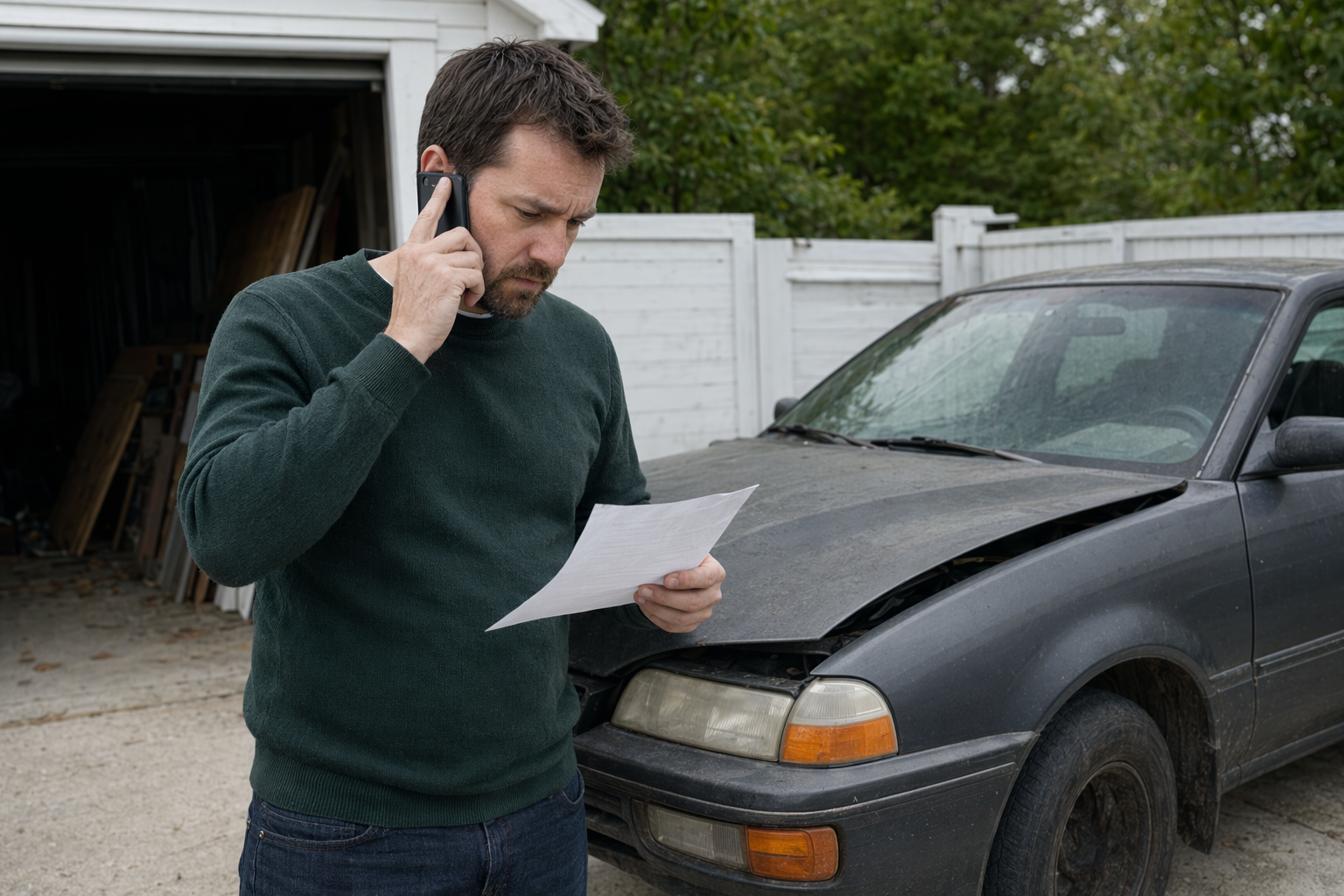
The short answer: a lowball offer usually shows up in the details
If someone gives you a price fast, that is not always the problem. The problem is when the number is not honest, not clear, or not backed up in writing.
A fair cash range for an unwanted vehicle depends on the year, make, model, condition, weight, location, and current scrap and parts prices. As a rough guide, an older running car sold whole might land around $300-$1,500. A non-running car with a dead engine may be more like $150-$600. A wrecked or flood car may fall around $150-$900. Scrap-only vehicles are often $100-$500. Heavier trucks and SUVs may bring $250-$1,200 just from scrap weight. These are typical ranges, not offers or guarantees.
So how do you spot a lowball? Ask yourself:
- Is the buyer giving a number without asking basic questions about the car?
- Are they vague about towing, fees, paperwork, or payment method?
- Do they want your title or keys before you are paid?
- Do they refuse to put the final amount in writing?
- Can you verify that they are licensed and insured?
If the answer to any of those is yes, slow down. Compare options. A free matching service like ScrapRoute can help you get matched with licensed buyers so you can compare and choose.
Red flags that usually mean the offer is too low or too risky
Some lowball tactics are obvious. Others sound normal until pickup day. These are the ones people get burned by most often.
1. Bait-and-switch price drops at pickup
This is the big one. You are told one number on the phone. Then the driver shows up and says:
- "The market changed today."
- "Your car is worse than described."
- "We can only pay this much now."
- "Take it or leave it."
Sometimes the car owner accepts because the vehicle is already hooked up, the driveway needs to be cleared, or they took time off work. That is how a lowball works.
2. Surprise towing or admin fees
A buyer may say towing is included, then subtract a pickup fee, fuel charge, admin fee, loading fee, or paperwork fee later. Even a decent number can become a bad deal when hidden charges show up.
3. Fake checks or payment games
If someone pushes a personal check, delayed payment, partial payment now and the rest later, or any story that keeps you from getting paid in full at handoff, be careful. Even a check that looks real can bounce. Confirm the payment method ahead of time and make sure the full amount is clear in writing.
4. Pressure to sign the title before payment
Never hand over the signed title or keys until you are paid. If they want control of the car first, that puts you in a weak spot. Title and lien rules vary by state, so confirm your state's process with the DMV. This is general information, not legal advice.
5. Unlicensed buyers or no proof of insurance
If they cannot show a business license or proof they are insured, walk away. Do not assume a truck and a business name are enough. Verify the license yourself.
For more on common tricks, read how to avoid junk car scams.

How to tell the difference between a realistic estimate and a lowball
A real estimate is not magic. It comes from facts.
A buyer or yard giving a realistic range will usually ask about:
- Year, make, and model
- Whether the car runs or drives
- Major damage, missing parts, or flood history
- Whether you have the title
- Your location
- Whether pickup is needed
That does not mean they need every detail or sensitive information. Be careful about over-sharing. You usually only need to provide basic vehicle and contact details to start. You should not need to give financial account numbers, Social Security numbers, or other sensitive records just to get matched.
A lowball estimate often has one of these patterns:
- Too fast with no questions: They throw out a number before learning enough about the vehicle.
- Too good to be true: The number sounds high, but nothing is confirmed in writing.
- Too slippery: Every answer is vague. "We'll see when we get there."
- Too much pressure: "This offer is only good right now," or "Sign now before the price drops."
If you want a better sense of what affects value, check how junk car prices work or get a starting point on your vehicle value. Just remember: any online number is still only an estimate until the buyer confirms the condition, pickup terms, and payment details in writing.
What to do next so you keep control of the deal
You do not need to argue with a lowball buyer. You just need a simple process.
Before pickup
- Compare more than one estimate when you can.
- Ask for the final amount, towing terms, and any fees in writing.
- Ask how and when you will be paid.
- Verify the buyer is licensed and insured.
- Confirm whether towing is included. If you want to understand the wording, read free towing explained.
At pickup
- Check that the amount matches what was confirmed.
- Do not hand over the title or keys until you are paid.
- If the number changes, you can say no.
- Take photos of the car and paperwork.
For title and paperwork
- Keep your title and ID safe.
- Confirm your state's title and lien rules with the DMV.
- If you need a general overview, see title transfer basics.
If you need another path
Sometimes selling the whole car is not the best move. If the vehicle is worth more in parts to you, or you are trying to repair another car on a budget, used parts can make more sense. A used engine is often a few hundred dollars up to around $1,500 installed-ready depending on the application, and a used transmission often falls around $300-$1,200. ScrapRoute can also help you find used parts through licensed auto recyclers.
The main point is simple: you compare, you choose, and you confirm everything before the car leaves.
A lowball offer is usually not just a low number. It is a deal that changes at pickup, adds hidden fees, uses unsafe payment, or comes from an unlicensed buyer. Get details in writing, verify the license yourself, and do not hand over the title or keys until you are paid.
Common questions
Is the highest first number always the best deal?
No. A high number can still be a lowball if it drops at pickup or gets reduced by towing, admin, or other surprise fees. The better deal is the one that is clear, written down, and backed by a licensed, insured buyer you can verify.
Should I accept a lower price if my car does not run?
Maybe, but only if the number is realistic for the car's condition. Non-running cars often bring less than running cars, but the real amount still depends on the year, make, model, condition, weight, location, and current scrap and parts prices. Compare estimates before deciding.
Can I give the title and get paid later?
That is risky. Keep your title and keys until you are paid. Do not rely on promises that payment will come later. Title and lien rules vary by state, so confirm your state's requirements with the DMV. This is general information, not legal advice.
What if the driver shows up and tries to lower the price?
You can say no. If the final amount does not match what was confirmed, or if new fees appear, do not feel forced to finish the deal. That is why it helps to have the amount, towing terms, and any fees in writing before pickup.