Running vs non-running: what changes the offer
A car that starts, moves, and can be sold whole usually brings more than one that needs a tow. But "running" is only one piece of the price. Condition, damage, parts demand, weight, and your location all matter too.
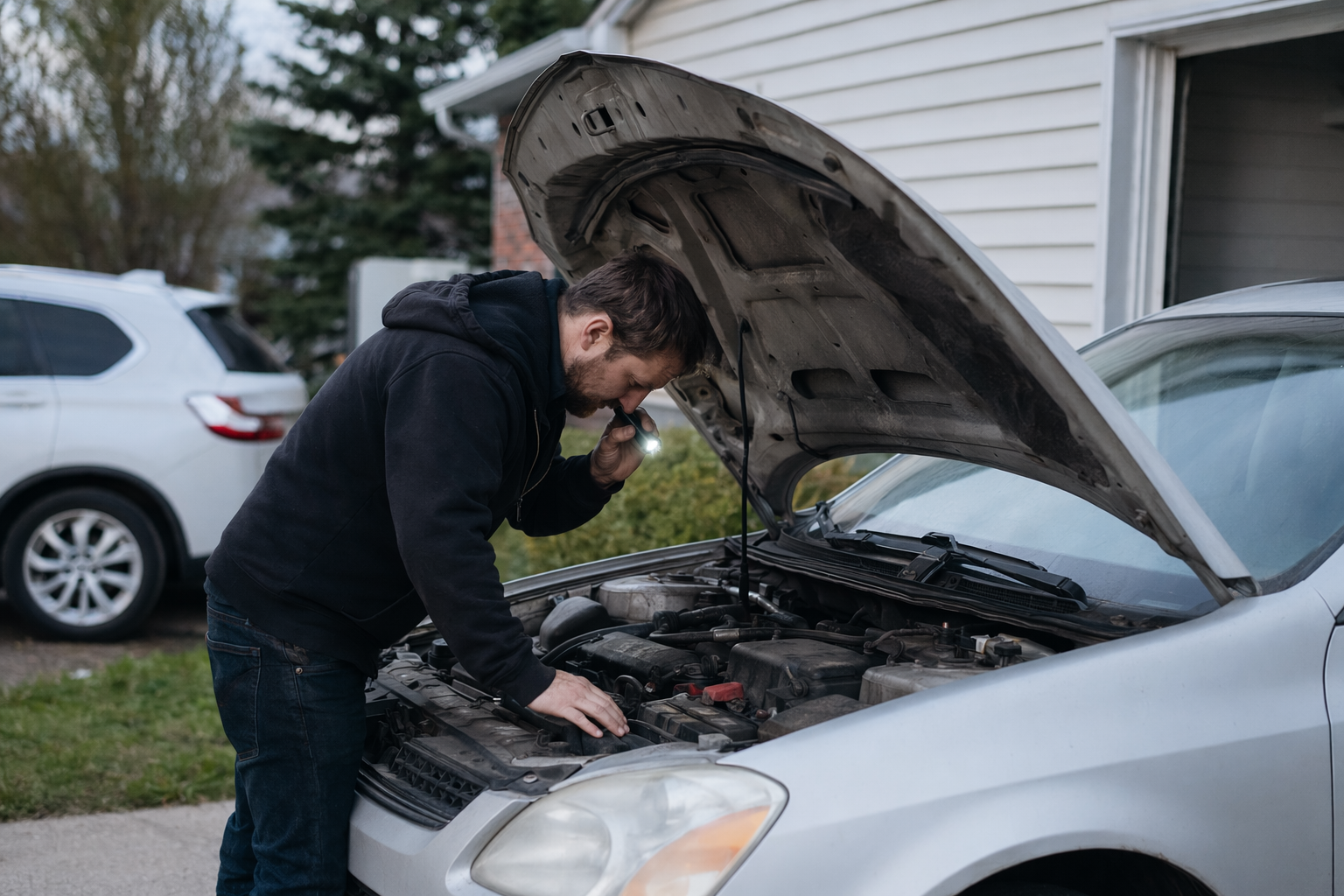
Why running status matters so much
When a buyer looks at an older car, the first question is simple: can it be sold whole, or is it mostly worth parts and scrap? That is why running status changes the typical range.
A running car gives a licensed buyer more options. It may be resold as a cheap transportation car, fixed and resold, or dismantled for higher-value parts. A non-running car usually narrows those options. It may still have good parts, but the buyer has to figure in towing, labor, risk, and the chance that the engine, transmission, or electrical system has bigger problems than expected.
Typical US ranges are often like this:
- Older running car sold whole: roughly $300-$1,500
- Non-running car or dead engine: roughly $150-$600
- Wrecked or flood car: roughly $150-$900
- Scrap-only car: roughly $100-$500
- Heavier trucks and SUVs by scrap weight: roughly $250-$1,200
These are estimates, not offers. The real cash offer depends on the year, make, model, condition, weight, location, and current scrap and parts prices.
If you want a closer idea before you compare matches, start with car value factors or read how junk car prices work.
What buyers usually look at besides "does it run?"
A non-running car is not always worth less than every running car. Some vehicles still bring decent money because the parts are in demand. On the other hand, a running car with severe rust, major transmission issues, flood damage, or missing parts may bring less than people expect.
Here are the big things that usually move the number up or down:
- Year, make, and model. Popular models with strong parts demand can do better, even if they do not run.
- Engine and transmission condition. If one major unit is bad, the value can drop fast. If both are known good, that helps.
- Can it move under its own power? Starts, idles, drives, shifts, and stops all matter.
- Body and frame damage. A straight body is easier to sell whole. Heavy collision damage lowers interest.
- Flood or fire history. These often reduce value because of hidden electrical and safety issues.
- Catalytic converter and other major parts still present. Missing parts can cut the estimate.
- Tire condition and whether the car rolls. A car that rolls is easier to load.
- Vehicle weight. For scrap-heavy pricing, trucks and SUVs may bring more because they weigh more.
- Local market. Scrap prices, towing distance, and parts demand vary by area.
- Paperwork. Title status matters. State title and lien rules vary, so confirm your state's rules with the DMV. This is general information, not legal advice.
One more point: if you are trying to buy a replacement engine or transmission instead of selling the car, the same logic works in reverse. A model with strong demand may cost more for parts. Used engines often run a few hundred dollars to about $1,500 installed-ready depending on the vehicle, and a used transmission often runs about $300-$1,200. You can compare options through used parts matching or learn more about used engines and transmissions.

A simple way to tell where your car may fall
You do not need to guess blindly. Use this quick sorting method:
- Running and drivable: It starts, stays running, goes into gear, moves, and stops. This is usually the strongest category for an older low-value car.
- Running but not really roadworthy: It starts, but overheats, slips, knocks, smokes, has brake issues, or cannot safely drive far. This often lands between a whole-car sale and a parts-value sale.
- Non-running but complete: It does not start or drive, but major parts are still there, it rolls, and the body is mostly complete. This can still have decent parts value.
- Wrecked, flooded, or stripped: Heavy damage, water intrusion, missing catalytic converter, missing wheels, or missing major parts usually pushes the number down.
- Scrap-only: Severe rust, major missing parts, burnout, or total failure. At this point, weight may matter more than make and model.
A few real-life patterns:
- A clean older sedan that runs and drives may land in the $300-$1,500 zone.
- The same car with a dead engine may drop closer to $150-$600.
- A wrecked SUV may still do better than a tiny scrap car because of weight and usable parts.
- A flooded late-model car may look valuable, but buyers may be cautious because of electrical damage.
If your vehicle will not start, do not assume it is worthless. If it is complete and the model has strong parts demand, it may still be worth more than scrap-only pricing. If you want to compare licensed buyers for a junk or disabled vehicle, start here.
What to do before you compare matches
A little prep can help you get a more accurate estimate and avoid confusion at pickup.
- Describe the car honestly. Say whether it starts, drives, shifts, rolls, or needs a tow.
- List major problems clearly. Dead battery, blown engine, bad transmission, flood damage, front-end hit, missing converter, flat tires.
- Take clear photos. Front, back, both sides, interior, odometer, and damage.
- Know your title status. Have the title if you can, and check for any lien. Rules vary by state, so confirm with your DMV.
- Remove personal items. Check the glove box, trunk, under seats, and your license plate rules.
- Ask what is included. Towing may be included by the matched buyer, but confirm it in writing.
Most important, protect yourself:
- Deal only with licensed, insured buyers.
- Verify the license yourself. Do not just take someone's word for it.
- Keep your title and ID safe.
- Never hand over the title or keys until you are paid.
- Confirm the final amount, towing, and any fees in writing before pickup.
ScrapRoute is a free matching service. You compare options and choose who to deal with. If your car does not run, this page can help next: sell a non-running car.
Common mistakes that lower the final amount or create problems
People usually get burned in the same few ways.
Mistake 1: Saying "it runs" when it barely does. If a car starts but cannot stay running, overheats in two minutes, or will not move in gear, say that up front. Surprises at pickup often lead to a lower number.
Mistake 2: Forgetting missing parts. If the battery, catalytic converter, wheels, title, or key is missing, mention it early. Hidden missing parts can change the estimate a lot.
Mistake 3: Focusing only on the highest number over the phone or by text. The real test is what is confirmed in writing, whether towing is included, and whether the buyer is licensed and insured.
Mistake 4: Handing over paperwork too soon. Keep control of your title and keys until payment is made. Title and lien rules vary by state, so confirm your state's requirements with the DMV.
Mistake 5: Not comparing enough options. One buyer may want your car for parts. Another may price it mostly by scrap weight. That difference can matter.
If you want a safer checklist before you choose a buyer, read how to avoid junk car scams.
Your next step
If your car still runs, you may be able to do better than scrap-only pricing. If it does not run, it still may have value as a complete parts car or by weight. Either way, the best move is usually the same: compare licensed local buyers, verify details, and do not rush.
Use ScrapRoute to get matched for free. You share basic vehicle and contact details, then you compare, you choose, and you confirm everything before pickup or payment. For a disabled, wrecked, or older car you want gone, you can start with selling a junk car or selling a damaged or wrecked car.
If your car runs and drives, it will often bring more. If it does not run, it may still be worth money for parts or scrap. Compare licensed buyers, tell the truth about the condition, verify everything in writing, and do not give up the title or keys until you are paid.
Common questions
Does a car need to start to have value?
No. A non-running car can still have value for parts or scrap. Typical ranges for a non-running car are often around $150-$600, but the real cash offer depends on the year, make, model, condition, weight, location, and current scrap and parts prices.
Is a running car always worth more than a non-running car?
Usually, but not always. A running car often brings more because it may be sold whole. But a running car with severe rust, transmission failure, flood damage, or major missing parts can bring less than a complete non-running vehicle with strong parts demand.
What should I tell a matched buyer about a non-running car?
Be specific. Say whether it starts, cranks, rolls, steers, brakes, and can be loaded easily. Mention major problems like engine failure, accident damage, flood history, flat tires, missing catalytic converter, or missing key. Honest details help avoid changes later.
How do I stay safe when selling a junk or non-running car?
Deal only with licensed, insured buyers and verify the license yourself. Keep your title and ID safe. Never hand over the title or keys until you are paid. Confirm the amount, towing, and any fees in writing before pickup. State title and lien rules vary, so confirm your state's rules with the DMV. This is general information, not legal advice.