Selling a Car After an Accident
Yes, you can usually still sell a car after an accident, even if it does not run. The key is to understand what affects value, compare buyers carefully, and protect yourself before pickup and payment.
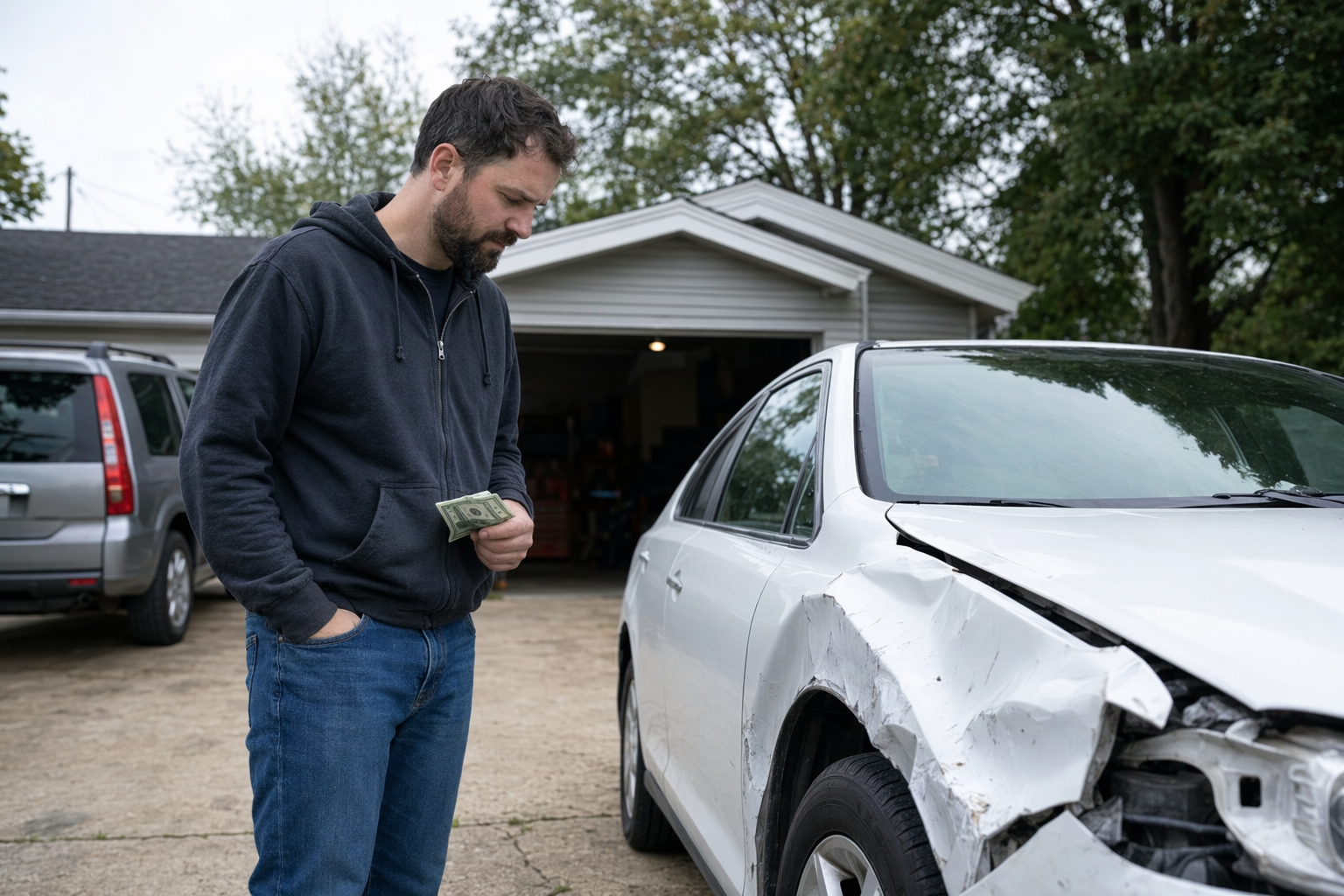
The short answer
A car does not have to be in perfect shape to be worth money. Many accident-damaged cars still have value as a whole vehicle, for reusable parts, or for scrap metal.
Typical ranges are just estimates, not offers. The real cash amount depends on the year, make, model, damage, whether it runs, vehicle weight, your location, and current scrap and parts prices.
Here is a realistic starting point for many vehicles in the US:
- Older running car sold whole: about $300-$1,500
- Non-running car or dead engine: about $150-$600
- Wrecked or flood-damaged car: about $150-$900
- Scrap-only vehicle: about $100-$500
- Heavier trucks and SUVs by scrap weight: about $250-$1,200
If you want to see how value usually gets calculated, start with how junk car prices work. If you are ready to compare local options, you can also get matched here.
If the accident car is not worth fixing, many owners choose the simple path: compare licensed buyers, confirm the terms in writing, get paid, then let the buyer arrange pickup if that is part of the deal.
What affects the value after a crash
Accident damage changes value fast, but not every crash means the car is worthless. Buyers usually look at a few basic things first.
1. Can the car still run and move?
A running car usually brings more than one that needs a winch or flatbed. If the engine starts, the transmission works, and the wheels roll, that often helps.
2. What kind of damage does it have?
Front-end hits, frame damage, airbag deployment, flood damage, and fire damage can lower value a lot. Cosmetic damage like a dented door or broken light may hurt value less.
3. What parts are still usable?
Even after an accident, a vehicle may still have good doors, wheels, mirrors, catalytic components, interior parts, electronics, engine accessories, or body panels. That is one reason some wrecked cars sell above pure scrap value.
4. Is there title or lien trouble?
A clear title usually makes the process easier. If there is a lien, or the title is missing, rules vary by state. Confirm your state's requirements with the DMV. This is general information, not legal advice. You can read more about the process on title transfer basics.
5. What is the vehicle made of, and how heavy is it?
Heavier trucks and SUVs can be worth more on scrap weight alone. But a lighter vehicle with strong used-parts demand can still beat a heavier one.
6. Where is the car located?
Local towing distance, storage yard access, apartment parking, rural pickup, and regional scrap demand all matter. A buyer may value the same vehicle differently in two different zip codes.
This is why one person may hear $250 and another hears $850 for a similar-looking wreck. The numbers can vary a lot, and that is exactly why comparing options matters.

Sell it whole, scrap it, or use it for parts?
After an accident, most owners are really deciding between three paths.
Sell the car whole to a licensed buyer
This may make sense if the car still runs, has repairable damage, or has strong parts demand. A whole-car buyer may see more value than simple scrap.
Sell it as a non-running or damaged vehicle
This is common when the air bags deployed, suspension is bent, cooling parts are broken, or the engine will not start after the crash. Learn more about selling a damaged or wrecked car.
Let the vehicle go for scrap value
If the car is badly crushed, stripped, burned, flooded, or missing major parts, scrap may be the realistic floor. That usually means lower value, but it can still be the fastest way to move an unusable vehicle.
There is also a second side many people forget: used parts. If your car was hit and you are trying to keep it on the road instead of selling it, used or recycled parts can sometimes save real money.
Common examples:
- A used engine is often a few hundred dollars to around $1,500 installed-ready, depending on the vehicle and setup
- A used transmission is often around $300-$1,200
- Doors, lights, mirrors, bumpers, wheels, and interior parts can also cost much less used than new
If you are trying to repair instead of sell, start with find used auto parts or used engines and transmissions.
The honest question is simple: Will fixing the car cost more than the car will be worth after repair? If yes, selling may be the cleaner choice.
How to protect yourself and avoid lowball problems
People get burned after an accident because they are stressed, the car is in the way, and they just want it gone. Slow down enough to protect yourself.
- Deal only with licensed, insured buyers. Verify the license yourself.
- Do not hand over the title or keys until you are paid.
- Confirm the final amount, towing, and any fees in writing before pickup.
- Ask whether the amount changes if the car needs extra winching, has missing wheels, or is stuck in a garage.
- Remove personal items, plates if your state requires it, and documents from the glove box.
- Take clear photos of the damage, odometer, and the car at pickup.
- Keep copies of any bill of sale or release paperwork.
- If the title is branded, missing, or there is a lien, check your DMV rules first. State rules differ.
Watch for red flags:
- The buyer will not show a license or insurance.
- They promise one number, then lower it at pickup without a clear reason.
- They ask for sensitive information you do not need to give to get matched, like bank account numbers or an SSN.
- They pressure you to sign over the title before payment.
- They suddenly add towing or processing fees that were not agreed to.
For more protection tips, read how to avoid junk car scams and how free towing really works.
A fair process should feel clear, not confusing. You compare options. You choose who to deal with. You confirm every detail before the car leaves.
What to do next
If you want to move forward, keep it simple.
- Gather basic info about the car: year, make, model, whether it starts, major damage, title status, and your location. You usually do not need to provide sensitive records just to compare matches.
- Take honest photos of the front, back, sides, interior, wheels, and the accident damage.
- Check the rough value range so you know what is realistic. A wreck with heavy damage may still be worth something, but not every car is a $1,000 vehicle.
- Compare licensed buyers instead of taking the first number you hear. ScrapRoute is a free matching service that helps you connect with licensed salvage yards, auto recyclers, and cash-for-cars buyers. Participating businesses pay a flat fee to be listed and matched.
- Confirm everything in writing before pickup: amount, timing, towing, title steps, and any conditions.
If your car still starts but has crash damage, see sell your junk car. If it no longer runs, selling a non-running car may be the better fit.
The goal is not to chase a fantasy number. It is to get an honest, realistic deal from a licensed buyer and finish the sale safely.
If your car was in an accident, you can usually still sell it, even if it does not run. Get a realistic range, compare licensed buyers, verify the license yourself, and do not give the title or keys until you are paid and the towing terms are confirmed in writing.
Common questions
Can I sell my car after an accident if it does not run?
Yes. Many non-running accident cars still have value. Typical ranges for a non-running vehicle are often about $150-$600, while wrecked or flood-damaged vehicles may land around $150-$900 depending on the year, make, model, condition, weight, location, and current scrap and parts prices. These are estimates, not offers.
Do I need a title to sell an accident-damaged car?
Often yes, but the exact rules depend on your state and whether there is a lien, branded title, or lost title issue. Confirm your state's rules with the DMV before you schedule pickup. This is general information, not legal advice. Also, keep your title safe and never hand it over until you are paid.
Should I repair the car first or sell it as-is?
It depends on the repair cost versus the car's after-repair value. If the damage is light and the car is otherwise solid, repair may make sense. If the frame is bent, air bags deployed, flood damage is involved, or major mechanical parts are damaged, selling as-is is often the simpler choice. Used parts can sometimes lower repair cost if you want to keep the car.
What information should I share to compare buyers safely?
Usually basic vehicle and contact details are enough to get matched: year, make, model, condition, whether it runs, title status, and location. Be careful about over-sharing. You should not need to give sensitive details like bank account numbers or an SSN just to compare options.