Used parts buying guide
Need a cheaper way to fix a car? This free guide helps you shop for used and recycled auto parts with clear steps, smart questions, and fewer costly mistakes.
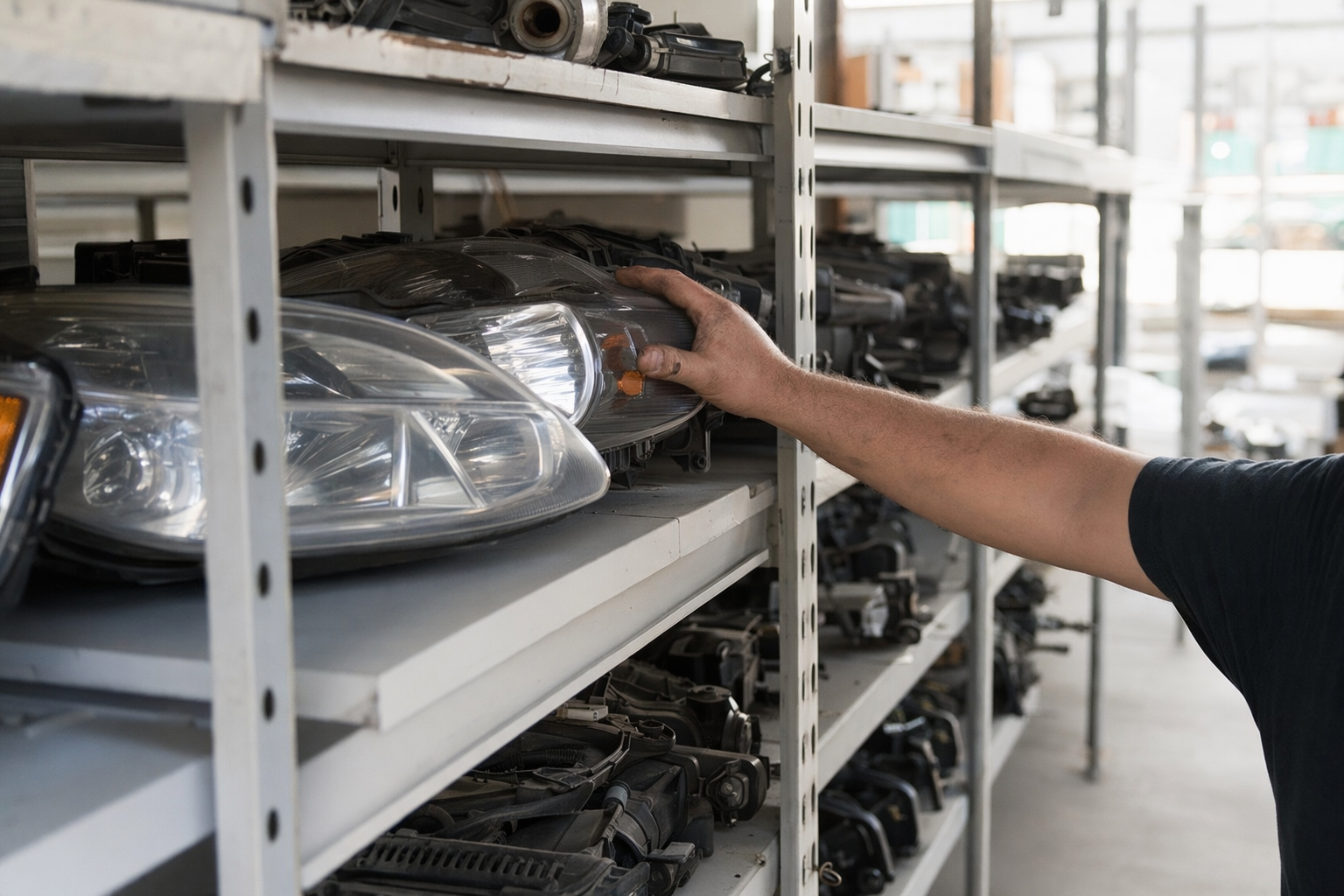
What this free guide is
Our Used Parts Buying Guide is a simple PDF for people who want to save money on repairs without guessing. It is made for drivers, families, first-time buyers, and non-native-English speakers who want plain steps they can actually use.
The guide is not a price list, offer, or guarantee. Used-part prices change by part type, year, make, model, condition, mileage, location, and local supply. It is also not legal or DMV advice.
What it helps you do:
- understand the difference between used, recycled, and pull-tested parts
- compare sellers more carefully
- ask about compatibility, mileage, return rules, and warranty terms
- avoid paying for the wrong part
- decide when a used part makes sense and when it may not
If you are still deciding what kind of part search to start, see find used parts.
How to use the guide before you buy anything
Use the PDF like a checklist, not just something to read once.
- Write down your vehicle basics. Year, make, model, engine size, trim, and whether the car is 2WD or AWD can matter.
- Confirm the exact part name. A starter, alternator, transmission, control arm, and ECU all have different fit and testing issues.
- Ask if the part matches your vehicle. Do not assume two similar cars use the same part.
- Ask about condition and history. For example: mileage on a used engine, damage on a door, corrosion on a wheel, or whether a module needs programming.
- Get the details in writing. Part condition, warranty length, return window, shipping or pickup terms, and any core charge should be clear before you pay.
For major components, it helps to review realistic market ranges first. A used engine is often a few hundred dollars to around $1,500 installed-ready depending on the setup. A used transmission is often about $300-$1,200. Those are typical ranges only, not quotes or guarantees. Learn more at used engines and transmissions.
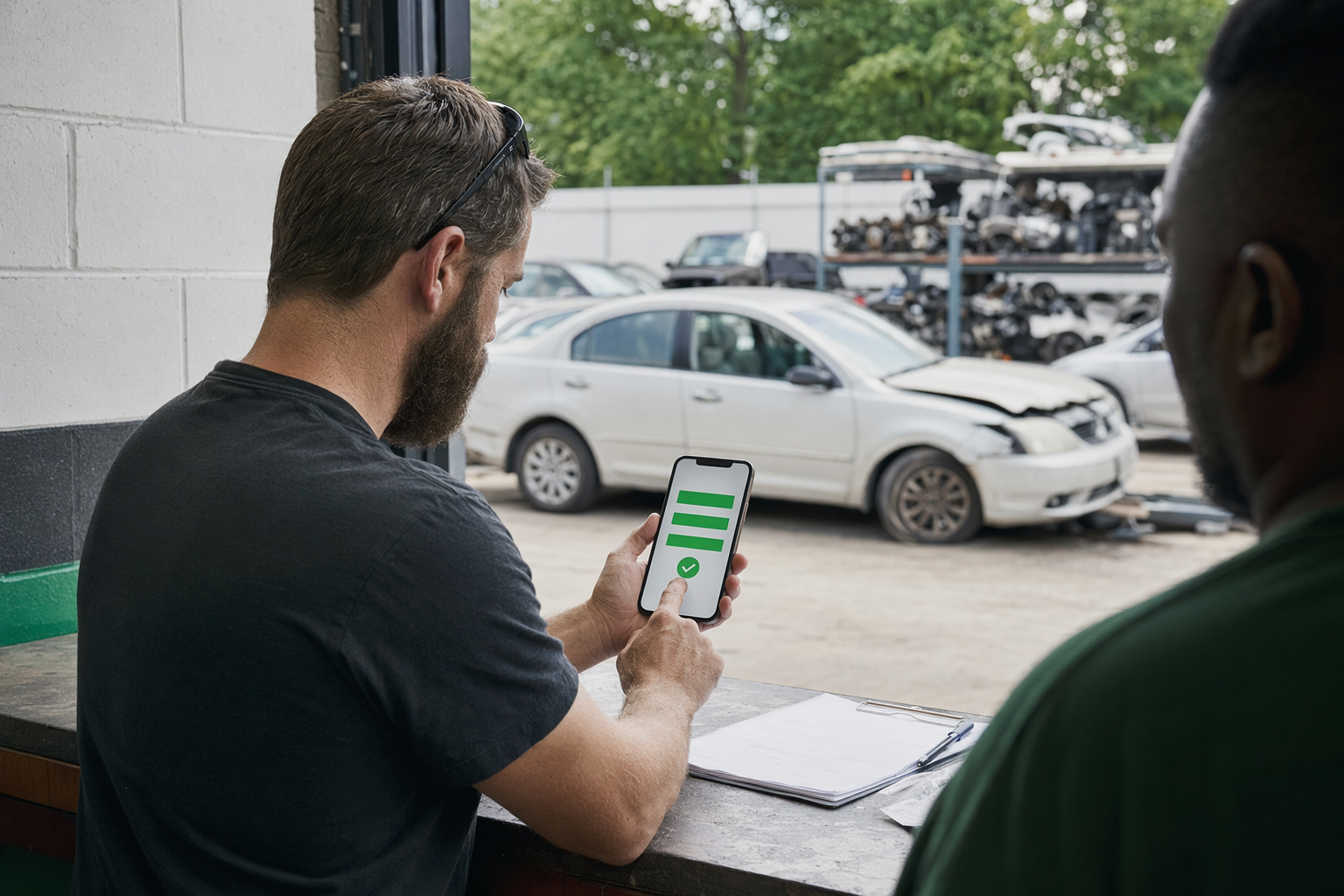
What smart buyers check in the guide
The biggest mistakes usually happen when people rush.
Fit comes first. Even a good part is a bad deal if it does not fit. Bring your vehicle details and ask the seller to confirm compatibility.
Condition matters more than the lowest price. A cheaper part with missing hardware, hidden damage, or no return policy can cost more in the end.
Warranty and returns matter. Read the terms. Ask:
- How many days do I have to return it?
- Is labor covered, or only the part?
- Are electrical parts final sale?
- What happens if the part is wrong or damaged?
Use licensed, insured businesses. ScrapRoute is a free matching service. We do not sell parts ourselves. We help connect people with participating licensed salvage yards and auto recyclers. You should verify the license yourself and confirm all terms in writing before pickup, delivery, or payment.
If you want help starting your search, use find used parts.
When a used part makes sense
Used parts are often a practical choice when the car is older, the repair budget is tight, or the part is a body panel, wheel, mirror, seat, engine, or transmission that can be sourced carefully.
They may make less sense when:
- the part is a high-risk safety item and condition cannot be verified well
- programming, calibration, or hidden electronic issues are common
- the return policy is weak
- the labor to install a bad part would be expensive
This is where the guide helps most. It pushes you to slow down and ask the right questions before you commit.
And if the repair cost is starting to exceed the car’s value, you may want to compare that choice against selling the vehicle as-is. Our car value guide can help you think through that side without pressure.
How to download it
Getting the guide is easy.
- Request the free download on this page
- Save used-parts-buying-guide.pdf to your phone or computer
- Keep it open while you call or message parts sellers
- Use it as a live checklist before you pay
There is no cost to use ScrapRoute’s matching service. Participating yards and buyers pay a flat fee to be listed and matched. You compare options, choose who to contact, and confirm everything yourself.
Download the free PDF, keep your vehicle details handy, and use the checklist to compare used parts, confirm fit, and get warranty and return terms in writing before you pay.
Common questions
Does the guide tell me the exact price of my part?
No. It does not give exact prices, offers, or guarantees. Used-part pricing depends on the year, make, model, condition, mileage, location, and current supply. The guide helps you compare parts and ask better questions before you buy.
Is ScrapRoute selling me the part directly?
No. ScrapRoute is a free matching service. We do not sell parts, dismantle vehicles, tow cars, or transfer titles. We help connect people with participating licensed salvage yards and auto recyclers, and you choose who to deal with.
What details should I have ready before I ask about a used part?
Start with the year, make, model, engine size, trim, and the exact part you need. Photos can help too. Avoid oversharing sensitive information. You usually do not need financial account numbers, SSNs, or other private records just to ask about parts.