Local Junkyard vs Online Cash Buyer
If you need to sell a junk, wrecked, flooded, or non-running car, you will usually look at two paths: a local buyer near you or an online service that matches you with buyers. The best choice depends on price, speed, paperwork, towing, and how careful you are with the title.
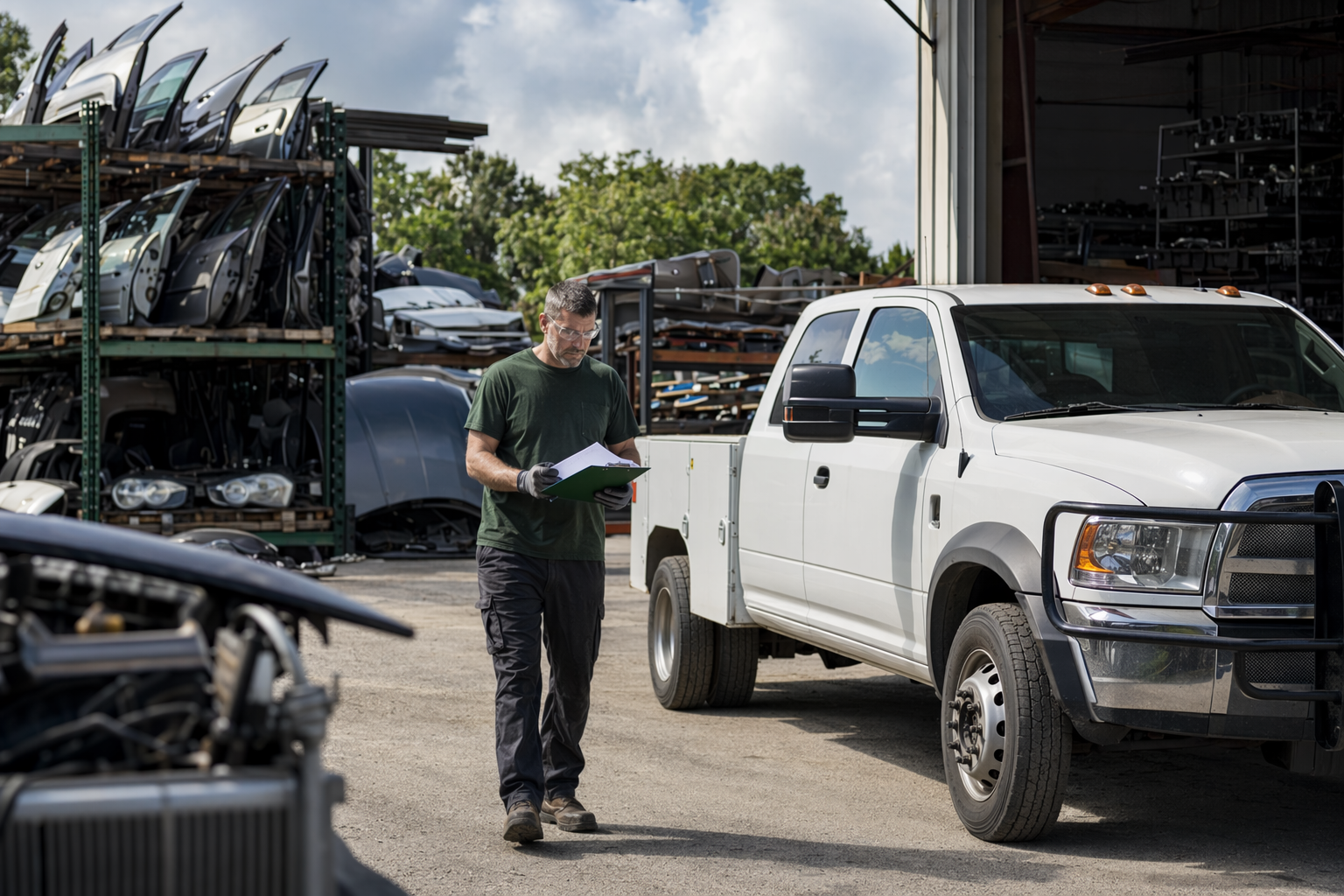
What is the real difference?
A local junkyard or salvage buyer is a business in your area that may buy vehicles directly. An online cash-buyer service can mean different things. Some companies buy cars themselves. Others, like ScrapRoute, are a free matching service that helps you compare licensed local buyers.
That difference matters. If you talk to only one local yard, you get one number. If you use a matching service, you may be able to compare more than one licensed buyer before you decide.
For most car owners, the real question is simple: Who will pay fairly, show up when promised, and handle pickup without surprise fees?
Typical ranges are just that: ranges, not offers. A real cash amount depends on the year, make, model, condition, weight, location, and current scrap and parts prices.
- Older running car sold whole: about $300-$1,500
- Non-running car or dead engine: about $150-$600
- Wrecked or flood car: about $150-$900
- Scrap-only vehicle: about $100-$500
- Heavier trucks and SUVs by scrap weight: about $250-$1,200
If you want a quick idea of what affects the number, see how junk car prices work.
Side-by-side comparison
Here is the honest short version.
1. Price
- A local yard may offer a fair number if they really want your make or need parts from your vehicle.
- A matching service can help you compare buyers instead of taking the first number.
- The highest number is not always the best deal if towing fees or paperwork problems show up later.
2. Speed
- A local buyer can sometimes move fast if they are nearby.
- An online matching service may take a little longer at the start, but it can save time if it helps you avoid calling multiple places yourself.
3. Towing
- Some buyers include towing. Some do not.
- Always confirm in writing whether pickup is included and whether there are any fees. Do not assume "free towing" means free in every case. Read more at free towing explained.
4. Trust and safety
- With a local yard, you may know the business name and address right away.
- With any buyer, local or online, you should verify the license yourself and deal only with licensed, insured buyers.
- Keep your title and ID safe. Do not hand over the title or keys until you are paid.
5. Paperwork
- Some buyers make the process sound easy, but title and lien rules vary by state.
- Confirm your own state's rules with the DMV. This is general information, not legal advice.
- If you need help understanding the process, start with title transfer basics.
6. Used parts shoppers
- If your goal is not selling a car, but finding affordable used parts, a local yard may have what you need today.
- A matching service can help you search more broadly for recycled parts, especially harder-to-find engines or transmissions. Start at find used parts.
When a local buyer may make more sense
A local buyer may be the better fit if:
- Your car is very heavy and mostly worth scrap weight
- The vehicle is nearby and easy to pick up
- You already know a licensed, insured local business with a solid reputation
- You want a fast, simple sale and you are comfortable comparing a few local options yourself
A local yard can also be useful if your car has been sitting for years and is clearly scrap-only. In many of those cases, the number may land around $100-$500, with bigger trucks and SUVs sometimes higher because of weight.
But be careful with the first "today only" price. A common problem is a good number on the phone, then a lower number at pickup. Protect yourself:
- Ask for the amount, towing terms, and any fees in writing
- Verify the buyer's license yourself
- Remove personal items from the vehicle
- Keep the title with you until payment is made
- Confirm whether the driver expects keys, title, and pickup signature at the same time
If you are selling a vehicle that does not run, this guide can help you think through the process: sell a non-running car.
When comparing buyers online may make more sense
Comparing buyers online can be smart if you do not want to spend your whole afternoon calling around. It can also help if your vehicle still has usable parts that make it worth more than plain scrap.
This can be especially useful for:
- A car with a bad engine but good body panels, wheels, or interior
- A wrecked or flood vehicle that still has valuable parts
- An older car that still runs and may sell whole for more than scrap
- A harder-to-value SUV or truck where one buyer may price by weight and another by parts demand
Typical examples:
- An older running car may bring roughly $300-$1,500
- A non-running car with a dead engine may bring roughly $150-$600
- A wrecked or flooded vehicle may bring roughly $150-$900
Again, those are estimates only. The real number depends on the vehicle and market.
The good part of comparing is control. You compare offers. You choose who to deal with. You confirm everything before pickup or payment. That is often better than feeling pushed into the first low number.
If you want to start comparing, you can get matched here or check your vehicle's general value at /value/.
How to choose the best path in 4 steps
Use this simple checklist before you say yes to anyone.
1. Figure out what your car really is
Is it running, non-running, wrecked, flooded, or scrap-only? A running older car may be worth more sold whole than by weight alone.
2. Compare at least two paths
Try one trusted local option and one matching option. You are not looking for hype. You are looking for the best written terms.
3. Check the full deal, not just the number
Ask:
- Is towing included?
- Are there any extra fees?
- When do I get paid?
- What exact paperwork is needed in my state?
4. Protect yourself at pickup
- Verify the buyer's license yourself
- Keep your title and ID secure
- Never hand over the title or keys until you are paid
- Confirm your state's title rules with the DMV
If you want a broad, scam-aware overview before deciding, read how to avoid junk car scams.
Do not take the first number you hear. Compare a trusted local buyer with at least one matching option, get the amount and towing terms in writing, verify the buyer's license yourself, and never give the title or keys before you are paid.
Common questions
Is an online cash buyer always better than a local junkyard?
No. Sometimes a local licensed buyer is the best choice, especially for a heavy scrap-only vehicle or a very fast pickup. Other times, comparing buyers online helps you avoid taking the first low number. The best option depends on the year, make, model, condition, weight, location, and current scrap and parts prices.
Who usually pays more for a non-running or wrecked car?
It depends on whether the vehicle still has strong parts value. A dead-engine car, wrecked car, or flood car may be worth more to a buyer who wants parts, not just scrap weight. Typical ranges are about $150-$600 for a non-running car and about $150-$900 for a wrecked or flood car, but those are estimates only, not offers or guarantees.
Should I give the title and keys to the tow driver first?
No. Keep your title and ID safe, and never hand over the title or keys until you are paid. Confirm the exact amount, towing terms, and any fees in writing before pickup. Deal only with licensed, insured buyers, and verify the license yourself. Title and lien rules vary by state, so confirm your state's rules with the DMV.
Can ScrapRoute buy my car or sell me used parts directly?
No. ScrapRoute is a free matching service. It does not buy vehicles, sell parts, tow cars, dismantle vehicles, transfer titles, or provide legal, tax, or DMV advice. ScrapRoute helps you connect with licensed salvage yards, auto recyclers, and cash-for-cars buyers so you can compare your options.