Used vs New vs Rebuilt Parts
If your car needs a part, the cheapest choice is not always the best one. Here is a straight answer on when **used**, **new**, or **rebuilt** parts make sense, and how to avoid paying too much.
What the three choices really mean
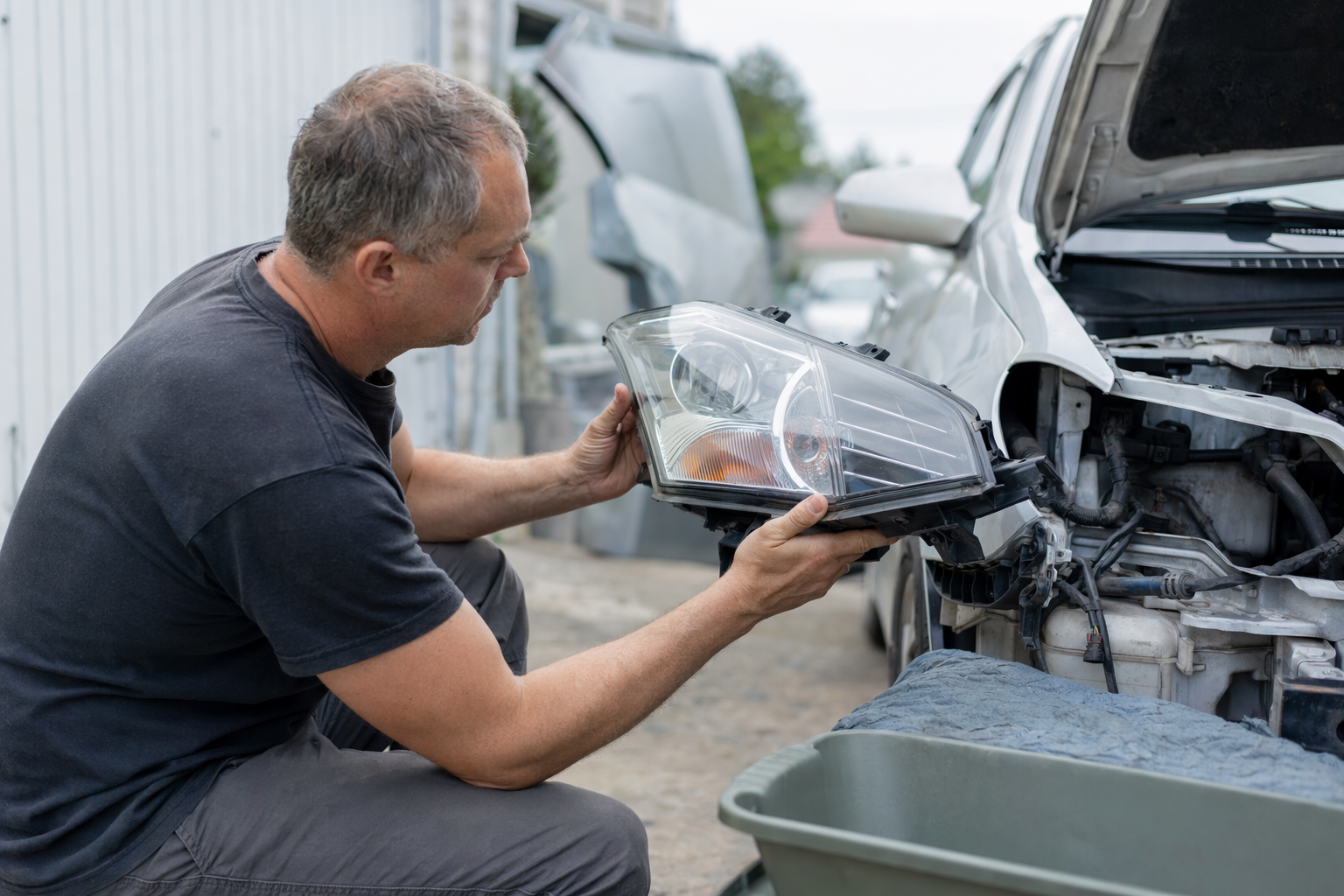
New parts are factory-new or aftermarket-new parts that have not been installed before. They usually cost the most. In many cases, they are the easiest option when you want predictable fit and the longest service life.
Used parts come from another vehicle. A licensed auto recycler removes, stores, and sells them for reuse. This is often the most affordable option, especially for body parts, wheels, glass, mirrors, doors, seats, and many electrical parts.
Rebuilt parts are used parts that were taken apart, inspected, and had worn pieces replaced before being put back together. They sit in the middle on price in many cases. Rebuilt can make sense for parts like starters, alternators, steering racks, some engines, and some transmissions.
The best choice depends on the part, your budget, how long you plan to keep the car, and how hard the part is to replace. If you are still comparing options, find used parts or learn more about used engines and transmissions.
Quick comparison: cost, risk, and when each one fits
Here is the honest side-by-side view most drivers need:
- Price
- New: usually highest
- Used: usually lowest
- Rebuilt: often middle, but sometimes close to new
- Availability
- New: good for common maintenance items, not always easy for older cars
- Used: often best for older cars and discontinued parts
- Rebuilt: depends on the part and local supply
- Condition
- New: no prior wear
- Used: prior wear varies by mileage, age, and how the donor car was treated
- Rebuilt: key worn components should be replaced, but rebuild quality can vary
- Best uses
- New: safety-critical items, sensors with known failure issues, rubber and plastic wear items, and parts that are very hard to replace twice
- Used: doors, fenders, hoods, bumpers, wheels, mirrors, interior trim, some modules, many engines and transmissions when inspected well
- Rebuilt: alternators, starters, brake calipers, power steering components, some engines, some transmissions
- Warranty
- New: often strongest, but read the terms
- Used: shorter in many cases
- Rebuilt: often better than used, but not always
- Risk level
- New: lowest part-condition risk, highest price risk
- Used: best money-saving option, but condition matters most
- Rebuilt: quality depends heavily on who rebuilt it and what was replaced
For big-ticket items, realistic used-part ranges can save real money. A used engine is often a few hundred dollars up to about $1,500 installed-ready depending on the vehicle and setup. A used transmission often runs about $300-$1,200. Those are typical ranges, not quotes or guarantees. Actual pricing depends on year, make, model, condition, mileage, location, and current supply.
When used parts are the smart move
Used parts are often the smartest buy when the car is older and you just need reliable transportation without spending more than the car is worth.
Good times to choose used:
1. Body and cosmetic repairs
A used door, mirror, tail light housing, wheel, or seat can save a lot. Color match is not guaranteed, but you may find a close match.
2. Older vehicles
If the car is 10-20 years old, new parts may be expensive, discontinued, or only available in lower-quality aftermarket versions.
3. You plan to keep the car a short time
If you just need another year or two, used can be the sensible choice.
4. The part is common and easy to inspect
Glass, wheels, interior trim, many suspension pieces, and some bolt-on accessories are easier to judge than hidden internal components.
Ask practical questions before you buy:
- What vehicle did the part come from?
- Is mileage known?
- Was the donor car wrecked, flooded, or burned?
- Are connectors, brackets, and sensors included?
- What is the return window?
- Is there a written warranty?
If the seller cannot clearly answer basic condition questions, move on. A low price is not a deal if the part fails right away.
When new or rebuilt is worth the extra money
Sometimes paying more now saves money and stress later.
Choose new more often when:
- The part affects safety or braking
- Labor is high, so doing the job twice is expensive
- The part has rubber, seals, or electronics that age badly
- The vehicle is newer and you want longer service life
Choose rebuilt more often when:
- The new part is very expensive
- The part is commonly rebuilt by reputable suppliers
- You can confirm what was actually replaced during the rebuild
- There is a solid written warranty
Examples where rebuilt can make sense:
- Alternators
- Starters
- Some steering racks
- Some brake calipers
- Some engines and transmissions
But be careful: rebuilt is not one fixed standard. One rebuilder may replace many wear items and test the unit well. Another may do the bare minimum. Ask for specifics. If the answer is vague, that tells you something.
For very expensive repairs, it is also fair to stop and compare the repair cost against the vehicle's value. If the numbers do not make sense, you may be better off fixing it with a lower-cost used part, or selling the vehicle instead. You can estimate what your car may be worth at value if you are deciding whether to repair or let it go.
How to choose the right part without getting burned
Use this simple process:
1. Start with the repair goal
Are you trying to keep the car 6 months, 2 years, or 5 years? Your timeline changes the right answer.
2. Ask for total cost, not just part cost
A cheap part with high labor can become the expensive choice. Ask about installation, fluids, programming, and core charges if any apply.
3. Match the part to the job
For cosmetic or non-critical items, used is often fine. For hard-to-reach or safety-related items, new may be the safer call. For certain mechanical units, rebuilt may be the middle ground.
4. Get details in writing
Ask for the exact part description, warranty length, return rules, and what is included.
5. Work with licensed businesses
Deal with licensed, insured recyclers or repair shops and verify the license yourself. If someone is vague about business details, walk away.
6. Protect your information
Share only the vehicle and contact details needed to locate the right part. Do not hand over sensitive records you do not need to share.
If your current car is not worth repairing, ScrapRoute can also help you compare your next move. You can get matched here if selling the vehicle may make more sense than putting more money into it.
The honest next step
If you need a part, do not assume new is always best or used is always risky. The right answer depends on the part, the labor, and the life left in the car.
- Choose used when price matters most and the part can be inspected well.
- Choose new when reliability and low risk matter most.
- Choose rebuilt when you want a middle option and can confirm rebuild quality.
ScrapRoute is a free matching service. We do not sell parts ourselves. We help people compare options with licensed auto recyclers so they can decide what makes sense for their car and budget.
If your car needs a part, think about the job first. Used is often best for saving money, new is best for low risk, and rebuilt can be a middle option if the quality is clear. Ask for total cost, warranty, and condition in writing, and compare before you buy.
Common questions
Are used parts reliable enough for daily driving?
Often, yes. It depends on the part and its condition. Used body parts, wheels, glass, interior parts, and many bolt-on components can be very good value. For major mechanical parts, ask about mileage, donor vehicle condition, warranty, and what is included before you decide.
Is rebuilt always better than used?
No. Rebuilt can be better, but quality varies a lot. A good rebuild replaces worn parts and tests the unit. A weak rebuild may do very little. Ask what was replaced, whether it was tested, and what the written warranty covers.
When should I avoid the cheapest part?
Avoid the cheapest option when labor is expensive, the part is hard to replace twice, or the part affects safety. In those cases, paying more for a better part can be the cheaper move overall.
What if the repair costs more than the car is worth?
That is common with older cars. Compare the full repair cost against the car's real-world value, how long you plan to keep it, and whether other major repairs are coming soon. If the math does not work, selling the car may be the better choice than repairing it.