How One Owner Avoided a Lowball Buyer
This is an **anonymized, illustrative** story based on common situations car owners face. It shows how one owner avoided a lowball deal by slowing down, comparing options, and getting the details in writing before pickup.
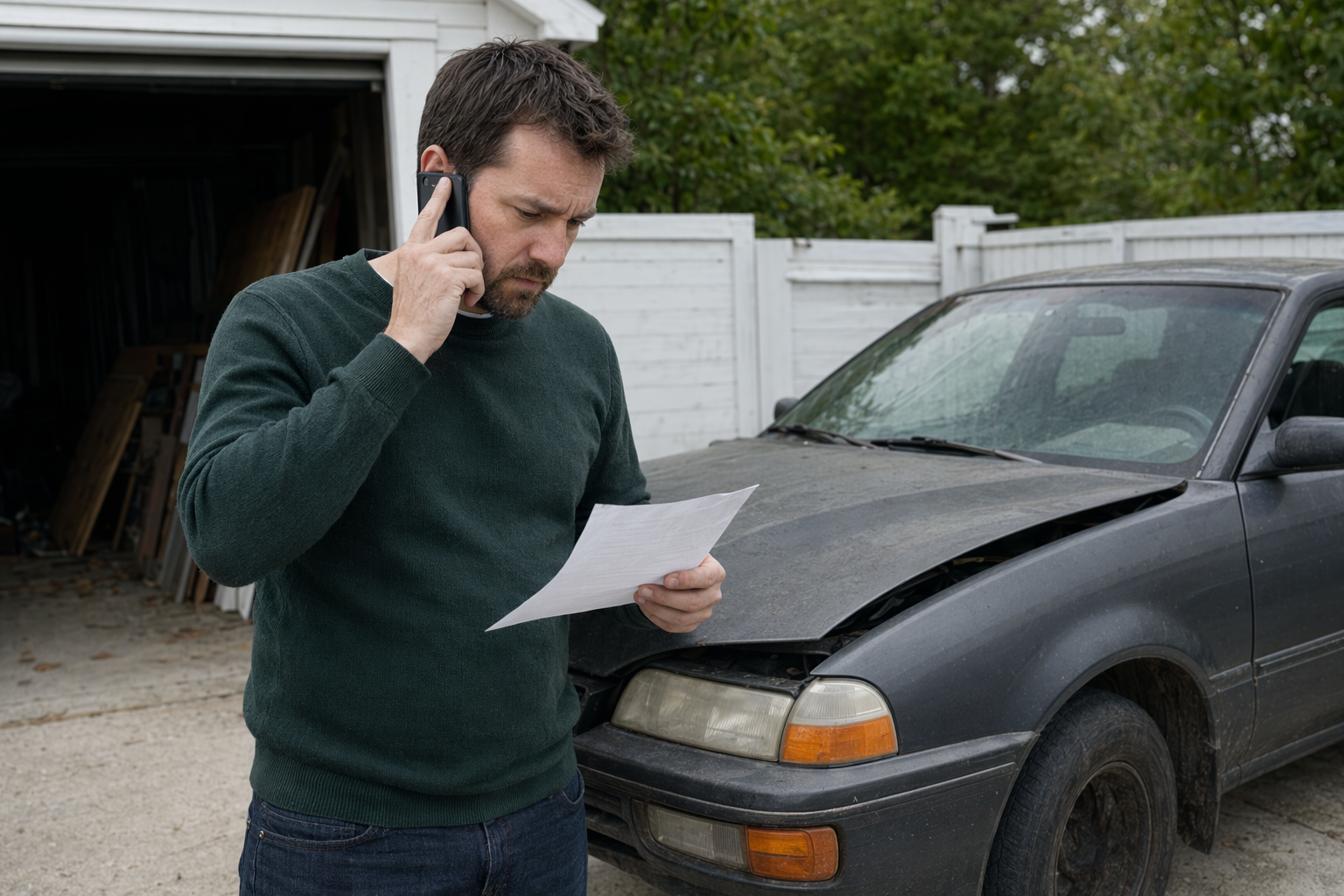
The situation: a damaged car, little time, and a lot of pressure
A car owner had an older sedan with front-end damage and a cooling problem after a minor crash. The car still started some days, but it was not reliable. Repairing it did not make sense.
At first, they did what many people do. They searched online, called the first buyer who answered, and got a number that sounded decent over the phone. Then the problems started.
The buyer was vague. They would not clearly confirm whether towing was included. They pushed for a same-day pickup. They also wanted the owner to "just sign the title now" so the driver could handle the rest.
That is where the owner paused.
They had heard stories about bait-and-switch price drops at pickup, surprise towing or admin fees, and people getting handed a check that later bounced. They also were not sure what their car might really be worth in damaged condition, so they took a few extra steps before agreeing to anything.
To get a better sense of realistic pricing, they reviewed how junk car prices work and checked a general value estimate range first.
What raised red flags
The first buyer did not look obviously fake. That is why this kind of situation catches people off guard. The warning signs were small at first, then added up.
- Price kept changing. On the phone, the buyer used a higher number to get the pickup scheduled, but would not put the amount in writing.
- Towing was not clearly free. They said, "We usually cover it," which is not the same as a written confirmation.
- Extra fees were vague. When asked about charges, they mentioned there "might" be an admin fee depending on location.
- Payment method was unclear. They would not confirm cash or a verifiable business check before pickup.
- Title pressure. They wanted the owner to sign over the title before money changed hands.
- License questions got dodged. When the owner asked if they were licensed and insured, the answer was indirect.
None of these points alone proves fraud. But together, they often lead to the same bad ending: the truck shows up, the price drops by a few hundred dollars, and the seller feels stuck.
This is also where many non-native-English speakers get pressured. Fast talk, rushed pickup times, and unclear paperwork can make a bad deal feel "normal." It is not normal. You have the right to slow down, ask questions, and walk away.
If you want a checklist of common warning signs, see how to avoid junk car scams.
What the owner did differently
Instead of accepting the first number, the owner used a simple process:
- Got basic details together. Year, make, model, whether it ran, visible damage, location, and whether they had the title. They did not treat the VIN or sensitive personal records as a must-have just to start.
- Asked for the full terms in writing. That included the pickup amount, whether towing was included, and whether any fees could be deducted.
- Verified license and insurance themselves. They did not rely on verbal promises.
- Compared more than one option. Through a free matching service, they asked to be connected with licensed buyers instead of relying on one random caller. They explored options to sell a damaged or wrecked car without committing on the spot.
- Set one firm rule: no title, no keys, no release of the car until payment was received and matched the written terms.
That changed the whole conversation.
One buyer disappeared when asked to confirm fees in writing. Another gave a lower but clearer number and stated towing was included. A third asked good questions about condition, confirmed the pickup terms, and was straightforward about what could change the price: missing catalytic converter, major missing parts, or damage worse than described.
That is the kind of honesty you want. Not the highest phone number. The clearest real-world terms.
If you need to compare buyers without paying to do it, you can start with get offer. ScrapRoute is a free matching service. You compare options and choose who to deal with.
The outcome: not perfect, just safer and clearer
The final result was not some miracle payout. It was simply a better, cleaner deal.
The owner sold the car for a typical damaged-car range amount, not the inflated phone number from the first caller. The real number made sense for the car's age, condition, and local market. It was lower than what a healthy running car might bring, but higher than a scrap-only deal.
More important, the owner avoided the common ways sellers get burned:
- No surprise towing fee at pickup
- No last-minute "admin charge"
- No bounced check story a week later
- No pressure to sign title early
- No handoff to an unlicensed buyer they could not trace later
The biggest takeaway was simple: a slightly lower written amount from a licensed, insured buyer is often safer than a higher verbal amount from someone who will not confirm the details.
And this lesson matters on the parts side too. If you are trying to keep a car on the road instead of selling it, slow down there as well. Confirm exactly which used part you need, what condition it is in, and what is included before paying. ScrapRoute can also help you find used auto parts through participating recyclers.
What you should do before any pickup
Use this short checklist.
- Verify the buyer's license and insurance yourself. Do not just take their word for it.
- Get the amount, towing terms, and any fees in writing before pickup.
- Ask how payment will happen. If it is a check, make sure it is verifiable and from the business you are dealing with.
- Do not hand over the title or keys until you are paid.
- Confirm who is coming to pick up the vehicle and the business name they represent.
- Remove personal items and plates if your state requires it.
- Check your state's title and lien rules with the DMV. State rules vary. This is general information, not legal advice.
If your car does not run, ask one more question clearly: Is towing included, and is it free to me? Get that answer in writing. For more on that point, read free towing explained.
A good buyer will not be bothered by clear questions. A bad one usually will.
If someone offers a high number but will not put it in writing, explain fees, or prove they are licensed, slow down and walk away if needed. Compare options, verify the buyer yourself, and never give the title or keys before you are paid.
Common questions
What is the biggest lowball trick junk car sellers should watch for?
The most common one is a **bait-and-switch price drop at pickup**. The buyer gives a higher number by phone, then lowers it when the truck arrives and says the car is "worse than expected." Protect yourself by giving an honest description up front and getting the amount, towing, and any fees confirmed in writing before pickup.
Should I sign the title before the tow truck arrives?
No. **Do not hand over the title or keys until you are paid** and the payment matches the written terms. Also confirm your state's title rules with the DMV, because title and lien requirements vary by state. This is general information, not legal advice.
How can I tell if a buyer is legitimate?
Ask whether the buyer is **licensed and insured**, then **verify that yourself**. Be cautious if they avoid the question, refuse to put terms in writing, cannot explain fees clearly, or push you to move fast. You can compare matched options with [licensed buyers for a junk car](/sell/junk-car/) instead of relying on one caller.