Finding an Affordable Used Engine
A blown engine can make an older car feel not worth saving. This anonymized example shows how one driver compared used-engine options, checked the details, and avoided paying for the wrong part.

The situation: a car worth fixing, but not with a brand-new engine
A driver had an older daily-use car with a dead engine. The body was decent. The transmission still shifted fine. Tires were usable. But the shop said a brand-new replacement would cost more than the car was worth.
That is where many people get stuck. They do not want a car payment. They do not want to spend thousands on a full rebuild. They just need the car running again at a cost that makes sense.
In this case, the realistic choices were:
- install a used engine
- sell the car as a non-runner for cash
- stop spending money and move on
For many older cars, a used engine can be the middle path. It is often cheaper than new. But the low price on paper is not the full story. The buyer still has to check fitment, mileage, condition, warranty terms, delivery or pickup, and labor.
If you are early in the process, it helps to compare used parts options first at find used parts before agreeing to anything.
What they did: compare the whole job, not just the engine price
The first lesson was simple: the cheapest engine listing is not always the cheapest repair.
The driver gathered a few basic details before asking for matches:
- Year, make, model, and engine size
- Whether the old engine failed from overheating, oil loss, or internal damage
- Whether they needed engine only, or engine with accessories
- ZIP code, so local and regional options could be compared
Then they asked about more than price. They asked:
- Is the engine the exact match for this vehicle?
- What mileage is on the donor engine?
- Was the vehicle wrecked, flooded, or parted out for another reason?
- Is a compression test or run-and-check record available?
- What parts are included?
- Is there a startup warranty, exchange window, or other written policy?
- Are there extra core charges, loading fees, or delivery fees?
That last part matters. A used engine might be a few hundred dollars to around $1,500 installed-ready depending on vehicle and setup, but the final number can move fast once missing parts, shop labor, seals, fluids, and shipping get added.
They also avoided a common mistake: buying before a mechanic confirmed compatibility. One small difference in engine code, sensors, or electronics can turn a "good deal" into wasted money.
For people comparing powertrain options, used engines and transmissions is a good starting point.
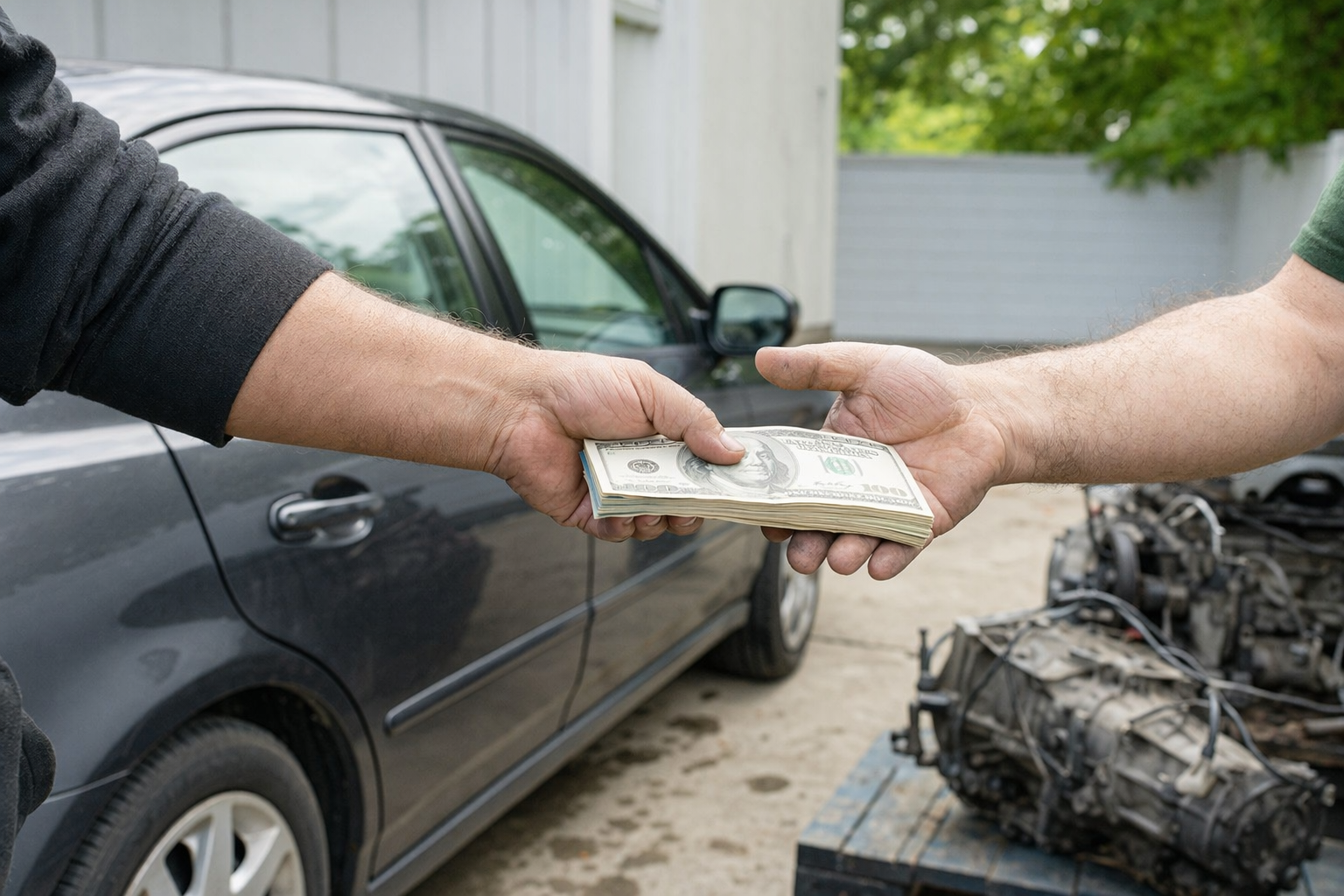
How they narrowed it down safely
This was not about finding a magic price. It was about reducing risk.
The driver focused on sellers that could be checked and contacted clearly. They looked for businesses that appeared to be licensed and insured, and they verified that information themselves before moving forward. They also asked for the key terms in writing.
Here is the short checklist they used:
- Confirm the exact engine code and fitment before paying
- Ask what is included: long block, intake, sensors, manifolds, accessories, or none
- Get the mileage and condition notes in writing
- Ask if the engine came from a wreck, auction vehicle, or another source
- Read the warranty terms slowly, especially what voids it
- Confirm delivery timing and all fees in writing
- Use a repair shop that will inspect the engine before full installation when possible
The driver also kept expectations realistic. A used engine is still a used part. It can save money, but it is not the same as a brand-new unit. Paying less up front may mean a shorter warranty or more uncertainty.
That is why ScrapRoute exists as a free matching service. We help people compare options from participating businesses, but you decide who to contact, you compare the details, and you choose what makes sense for your budget.
The outcome: not the lowest sticker price, but the best overall value
In this example, the driver did not choose the cheapest engine. They chose one with clearer fitment information, moderate mileage, and written terms they understood.
The total repair bill was still a serious expense. But it was much lower than a new engine or replacing the car right away. Just as important, they avoided two problems that cost people money all the time:
- buying the wrong engine
- agreeing to surprise fees after the fact
The takeaway was practical:
A good used engine deal is really three deals at once:
- The part itself has to fit.
- The condition has to be described honestly.
- The total installed cost has to still make sense for the car.
If those three pieces do not line up, selling the vehicle may be the smarter move. An older non-running car often brings roughly $150-$600 depending on the year, make, model, condition, weight, location, and current scrap and parts prices. If you are weighing repair versus sale, compare the numbers side by side and read how junk car prices work before deciding.
And if anyone pressures you, slow down. Confirm everything in writing. Keep your documents safe. If you later choose to sell a vehicle instead of fixing it, deal only with licensed, insured buyers, verify the license yourself, and never hand over the title or keys until you are paid. Title and lien rules vary by state, so confirm your state's requirements with the DMV. This is general information, not legal advice.
If you need a used engine, do not look at price alone. Check fit, mileage, what is included, warranty terms, and all fees in writing, then compare the full repair cost to what the car is worth before you decide.
Common questions
How much should I expect to pay for a used engine?
It depends on the vehicle, engine type, mileage, condition, location, and what is included. A used engine is often a few hundred dollars up to around $1,500 installed-ready depending on the setup, but labor, fluids, seals, shipping, and shop charges can change the final total a lot.
What should I check before buying a used engine?
Check exact fitment first. Then ask for the engine code, mileage, condition notes, what parts are included, and any written warranty or exchange terms. Also confirm all delivery, loading, or core fees in writing before you agree.
When is it smarter to sell the car instead of replacing the engine?
Usually when the total repair cost is too high for the value of the car, or when the vehicle has other major problems like transmission trouble, frame damage, or flood history. For some older cars, selling as a non-runner and putting that money toward another vehicle is the safer financial choice.